A Cold Beginning of Growing Up
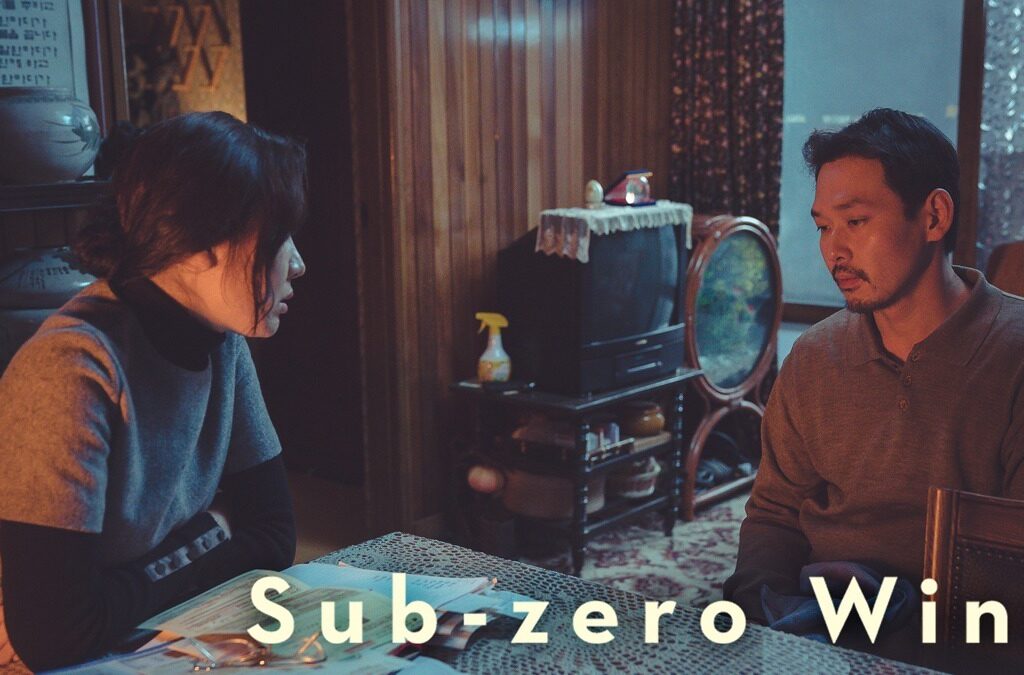
Set across seven formative years, Sub-Zero Wind tells a deeply personal story about growing up in an unstable family. Young-ha, first abandoned by her father at the age of twelve, is forced to return to a life she never truly chose, living with her mother, Eun-suk, and a stepfather she barely knows.
Her mother, absorbed in her responsibilities at a local church, often feels emotionally distant. In this quiet neglect, Young-ha begins to navigate her own fragile world. Alongside her is Mi-jin, her cousin and closest companion, who is also struggling with her own painful circumstances.
From the very beginning, the film sets a subdued yet emotionally heavy tone, reflecting how silence and distance can shape a person just as much as conflict.
A Layered Journey Through Time
What makes Sub-Zero Wind stand out is its three-part narrative structure. The story unfolds in stages, childhood, adolescence, and early adulthood, allowing the audience to witness the gradual emotional shifts in Young-ha’s life.
Each phase reveals a different layer of her reality. As a child, she is confused and vulnerable. As a teenager, she becomes more observant, quietly absorbing the cracks within her family. By the time she reaches adulthood, there is a sense of emotional fatigue, but also a subtle resilience.
This progression is strengthened by the decision to cast three different actresses for Young-ha at different ages. Rather than feeling disjointed, the transitions feel natural and even necessary, emphasizing how much she has changed internally.
The narrative does not rely on dramatic twists. Instead, it moves gently, almost like a slow wind, subtle, but persistent enough to leave a lasting impact.
Characters Shaped by Silence
Young-ha is not written as a loud or expressive protagonist. Her strength lies in her restraint. She observes more than she speaks, and her emotions often linger beneath the surface. This makes her journey feel authentic, especially in the context of a family where communication is limited.
Eun-suk, her mother, is perhaps one of the most complex figures in the film. On the surface, she appears responsible and devoted to her religious life. However, her emotional absence creates a quiet tension that deeply affects Young-ha. She is not portrayed as a villain, but rather as someone shaped by her own limitations and choices.
Mi-jin, on the other hand, serves as both a mirror and contrast to Young-ha. While they share similar hardships, their ways of coping differ. Through Mi-jin, the film subtly explores how two people in similar situations can walk very different emotional paths.
Even the stepfather, though not heavily emphasized, contributes to the uneasy atmosphere within the household. His presence adds another layer of discomfort, reinforcing the film’s theme of emotional disconnection.
Interpreting the Meaning Behind the Ending
The title Sub-Zero Wind itself carries a symbolic weight. It suggests a kind of emotional coldness, an environment where warmth is scarce, and survival requires endurance.
By the end of the film, there is no dramatic resolution or clear sense of closure. Instead, what the audience gets is something more reflective. Young-ha’s journey does not end with a transformation that is loud or obvious. Rather, it feels like a quiet acceptance of her reality.
One possible interpretation is that the “wind” represents the continuous hardships she faces, unseen, but always present. And yet, despite its coldness, she remains standing. There is a subtle suggestion that growth does not always come with healing, but sometimes with understanding.
The film also hints at the idea of inherited emotional patterns. Young-ha’s future may not be entirely free from the past, but her awareness of it becomes a form of strength.
Final Thoughts and Rating
Sub-Zero Wind is not a film that seeks to entertain in a conventional sense. It is slow, introspective, and often uncomfortable in its honesty. However, for viewers who appreciate grounded storytelling and emotional realism, it offers a deeply rewarding experience.
Director Kim Yu-ri, in her feature debut, demonstrates a strong sense of control and sensitivity. The film’s quiet tone, combined with powerful performances, creates an atmosphere that lingers long after it ends.
This is a story about family, not in its idealized form, but in its most fragile and complicated state. It captures the feeling of growing up in emotional isolation, where love exists, but is rarely expressed.
Rating: 8/10
A subtle yet haunting drama that speaks softly, but leaves a lasting echo.