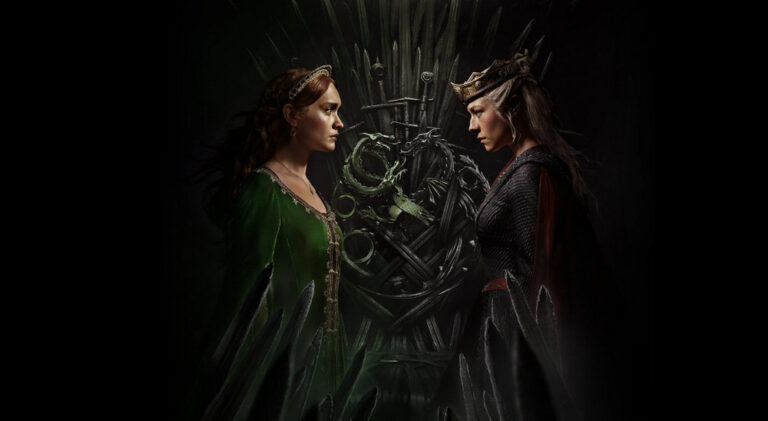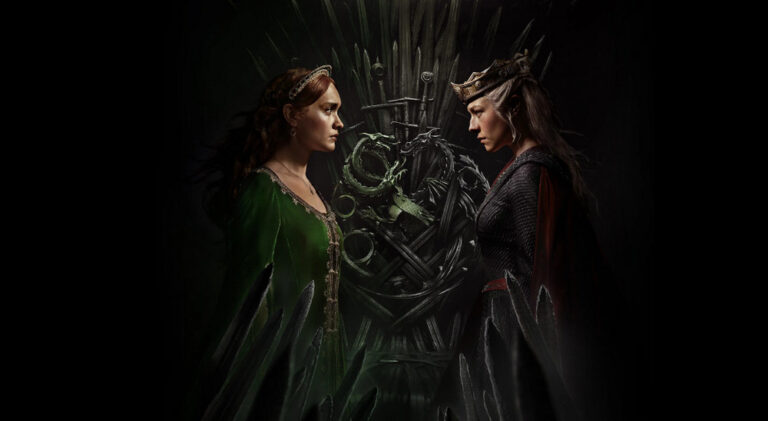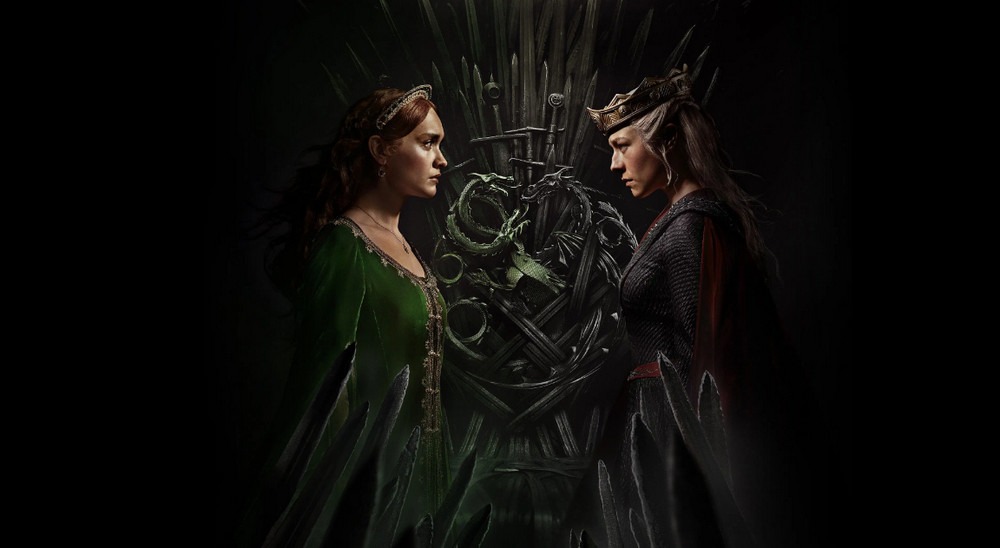
House of the Dragon season 3 closes out with episode 8, and it’s a finale that burns Tumbleton to the ground, literally and figuratively. Rhaenyra’s grip on the Iron Throne gets shakier by the minute, Aegon makes his return on Sunfyre, and the Dance of the Dragons claims one of its most devastating losses yet. Here’s everything that happens in the season 3 finale, plus my full breakdown of how it all lands.
The Queen Starts to Unravel
House of the Dragon Season 3 Episode 8 opens with Grand Maester Orwyle desperate to get an audience with Rhaenyra. Word has reached King’s Landing that Sunfyre and Aegon are alive, and Rhaenyra can barely process it. It’s the kind of gut-punch that changes everything, and you can feel the walls closing in on her almost immediately.
The smallfolk aren’t helping matters either. Many of them see Aegon and Sunfyre’s survival as a sign from the gods, proof that he’s the true King, and Rhaenyra’s own subjects start slipping away from her cause. Daemon, for what it’s worth, stays close by her side through it. Given how the season has framed him, I think we’re meant to take everything he says here as gospel truth, which honestly says a lot about where this show’s sympathies lie.
With Sunfyre now a threat somewhere out there, watch points go up across the realm. But Rhaenyra’s real focus is Tumbleton. She wants Ormund and Daeron wiped out first, treating it as a stepping stone before she eventually deals with Aegon herself.
What’s harder to watch is how she treats the people around her. When Baela pushes back on her over Corlys being taken prisoner, Rhaenyra doesn’t take the criticism well. She turns it back on Baela and even takes a jab at Rhaena in the process. It’s a small moment, but it tells you everything about the state Rhaenyra is in right now.
Meanwhile in Tumbleton, the Hightower forces are bracing for the fight coming their way. And then there’s Ulf, the wildcard of the entire war effort, who’s already cut a secret deal with Ormund following what happened in the previous episode.
Rhaenyra’s Bid for the Sept, and Mysaria’s Exit
Determined to shore up her legitimacy, Rhaenyra rides to the Great Sept with a full escort, hoping the High Septon will publicly anoint her as Queen. Before she leaves, she deals with one more piece of business: Mysaria. She’s dismissed from her position and told she’ll be shipped off to Pentos by dusk, her services no longer needed.
Over with Alys and Aemond, there’s a quieter, stranger reveal. Alys has been nursing Aemond as he processes what Alicent tried to do to him, and in the process we learn she’s over a century old. Her backstory goes all the way back to when Balerion burned Harrenhal, her son was horribly injured in the fire, and when the maesters couldn’t save him, she turned to older, darker magic out of desperation. Her son died anyway, and when she tried to follow him in death, she found out the price of that magic instead: she’s cursed to live forever, tied to the Riverlands and bound to serve whoever holds Harrenhal.
Then Aegon shows up, riding in on Sunfyre and pulling Aemond back into the fold. Aemond asks for forgiveness, and Aegon lets him back in, but makes it painfully clear who’s calling the shots now. Their plan is to track down Vhagar, crush their enemies at Tumbleton, and retake King’s Landing, all under Aegon’s banner. Not Aemond’s.
Helaena’s Breaking Point
Back in the Red Keep, Helaena confronts Rhaenyra directly, telling her that their father would be ashamed of what she’s turned into and that everything Rhaenyra now stands for is ugly. When Helaena refuses to eat, Rhaenyra has her physically restrained and force-fed to keep her and the unborn baby alive. It’s a brutal, uncomfortable scene, and it sets up everything that follows.
At the Great Sept, the High Septon flatly refuses to anoint Rhaenyra. He tells her that Aegon surviving is proof the gods have already made their choice, and Rhaenyra’s response is swift and cold: she names him a traitor and has Alyn execute him on the spot.
She doesn’t stop there. Rhaenyra steps outside and delivers a speech to the crowd that’s less “rousing” and more full-blown unraveling. She warns of a threat from the Far North, crowns herself “Rhaenyra the Chosen,” and, for good measure, declares in High Valyrian that she is the Prince That Was Promised. Given how this franchise usually handles prophecy, I don’t think that line is going to age well.
The Battle of Tumbleton
On the eve of the fighting, Daeron can’t shake the feeling that something bigger is going on than Ormund is letting on, and honestly, given everything swirling around him, it’s hard to blame him for being nervous.
Before the battle kicks off, Gwayne tries to broker peace on his own, bringing Corlys along to meet with Daemon. The first offer floated is a division of power across Westeros. Corlys counters with something more specific: Rhaenyra stays Queen, and Daeron is pardoned and named Lord Paramount of the Reach and Warden of the South. Daemon shuts it down without hesitation. With Aegon and Aemond both still active threats, peace was never really on the table, and the talks collapse fast.
Once the fighting starts, Ulf is missing in action, and it turns out he’s just blackout drunk and passed out on a toilet. Ormund eventually tracks him down, beats him for it, and orders him back onto Silverwing to follow the plan.
With Ulf unaccounted for and Hugh arriving unexpectedly on Vermithor, Daemon decides he can’t wait any longer. He mounts Caraxes and leads the charge himself, tearing through Tumbleton’s defenses and forcing the gates open.
Ulf finally gets airborne on Silverwing, and for a moment, Daemon’s men actually cheer at the sight of him approaching. That relief doesn’t last. Ulf turns Silverwing on Rhaenyra’s own forces outside the city, slaughtering the men below and throwing the entire battle into chaos.
Inside Tumbleton, Ormund runs into Roderick “Roddy the Ruin” Dustin in single combat. Ormund manages to hack off Roddy’s forearm, but even one-handed, Roddy still manages to stab him. Neither man gets to enjoy the moment, because Ulf sweeps over the walls on Silverwing and burns them both alive.
And Ulf keeps going. He turns his fire on Tumbleton itself, killing soldiers and civilians without distinction. What follows is total carnage, Daemon ends up surrounded by the bodies of innocent people, including mothers still clutching their dead children. Corlys eventually finds him and tells him plainly: Ulf has switched sides, the town is lost, and they need to get out.
Elsewhere in the chaos, Gwayne wakes up and searches frantically for Daeron, who’s nowhere to be found. Hugh, meanwhile, finds Kat’s body among the dead, killed in the destruction of Tumbleton, and completely breaks down.
Helaena’s Death and the Episode’s Final Gut-Punch
Back in King’s Landing, we learn Mysaria never actually left for Pentos. She slipped away from her escort and stayed hidden among the smallfolk, quietly watching Rhaenyra’s reign spiral further out of control.
Then comes the episode’s most devastating moment: Helaena, after everything she’s endured, jumps from a window in the Red Keep, taking her unborn child with her. The visual echo to Tommen’s suicide in Game of Thrones is unmistakable, right down to a nearly identical window in the Red Keep.
When Rhaenyra reaches Helaena’s room afterward, she finds a tapestry Helaena had made. It shows Helaena’s own death, and it also shows Rhaenyra on the Iron Throne, surrounded by dragons, flames, and suffering.
Far from King’s Landing, Alicent is shown surrounded by butterflies at the exact moment her daughter dies.
The Episode Review: A Finale That Burns Bright but Burns Uneven
House of the Dragon closes its third season with a finale packed with action and just enough new threads to pull us into whatever comes next. Aegon returns to the story with real teeth this time, he’s got the confidence and the leverage to actually be a compelling threat, and for now, he’s got Aemond firmly under his control.
That said, this finale leans hard into Game of Thrones callbacks, for better or worse. The looming threat from the Far North, Helaena’s final tapestry hinting at “the prince that was promised,” and the reintroduction of real magic through Alys’s backstory all feel like the show reaching back toward its predecessor’s mythology rather than forging something entirely its own.
I’ll admit, learning more about Alys, especially the reveal of her ageless, cursed existence, was genuinely one of the more interesting additions this episode. I have a feeling this is only the beginning of that thread, and I’d expect it to matter a lot more once season 4 rolls around.
The Hightower storyline wraps up in blood, though Alicent is clearly still alive based on the closing shots, so that particular arc isn’t finished yet either. And there’s something almost darkly funny about how Ulf’s arc resolves: after spending the whole build-up plotting against Rhaenyra, he ends up back on her side purely by accident, blackout drunk and stumbling into the role of unlikely hero-slash-mass-murderer. Ormund, on the other hand, just never had an answer for him, and his death feels almost embarrassingly unceremonious given how much buildup his character got.
Season 3 as a whole has been a mixed bag. There have been flashes of genuinely great action, but they’re surrounded by political maneuvering that sometimes feels naive rather than clever, plus a handful of writing choices that left me scratching my head more than once.
And zooming out, I can’t help but notice that both House of the Dragon and Game of Thrones keep circling back to the same underlying message, whether intentionally or not: Westeros, as a whole, really does not want to see a woman sit on the Iron Throne.
House of the Dragon Season 3 Episode 7 |