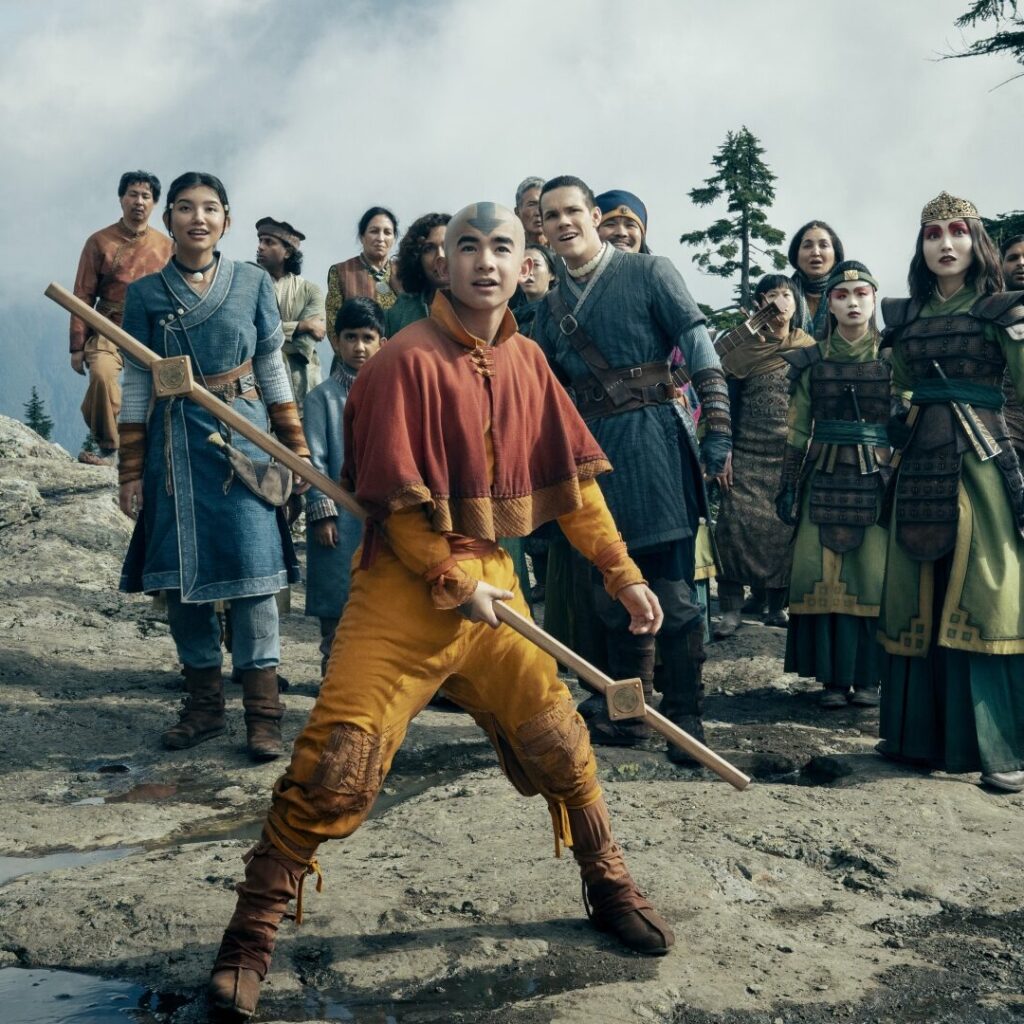
I’ll be honest, I went into Avatar: The Last Airbender Season 2 with cautious expectations. Season 1 of the live-action Avatar was good, but it had that familiar energy of a show still finding its footing. So when I hit play on episode 1, I wasn’t fully prepared for how quickly season 2 would grab me.
Two episodes in, and I’m already thinking about it more than I expected to.
Quick Recap: What Actually Happens
Episode 1 – Back on the Road, Bigger Stakes
We pick up right where we left off. Aang has mastered water, but he still needs Earth and Fire, and the clock is ticking. Sozin’s Comet is approaching, and anyone who knows their Avatar lore knows what that means: when it arrives, the Fire Nation’s power becomes almost unstoppable, just like it was when Sozin used it to wipe out every Airbender a century ago.
The first big moment of the season is Aang reuniting with his old friend Bumi, who, to everyone’s confusion, willingly surrendered himself to the Fire Nation. No fight, no resistance. Just walked in. And when Aang asks why, Bumi doesn’t really give a straight answer. He talks about “neutral jing”, this idea of waiting, listening, and only acting when the moment is exactly right.
I’ll admit, I didn’t fully get it on first watch. But it stuck with me.
Meanwhile, on the villain side of things, Ozai is done with his failing generals. Power gets reshuffled, and Azula, cold, calculated, and clearly her father’s daughter, gets two assignments: neutralise the Earth Kingdom and bring Zuko home. She recruits Ty Lee and Mai in the most Azula way possible (staging a fight between them to prove their loyalty), and off they go.
Zuko, for his part, is wandering as a fugitive with Iroh. He’s miserable, proud, and deeply uncomfortable with the idea of living like a regular person. Classic Zuko.
Episode 2 – Enter Toph
This is the episode I was waiting for. We follow Zuko into a small Earth Kingdom town where he helps a kid named Peng and gets invited to dinner with his mum, Fei. It sounds minor, but these scenes are some of the best writing in both episodes, more on that later.
Aang, meanwhile, tracks down an underground Earthbending arena and watches a blind girl absolutely dismantle a huge fighter called The Boulder. He immediately knows: this is his teacher. The Blind Bandit. Toph Beifong.
Except, she’s also the sheltered daughter of a wealthy family who has zero idea how powerful she actually is. Getting her on board means navigating family politics, a dinner invitation, and a late-night garden conversation where Toph explains neutral jing in a way that finally made it click for me.
Everything collides at the end: Azula, Zuko, and Aang end up in the same town square, Iroh comes back, Toph makes her choice, and season 2 officially begins.
What I Actually Think About the Story
What I appreciate most about these two episodes is that they’re not rushing. Season 1 sometimes felt like it was sprinting to hit plot points. Here, the show is taking time to ask a quieter question: what kind of person do you need to become to actually save the world?
Aang’s answer, apparently, is someone who can learn to be still. And I love that for him. His instinct is always to act, to fix it, solve it, fight it. The idea that Earthbending might require the opposite of that is genuinely interesting character work for someone who’s already under enormous pressure.
The Great Comet gives the season its urgency, but the show wisely doesn’t let it dominate every scene. It’s there in the background, like a deadline you’re aware of but not panicking about yet. That pacing feels right.
The Character Stuff, This Is Where It Gets Good
Zuko Is Carrying This Season Already
I’m just going to say it: Zuko’s storyline in episode 2 is the highlight of both episodes for me.
The flashbacks to his childhood, especially his mother’s quiet influence, reframe so much about who he is. She’s the one who told him that courage isn’t weakness, that compassion matters. And you can see that fighting against everything Ozai shaped him to be.
The scene where he helps Fei and Peng, then stays for dinner, then does the dishes afterwards, it sounds mundane but it hit differently. This is a prince who was raised to believe labour is beneath him, quietly washing dishes because he wanted to show gratitude. That’s character development happening in the smallest possible moment, and I thought it was beautifully done.
Azula Is Terrifying in the Right Way
Azula doesn’t feel like a cartoon villain here. She feels like someone who was raised to be exactly this, ruthless, controlled, always performing for an audience she’s already decided is beneath her. The way she tests Ty Lee and Mai’s loyalty through a staged fight says everything about how she thinks. She doesn’t inspire loyalty. She manufactures it through fear.
What makes her interesting is the implied comparison to Zuko. Same upbringing. Completely different results. The show doesn’t spell that out, it just shows you both of them and lets you feel the difference.
Toph’s Introduction Was Worth the Wait
She shows up and immediately feels like a fully realised person, not just a new team member. The detail that she’s been secretly mastering Earthbending while her family thinks she’s fragile is the kind of character irony that works every time because it earns its satisfaction.
Her decision to join Aang at the end of episode 2 is the first real choice she’s made entirely for herself. I’m here for it.
Moments That Stayed With Me
The one that keeps coming back to me is actually pretty quiet: Aang and Katara healing the sea serpent at Serpent’s Pass instead of fighting it. It’s a small scene, but it felt like the show’s thesis statement in miniature, that the solution is almost never the obvious one, and that understanding something is more powerful than overpowering it.
Bumi’s surrender is the other one. I initially thought it was a strange choice for a king. But by the end of episode 1, I understood it differently. He didn’t surrender out of weakness. He surrendered on purpose, to protect people, waiting for exactly the right moment. Neutral jing in practice. It reframed the whole season for me.
The Concept That Makes This Season Click
Neutral jing. I keep coming back to it.
In Earthbending, there are three approaches: advance, retreat, or wait and listen. Neutral jing is the third one, and it’s the hardest, because it requires trust that the right moment will come instead of forcing one. It’s what Bumi embodied by surrendering. It’s what Toph uses when she senses the world through her feet. It’s what Aang hasn’t learned yet.
Once I saw the whole season through that lens, everything else started making more sense. The show isn’t just teaching Aang to bend earth. It’s teaching him, and honestly, kind of the audience, that wisdom sometimes looks like doing nothing.
Honest Thoughts: What Works and What Doesn’t
I want to be fair here, because these episodes aren’t perfect.
What I loved: the Zuko scenes are genuinely moving, Toph’s introduction is confident and well-cast, and the philosophical underpinning of the season feels more coherent than season 1’s. The show trusts its audience more here, and it shows.
What felt off: episode 1 moves fast, and some of it gets lost in the speed. The Serpent’s Pass sequence could have used another minute or two, the serpent healing felt slightly rushed when it deserved to land harder. And Suki’s expanded role is something I’m excited about in theory, but episode 1 didn’t quite find what to do with it yet. It feels like a promise the show hasn’t cashed in.
Overall though? I’m genuinely more excited about season 2 after two episodes than I was going into it. That’s a good sign.
Final Thoughts
Two episodes in, Avatar: The Last Airbender season 2 feels like a show that knows what it wants to say. It’s not just about an Avatar learning to bend elements, it’s about learning when to move and when to be still. That’s a more interesting story, and honestly a more interesting season premise.
The fact that Netflix dropped the whole season at once says something, they clearly had confidence in what they made. And after just two episodes, I think that confidence is at least partly justified.
I’m not stopping here. If you haven’t started yet, neither should you.