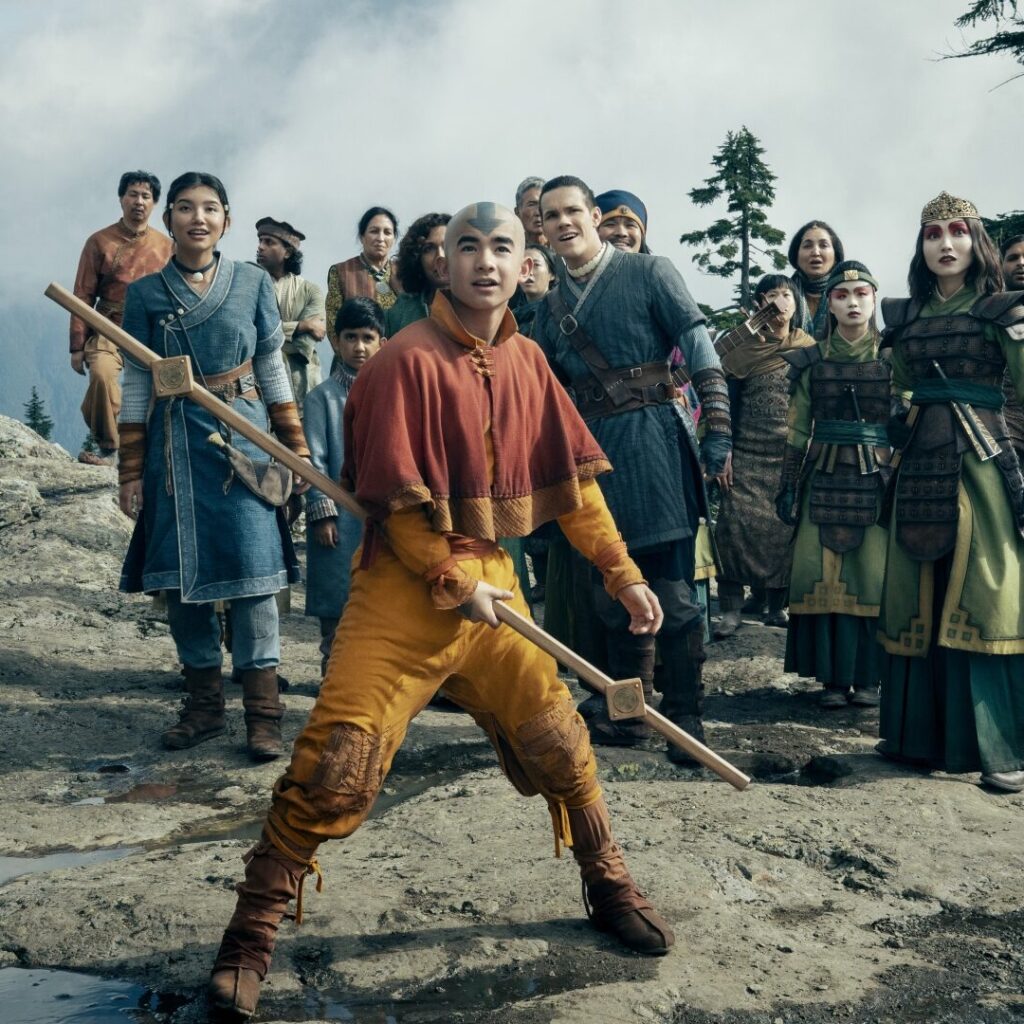
When I finished episode 2, I was cautiously optimistic. The show had found its footing, Toph was everything I hoped she’d be, and Zuko doing the dishes was somehow the most emotionally affecting scene of the whole season opener. I thought I knew what kind of show this was going to be.
Episodes 3 through 7 made me realise I had no idea.
This isn’t the same energy as the first two episodes. The tone shifts, the stakes get heavier, and by the time the finale hits, I was genuinely sitting with my jaw slightly open. In the best way. Mostly.
Quick Recap: What Happens in Episodes 3-7
Episode 3 – Welcome to Ba Sing Se (Now Please Stop Talking About the War)
The gang arrives at Ba Sing Se, the great Earth Kingdom city that’s supposed to be their safe haven. It immediately isn’t. Everyone gets separated and detained at the gates, and even after Toph pulls strings using her family name to get them released, the city feels wrong.
Enter Joo Dee, their cheerful, suspiciously helpful government-assigned guide, and Long Feng, the Cultural Minister who is definitely not hiding anything. The Earth King has apparently banned all mention of war inside the city. Anyone who brings it up gets quietly removed. Sai, their refugee contact, disappears overnight.
Toph clocks it immediately. The others take longer. Ba Sing Se isn’t a sanctuary, it’s a very polished cage.
Episode 4 – Cracks in the Wall
The political tension tightens. Sokka starts investigating Sai’s disappearance and learns from Professor Zei that people go missing in Ba Sing Se all the time, teachers, students, anyone who asks inconvenient questions. Katara starts sneaking out at night in a secret identity to help people in the lower districts. Aang keeps trying to get an audience with the Earth King and keeps being politely redirected.
Meanwhile, Zuko is hiding in the city doing manual labour, and Azula, brilliantly, infiltrates Ba Sing Se disguised as a Kyoshi warrior. She’s already inside the walls before anyone notices.
Episode 5 – The Spirit Library
The group finds a lead: a mythical spirit library, folded away from the physical world, that might contain the key to defeating the Fire Nation. Specifically, they’re looking for information about a solar eclipse, the “Day of Black Sun”, when Firebenders lose their powers entirely.
The library itself is one of the most visually interesting sequences of the season. A giant owl named Wan Shi Tong guards it, deeply distrustful of humans after being used before for warmongering. The gang has to promise their knowledge won’t be used to harm anyone. That goes about as well as you’d expect.
They find what they need. They also lose Jet, who sacrifices himself so the others can escape. And when they return, Appa is gone.
Episode 6 – Fever Dreams and Falling Apart
Zuko gets a fever. This sounds minor. It isn’t. The episode uses his illness as a vehicle for some of the most affecting flashback work of the season, his mother, Ozai, Azula, dragons, and he wakes up genuinely changed. He asks Iroh for a job at the tea shop. That’s it. That’s the scene. And somehow it hit harder than most of the action sequences.
Back in Ba Sing Se, Long Feng is tightening his grip. Azula is negotiating with him. The gang tries to get to the Earth King directly and it goes badly. Aang loses his temper in front of the King. Toph’s family connections to the Fire Nation get used against her. Everything is unravelling at once.
Episode 7 – The Finale
Ba Sing Se falls.
Azula’s plan, which she’s been executing quietly across multiple episodes, comes together in one clean move: she takes out Long Feng’s entire inner circle in a single room, then offers Long Feng an impossible choice. He folds. The city is hers.
Zuko and Katara share a cell and have the most human conversation either of them has had all season. Toph escapes her mother’s trap through sheer force of will (and metalbending). Aang finds Appa. And then, Aang gets struck down by Azula’s lightning while in the Avatar State.
The season ends with the group fleeing on Appa, Ba Sing Se behind them, Aang unconscious and barely alive.
What I Think About the Story
Ba Sing Se is doing something I wasn’t expecting from this show: it’s a political thriller.
The Fire Nation’s external threat is almost secondary for most of these episodes. The real danger is bureaucratic rot, a city so committed to the illusion of peace that it’s become complicit in its own downfall. Long Feng isn’t a firebender. He’s a minister. And he’s somehow scarier than Azula for most of the season because his power is invisible, quiet, and everywhere.
I loved that. It made the world feel genuinely complicated in a way that fantasy shows often avoid.
The comet’s ticking clock also started landing harder here. Finding out about the Day of Black Sun in episode 5 gave the group their first real strategic hope, and then the finale immediately reminded us how far they still have to go.
The Character Work – Still the Best Thing About This Show
Zuko’s Fever Break Is the Scene of the Season
I keep coming back to episode 6. Zuko’s fever sequences, the dragon dreams, his mother’s voice, the memories of Ozai telling him he doesn’t matter, are doing something genuinely moving. And then he wakes up and asks for a job at a tea shop, and I felt something shift.
The tragedy of the finale is that all of that growth gets undone in one moment. Azula offers him the one thing he’s spent his entire life chasing, his father’s approval, his honour back, his place in the family, and he takes it. He joins her side. He helps strike Aang down.
It’s devastating. And it works precisely because the show spent so much time making us believe he was finally, actually changing. The regression hurts because the growth felt real.
Azula Is Playing Chess While Everyone Else Plays Checkers
The Kyoshi warrior disguise is such a good move, both narratively and as a character beat. Azula doesn’t fight her way into Ba Sing Se, she walks in, because she studied the situation and found the gap. That’s who she is. She’s not just powerful; she’s patient and strategic in a way that makes her genuinely threatening.
Her conversation with Long Feng, where she lists his conspirators’ names, then explains she already told the Fire Nation generals about them, is the best villain scene of the season. She had the checkmate before he even sat down.
Katara Is Finally Getting Something to Do
Her secret identity storyline in episodes 4–6 gave her more agency than anything in season 1. Sneaking out at night to help people, confronting Jet, working alongside General Sung, she felt like a protagonist here rather than a supporting character. I want more of this.
Toph and Her Mother
The scene where Lady Beifong spikes Toph’s tea is a gut punch. It’s framed as a reconciliation, then revealed to be a trap. What makes it sting is that Toph almost believed it, and part of her wanted to. Her eventual escape through metalbending is triumphant, but the emotional hangover of that scene stays.
Moments That Stayed With Me
Wan Shi Tong eating Zei. I did not see that coming. The librarian who promised neutrality enforcing his rules in the most extreme possible way, on someone who technically violated the spirit of the agreement, was genuinely shocking. And a little darkly funny.
Katara and Zuko in the cell. Two people on opposite sides of a war, finding common ground over mothers taken too soon. It’s a quiet scene in the middle of a chaotic finale and it’s the most emotionally precise thing the season does.
Azula’s lightning striking Aang. The Avatar State is supposed to be the ultimate power. Watching it become a vulnerability, Aang hesitating, Azula not, was a brutal, effective ending.
Zuko choosing Azula. Knowing it was coming (if you’ve seen the animated series) doesn’t make it hurt less. Maybe it makes it worse.
What the Show Is Really Saying
Ba Sing Se functions as the season’s central metaphor. A city that refuses to acknowledge the war is not a city at peace, it’s a city in denial. And denial, the show argues, is its own kind of destruction. Long Feng’s control isn’t maintained through violence; it’s maintained through information management, through keeping people comfortable and ignorant.
Sound familiar? There’s a reason this arc hits differently as an adult than it probably does as a kid watching the animated version.
Zuko’s arc runs parallel to this. He spends the season slowly dismantling his own denial, about who he is, what he wants, whether his father’s approval is worth the cost. The fever break in episode 6 is him finally telling the truth to himself. And then Azula shows up with a better lie, and he chooses the lie. Because the truth is harder.
That’s not a villain arc. That’s a very human one.
What Works and What Doesn’t
What works: The Ba Sing Se political thriller storyline is the strongest sustained narrative the show has done. Azula’s slow takeover, executed across multiple episodes without calling attention to itself, is genuinely impressive plotting. Zuko’s arc is still the emotional backbone of the season and it earns its devastating finale beat. And the Spirit Library sequence is visually inventive in a way the show hasn’t quite reached before.
What’s less convincing: The gang’s internal conflict in episode 6, everyone snapping at each other over secrets, felt slightly rushed. These are tensions that deserved a little more runway before the blowup. And Jet’s sacrifice, while emotionally appropriate for his arc, happened quickly enough that I’m not sure it landed as hard as it should have.
The finale also has to carry a lot of weight across a lot of characters simultaneously, and a few threads (Sokka and Sai’s prison break, for instance) feel more functional than affecting.
Final Thoughts
I started this season expecting a solid fantasy adventure. What I got in episodes 3–7 was a show willing to let its city fall, its hero get struck down, and its most compelling character make the wrong choice at the worst possible moment.
That’s not what safe adaptations do. And whatever else you want to say about Avatar season 2, it’s not playing it safe.
Aang is unconscious. Ba Sing Se is occupied. Zuko is on the wrong side again. The comet is still coming.
Season 3 has a lot to answer for. I’ll be there.