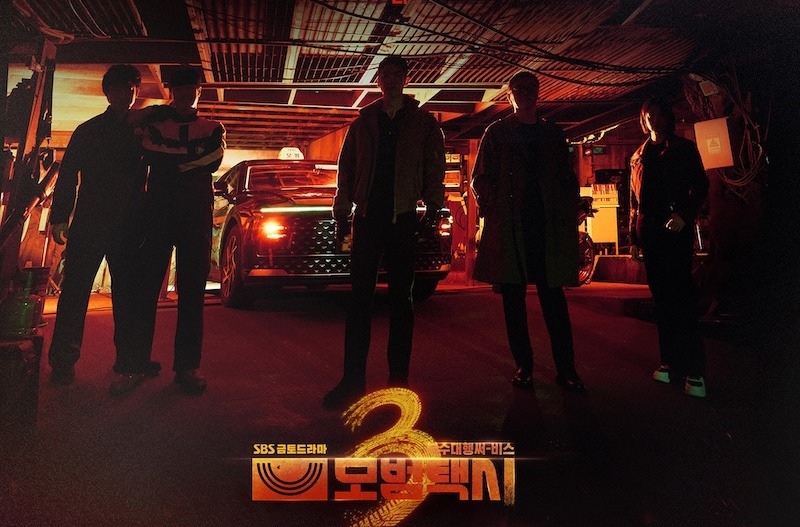
There’s a particular kind of silence that follows a finale that refuses to give you the catharsis you were promised. No triumphant arrest. No villain dragged off in handcuffs while a crowd cheers. Just a string of quiet, almost cryptic scenes that leave you staring at the credits wondering if you missed something. That’s exactly the trick Taxi Driver Season 3 pulls in its last episode, and honestly, it’s a braver choice than most revenge thrillers are willing to make.
For three seasons, Kim Do Ki has been the closest thing K-drama has to an untouchable avenger. He always wins. He always walks away. So when the finale dares to put that certainty in doubt, it does more than tease a cliffhanger, it forces us to ask what “winning” even means in a story about systemic corruption. Is Kim Do Ki still alive? Yes. But the more interesting question is what kind of victory he’s left with, and whether the show earns the ambiguity it leans on so heavily.
Let’s break down what actually happens, then dig into why it matters.
A Quick Recap: What Happens in the Finale
The final arc of Season 3 centers on Oh Won Sang, a disgraced former general whose career collapsed after he was exposed for serious misconduct, including sexual violence. Rather than accept consequences, he spirals into a delusion of national salvation, convinced that only martial law, with himself at the helm, can “save” the country. His plan involves staging a deadly incident, pinning it on North Korea, and using the resulting panic to seize power.
Yoon Seon Ah uncovers the plot before it can fully unfold. Her solution is brutal in its simplicity: she sacrifices herself to disrupt it. Her death doesn’t stop Oh Won Sang outright, but it cracks his plan open just enough for Kim Do Ki and the Rainbow Taxi crew to exploit later.
Crucially, this final job isn’t a client request, it’s personal. Kim Do Ki chooses to go after Oh Won Sang himself, fully aware of the risk to his own life. Former Rainbow Taxi clients return to help dismantle the execution plot, and in one of the season’s strangest, most memorable twists, a planned military execution gets disrupted not by gunfire but by a chaotic Elements concert. A sympathetic insider, Major General Jo Sang Hoon, feeds Kim Do Ki classified military access that makes the whole operation possible.
The climactic showdown between Kim Do Ki and Oh Won Sang is shown only in fragments, the show cuts away before we see a clean resolution. Later, Kim Do Ki resurfaces under a new disguise, confirming he survived. The Rainbow Taxi crew keeps operating on new cases. And in the final stinger, Rim Bok Sun, the twin sister of Season 1-2 antagonist Rim Bok Ja, appears, a clear setup for whatever comes next.
What’s Really Going On Underneath the Plot
Strip away the action-thriller mechanics and Season 3’s finale is doing something more pointed than its predecessors: it’s a story about institutional power, not individual cruelty.
Oh Won Sang isn’t a random psychopath. He’s a former general, someone who once held legitimate authority, and his crime isn’t just violence, it’s the attempt to manufacture a national crisis purely to reclaim that authority. That’s a meaningfully different villain than the corporate predators or street-level abusers of earlier seasons. He represents the danger of unaccountable power dressed up as patriotism, and the show seems acutely aware of how real that fear is in a country with its own history of martial law.
Against that backdrop, Kim Do Ki’s motivation shifts. He’s no longer simply responding to a client’s pain, he’s the one initiating the fight, because he understands that some threats are too structural to wait for a victim to ask for help. That’s a quiet but important evolution for his character: from reactive avenger to someone actively trying to dismantle the conditions that let people like Oh Won Sang exist in the first place.
And then there’s the concert. Turning a planned execution into a chaotic, half-absurd public performance is the finale’s boldest symbolic move. It argues, almost cheekily, that creativity and collective noise can disrupt violence as effectively as force can, that resistance doesn’t have to look like a gunfight to be powerful. It’s a strange beat tonally, but it lands as the show’s clearest statement of its values.
The Insight Most Viewers Miss
Here’s the part that doesn’t get talked about enough: Kim Do Ki’s survival is framed almost identically to his erasure.
He doesn’t return as a hero reclaiming his name. He returns in disguise, anonymous, already vanishing into the next identity. The show is quietly telling us that the price of his kind of justice isn’t death, it’s the permanent inability to ever just be himself again. Every victory pulls him further from any normal life, any fixed identity, any rest. That’s a much sadder ending than a literal death would have been, in a way, because it suggests his fight never actually ends; it just resets.
There’s also something worth sitting with in how Yoon Seon Ah’s sacrifice is treated. The show doesn’t dwell on her death for spectacle. It positions her not as a tragic side character, but as the actual turning point of the entire arc, the person whose choice made everything after possible. That’s a deliberate inversion of how these stories usually treat self-sacrifice, and it’s one of the finale’s more emotionally mature choices.
So, Does the Finale Actually Work?
Mostly, yes, with one significant caveat.
What works: the show trusts its audience enough to leave the central confrontation unresolved on screen, which is a riskier and more interesting choice than a tidy victory lap. The decision to make Oh Won Sang a former military figure chasing manufactured crisis gives the season’s stakes a sharper, more political edge than the earlier seasons managed. And Yoon Seon Ah’s arc gives the finale genuine emotional weight instead of just plot mechanics.
What doesn’t fully land: the editing. Cutting away from the Kim Do Ki vs. Oh Won Sang fight is thematically justified, but it also robs the audience of a payoff they’ve been building toward for three seasons. Ambiguity is a legitimate artistic choice, but there’s a fine line between “trusting the audience” and “withholding the climax you didn’t quite know how to film.” The finale sits closer to that line than it probably should. The concert twist, while symbolically rich, also moves so fast that its full impact gets a little lost in the shuffle of everything else the episode is trying to wrap up.
Taken as a whole, it’s a finale that prioritizes meaning over spectacle, admirable in theory, slightly frustrating in execution.
Final Thought: An Ending That Refuses to End
What Taxi Driver Season 3 ultimately argues is that justice, in a system this broken, doesn’t come with a finish line. Kim Do Ki doesn’t get to stop. He just gets to keep going, a little more hidden each time, a little further from whoever he used to be. The taxi changes its number, the operation goes quiet, but the thing driving it, the refusal to let cruelty go unanswered, doesn’t shut off.
That’s a harder, less comfortable note to end on than a clean victory. But it’s also more honest. The Rim Bok Sun tease confirms there’s more story coming, and if Season 4 is willing to keep asking what justice actually costs the people who chase it, this finale will have done its job, not by answering every question, but by making sure we’re still asking the right ones.