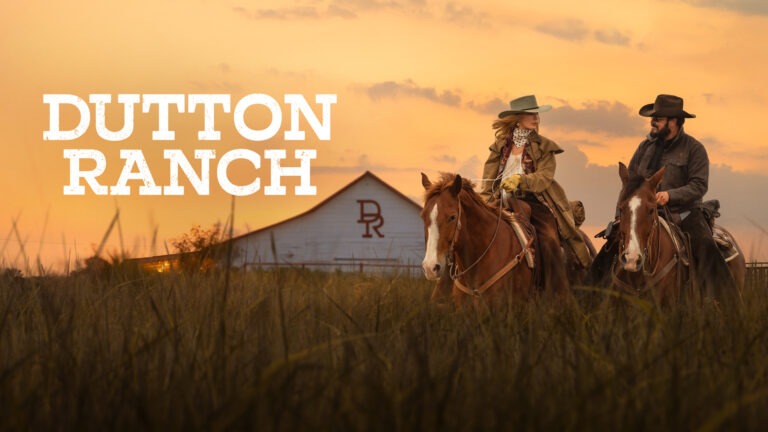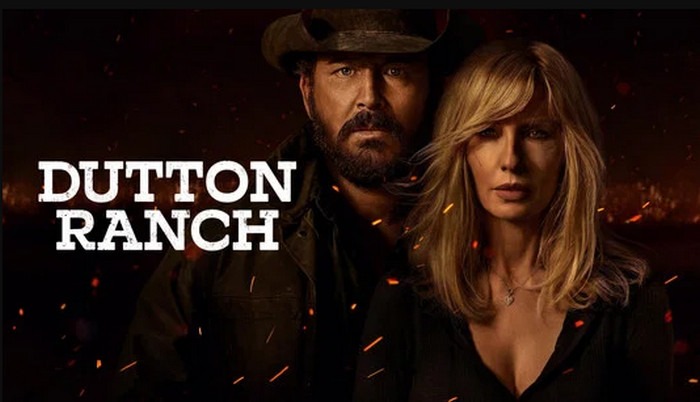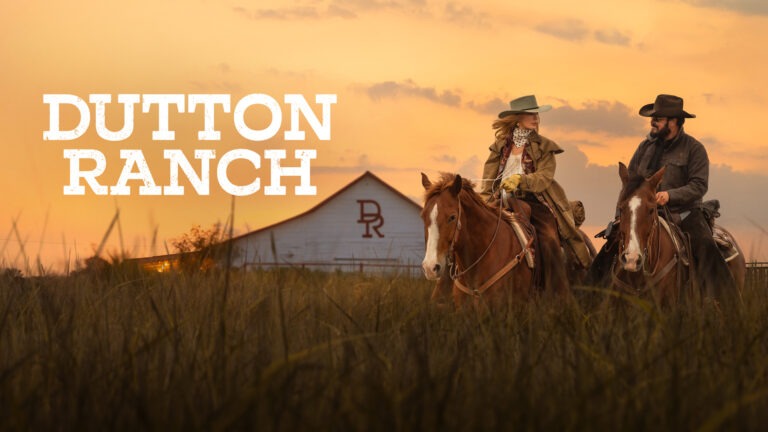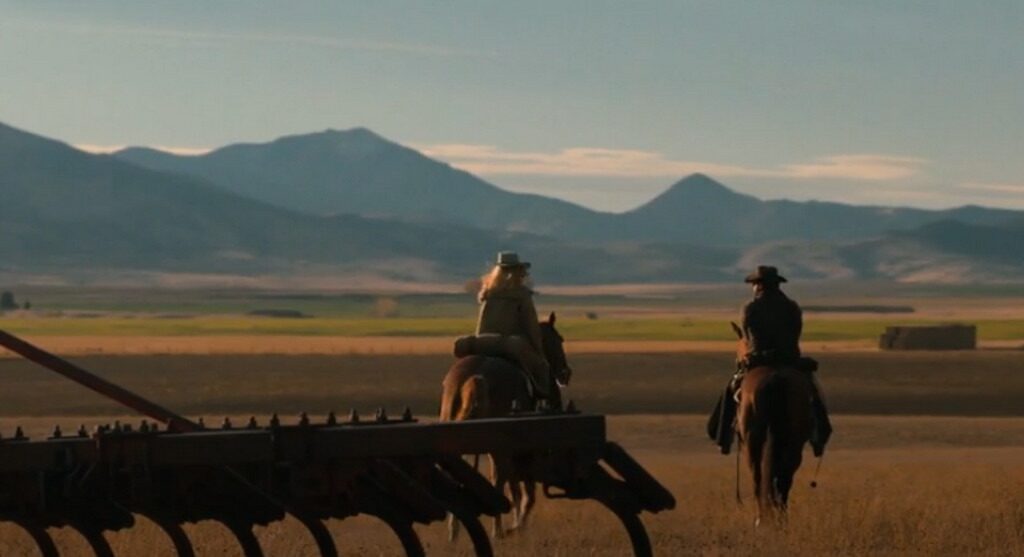
Dutton Ranch opens with peace, real peace, and that’s exactly why the fire hits so hard. Beth and Rip riding through the Yellowstone landscape at sunset feels almost painfully calm, like the show wants us to sit with that comfort for a little while before taking it away. The scene stretches just enough to let you breathe in the silence with them. No chaos. No politics. No fighting over land. Just two people who survived years of emotional warfare finally finding a rhythm that feels stable.
And honestly, watching Beth smile without looking like she’s preparing for battle felt strange in the best way.
That opening conversation under the tree stayed with me long after the episode ended. They promise each other they’ll always make time to ride together, and for a second it almost feels like the series could become something softer. Then the lightning flashes across the sky, and suddenly the entire mood changes without warning.
The wildfire sequence is filmed with this exhausting urgency that made me tense up immediately. Not because it’s overly dramatic, but because it feels practical and messy. Rip cutting fences to free cattle while Beth scrambles to grab Carter and salvage what they can carries the kind of panic people have when they already know they’re too late.
The ranch isn’t just property to them. It’s memory, identity, grief, history. Watching it burn felt less like losing land and more like watching the last piece of their former life collapse in front of them.
And maybe that’s why the six-month jump to Texas feels emotionally off-balance on purpose.
Texas Doesn’t Feel Like Home, And The Show Knows It
Rio Paloma looks harsh compared to Yellowstone. The heat practically radiates through the screen. Everything feels flatter, dustier, more hostile. Even the colors of the show seem different now, stripped of that cold Montana beauty people associate with the Yellowstone universe.
Beth and Rip buy a new ranch, but there’s an emptiness hanging around them. They’re surviving, not rebuilding. That distinction matters.
I actually liked that the episode didn’t spend too much time romanticizing the “fresh start” angle. A lot of shows would frame this as a new chapter full of hope. Dutton Ranch doesn’t. The atmosphere keeps reminding you these people are displaced. Even when Beth tries to handle business at the slaughterhouse, she immediately runs into another wall.
And that wall has a name: the Jackson family.
The introduction of Rob-Will Jackson is brutal in a very simple way. No long villain speech. No elaborate setup. He wakes Wes in the middle of the night and casually murders him over bookkeeping suspicions. The scene lands because of how cold and transactional it feels. Rob-Will doesn’t even come across as particularly intelligent or strategic. He just feels dangerous in the impulsive way that unstable people often do.
But the really interesting part is realizing he’s not actually the one in control.
Beulah Jackson immediately became the character I’m most curious about this season. She barely raises her voice, yet somehow dominates every scene she’s in. When Beth meets her at the slaughterhouse, the tension is immediate. Two women who are used to controlling rooms suddenly sharing the same air.
What I liked most is that the scene avoids turning into some exaggerated “girlboss showdown.” Beulah doesn’t need theatrics. She already owns the system around her. Beth slowly realizes the Jackson family controls nearly every important piece of Rio Paloma, from logistics to law enforcement to local business networks.
That realization unsettled me more than Rob-Will shooting someone.
Because violence is obvious. Systems are harder to fight.
Carter Feels Like The Emotional Wildcard
Carter’s storyline surprised me a little. It would’ve been easy to push him into generic troubled-teen territory, but the episode gives him moments that feel awkwardly authentic instead.
His scenes at school carry this uncomfortable loneliness underneath them. He doesn’t know how to exist in this environment yet. When Oreana notices him, you can almost see how badly he wants connection, even if he doesn’t fully trust it.
The rodeo sequence honestly made me cringe a little, in a believable way. Watching Carter fall for the oldest trick imaginable because a pretty girl paid attention to him felt painfully realistic. There’s something sad about how eager he is to belong somewhere.
But then the parking lot fight changes the tone instantly.
What stood out to me wasn’t the violence itself. It was how quickly Carter snapped once he saw Oreana being grabbed. The reaction felt impulsive, emotional, almost inherited. Like no matter how much distance they’ve put between themselves and Yellowstone, the Dutton instinct for aggression still lives inside him.
And now he’s already entangled with local law enforcement in Episode 1.
That feels intentional.
Oreana also clearly knows more people than she lets on. Her connection to Sheriff Wade immediately raises questions, especially because the episode frames Rio Paloma as a town where influence matters more than truth. I wouldn’t be surprised if Carter unknowingly becomes a pressure point both families eventually exploit.
Beth And The Horse Scene Quietly Says Everything
Oddly enough, my favorite scene in the episode might’ve been the injured horse storyline.
Beth meeting veterinarian Everett McKinney beside the road could’ve been filler, but it ends up revealing more about her emotional state than most dialogue-heavy scenes. When Everett prepares to euthanize the horse, Beth suddenly hesitates and begs him not to do it.
And for a moment, she sounds vulnerable in a way we rarely hear from her.
The horse is broken, displaced, suffering, and unlikely to fully recover anytime soon. Obviously the symbolism isn’t subtle, but it works because Kelly Reilly plays the scene with restraint. Beth choosing to save the animal despite the odds feels like she’s trying to convince herself that damaged things can survive if given enough time.
Maybe she needs that belief right now.
The scene also introduces Everett naturally without making him feel forced into the narrative. I already suspect he’ll become emotionally important later, especially considering how isolated Beth seems beneath her usual sharpness.
The Ending Makes The Entire Conflict Feel Bigger
By the time Rip discovers Wes’ half-buried body, the show finally reveals the shape of the season’s larger conflict.
Up until then, the tension mostly feels regional, rival ranches, business control, local hostility. But finding a corpse changes everything. Suddenly this isn’t just about territory or intimidation anymore. There’s a criminal thread running underneath Rio Paloma, and Rip has unknowingly stepped directly into it.
What makes the ending effective is how quiet it is.
No huge cliffhanger music. No exaggerated reveal. Just Rip standing there realizing he found something he absolutely was not supposed to find.
And honestly, that restraint is what made it work for me.
After some recent Yellowstone spin-offs started leaning too hard into procedural drama and overcomplicated side plots, Dutton Ranch feels refreshingly grounded again. The episode moves quickly, but it still allows scenes to breathe. Characters feel messy and human rather than written purely to push plot.
Most importantly, the show understands atmosphere.
You can feel the grief hanging over Beth and Rip even when nobody says it out loud. You can feel how foreign Texas feels to them. And you can already sense that this town operates under rules the Duttons don’t fully understand yet.
The feeling that everyone here is carrying around damage they haven’t fully processed yet. And Rio Paloma looks like the kind of place that knows exactly how to use that against them.
Final Review
I ended up liking this premiere much more than I expected to. Dutton Ranch doesn’t reinvent the formula, but it returns to the emotional texture that made the earlier Yellowstone stories compelling in the first place. The tension feels personal again instead of overly manufactured.
Beth and Rip remain the emotional core of the show, but Carter’s instability and the quiet menace of the Jackson family give the series enough momentum moving forward. The wildfire opening also immediately gives the season emotional weight instead of forcing viewers to wait several episodes for investment.
Most importantly, the episode trusts silence and atmosphere more than exposition. That alone makes it feel stronger than several recent entries in this universe.
The premiere succeeds because it understands that loss changes people long before revenge ever does. And by the end of Episode 1, it already feels like everyone in Rio Paloma is heading toward a collision that won’t stay contained for very long.
Next: Dutton Ranch Episode 2
Disclaimer: As an Amazon Associate, I earn from qualifying purchases. This means if you click on any of the links below and make a purchase, I may receive a small commission from Amazon at absolutely no extra cost to you. Thank you for supporting my blog!
Bring the Dutton Ranch Vibe to Your Home
Obsessed with the rugged style and intense drama of this episode? You don’t have to just watch the cowboy lifestyle, you can own a piece of it! Here are the top-rated items every true Yellowstone fan needs to check out on Amazon right now:
- The Ultimate Collector’s Choice: Want to relive the entire Dutton family legacy from the very beginning? Grab the Paramount Home Ent Yellowstone: Dutton Legacy Collection Blu-Ray Boxed Set. It includes the main series and the hit prequels, making it the perfect binge-watch companion.
- Get the Rip Wheeler Look: Channel your inner ranch foreman with the iconic Rip Wheeler Yellowstone Black Denim Jacket. It’s tough, stylish, and built to handle everyday wear just like Rip.
- Everyday Ranch Wear: Looking for something casual? Show your loyalty to the brand with this authentic Yellowstone Dutton Ranch Logo Brown Washed Cap. It has that perfect, gritty Western aesthetic.