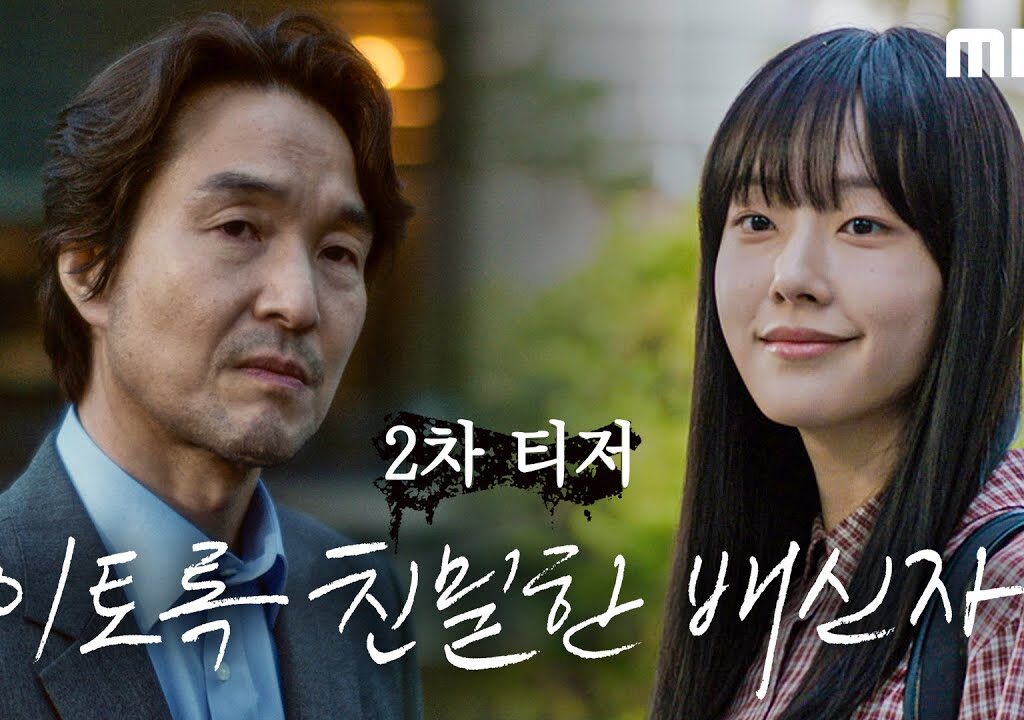
What if the person you’re trained to understand… is your own child, and she might be hiding something terrible?
That is the unsettling question at the heart of Doubt, one of the most psychologically intense Korean dramas in recent years. Rather than relying on fast-paced twists or obvious villains, the series builds its tension through fractured family relationships, emotional trauma, and the constant uncertainty of truth.
In this Doubt K-drama Episodes 1-5 review, the mystery surrounding Min-ah’s disappearance and Su-hyeon’s death grows increasingly tangled, but the real emotional conflict lies elsewhere: between profiler Jang Tae-soo and his daughter Ha-bin, whose unsettling behavior makes every interaction feel like a warning sign.
By Episode 5, Doubt has already proven itself to be more than a murder mystery. It is a story about fear, damaged trust, emotional isolation, and the dangerous consequences of suspicion inside a family.
Doubt K-Drama Episodes 1–5 Recap
Episode 1
Criminal profiler Jang Tae-soo investigates a skeleton found in the forest while struggling with his estranged daughter, Ha-bin. A separate case emerges involving a large pool of blood in a warehouse. Suspicion begins to build when Ha-bin is linked to petty crime and behaves strangely. The episode ends with Tae-soo fearing she may be connected to the case.
Episode 2
Clues begin pointing toward a runaway girl, Min-ah, who may be the victim. Evidence, like a red thread, connects Ha-bin to the crime scene. Tae-soo’s past surfaces, revealing he once suspected his own daughter of causing harm. Meanwhile, Ji-yeon claims Ha-bin was the last person to see Min-ah alive, and a child’s death from Ha-bin’s past resurfaces.
Episode 3
Ha-bin provides an alibi, but inconsistencies appear. Tae-soo discovers she left her hotel room on the night of the murder. The investigation reveals a network of runaway teens tied to Young-min. Meanwhile, Tae-soo is framed for bribery, and forensic evidence links the skeleton case to the current murder.
Episode 4
The narrative deepens as it’s revealed Ha-bin orchestrated a plan involving Min-ah. The skeleton is identified as Su-hyeon, Ha-bin’s former friend. A shocking twist emerges: Tae-soo’s late wife, Ji-soo, may have helped bury the body. Ha-bin manipulates situations to keep Tae-soo away from the truth.
Episode 5
Ji-soo’s past is uncovered through therapy recordings, suggesting she believed Ha-bin may have killed Su-hyeon and covered it up. Tae-soo confronts the possibility that his daughter lacks empathy. Meanwhile, his own past cruelty toward Ji-soo comes to light, complicating his role as both investigator and father.
At this point, the real mystery is no longer just Min-ah’s murder. The deeper question is whether Ha-bin is truly dangerous, or whether everyone around her has already decided she is.
Story Analysis: Why Doubt Works as a Psychological Thriller
At its core, Doubt isn’t just a crime thriller, it’s a psychological battlefield.
The central conflict is deceptively simple: a series of murders tied to a group of troubled teens. But beneath that lies a far more disturbing question: What happens when the person you’re supposed to trust most becomes your biggest uncertainty?
The show leans heavily into themes of:
- Parental failure and guilt
- The fragility of truth
- Trauma shaping perception
- Moral ambiguity
Tae-soo’s profession as a profiler makes the irony sharper. He can dissect strangers with clinical precision, yet when it comes to Ha-bin, his judgment is clouded, either by doubt or denial. The narrative constantly asks: is he seeing clearly, or is he projecting his guilt?
Meanwhile, the structure of the story mirrors its theme. Each episode adds information that doesn’t clarify, but complicates. The audience is forced into the same mental state as Tae-soo: constantly reassessing, never fully certain.
Doubt constantly pushes viewers into an uncomfortable position: judging people before knowing the truth. And that discomfort is exactly what makes the series so effective.
Character Development: Fractured People in a Fractured Story
Jang Tae-soo: A Man Who Doubts Too Much
Tae-soo begins as a composed, almost detached profiler. But that image slowly cracks.
His past actions, locking his daughter up, suspecting her of harm, telling his wife to kill herself, paint a far darker picture. He isn’t just a flawed father; he may be one of the key reasons his family fell apart.
What makes him compelling is that he’s not entirely wrong to doubt. The tragedy is that his doubt may have *created* the very monster he fears.
Ha-bin: The Enigma at the Center
Ha-bin is easily the most unsettling character.
She’s calm, intelligent, and disturbingly controlled. Her actions, manipulation, calculated moves, emotional detachment, suggest someone who sees the world very differently.
But the show resists giving easy answers. Is she a sociopath? A traumatized child shaped by her father’s suspicion? Or someone forced to survive in a broken environment?
Her lack of visible emotion becomes a narrative weapon. Every smile feels suspicious. Every silence feels loaded.
Ji-soo: The Silent Tragedy
Even in death, Ji-soo becomes central to the story.
Through therapy recordings, we see a woman caught between fear and protection, terrified of what her daughter might be capable of, yet willing to bury the truth to protect her.
Her arc reframes everything. She wasn’t just a victim, she was carrying a burden no one else could see.
Supporting Characters: Layers of Uncertainty
Characters like Young-min, Dae-hong, and Eo-jin are not just side players, they add to the web of distrust.
- Young-min embodies chaos and manipulation.
- Dae-hong feels suspiciously secretive.
- Eo-jin represents logic, but even she struggles to piece things together.
No one feels entirely clean.
Key Moments & Turning Points
Several scenes fundamentally shift the narrative:
- The red thread discovery: A small detail that becomes a major link between Ha-bin and the crime.
- Ha-bin burning the keychain: A quiet but powerful act of possible evidence destruction.
- Dashcam footage reveal: Shatters Ha-bin’s alibi and deepens suspicion.
- Ji-soo burying the body (video): One of the most shocking reveals, turning the story into a family tragedy.
- Therapy recordings: These scenes reframe Ha-bin not just as suspicious, but potentially dangerous.
- Tae-soo’s past confession: Reveals he may not be morally superior to anyone he investigates.
Each moment doesn’t resolve tension, it amplifies it.
Hidden Meanings & Deeper Insights
What makes Doubt stand out is how it uses crime as a lens to explore emotional truth.
1. The Title as a Theme
“Doubt” isn’t just about the mystery, it’s the emotional core of the story. Every relationship is poisoned by it:
- A father doubts his daughter
- A mother doubts her own instincts
- The audience doubts everyone
2. Emotional Detachment as Survival
Ha-bin’s lack of empathy may not simply be a condition, it may be a defense mechanism. Growing up under constant suspicion could have shaped her inability to trust or express emotion.
3. Truth vs. Perception
The show suggests that truth is not objective, it’s filtered through trauma, guilt, and memory. Tae-soo’s perspective, in particular, is unreliable.
4. Cycles of Damage
Tae-soo’s actions toward Ji-soo and Ha-bin hint at a cycle: suspicion leads to isolation, which leads to more extreme behavior, reinforcing the original suspicion.
Doubt K-Drama Review: What Works and What Doesn’t
What Works
The strongest part of Doubt is its psychological tension. The series creates suspense not through constant action, but through silence, implication, and emotional uncertainty. Every scene between Tae-soo and Ha-bin feels heavy with unspoken fear.
The performances are exceptional, particularly Han Suk-kyu and Chae Won-bin. Han brings controlled emotional exhaustion to Tae-soo, while Chae makes Ha-bin almost impossible to read, calm, detached, yet deeply unsettling.
The writing also deserves praise for trusting viewers to piece together its mystery rather than overexplaining everything.
What Doesn’t
At times, Doubt risks becoming overly complex. New clues and side mysteries appear so frequently that some viewers may feel overwhelmed instead of intrigued.
Several supporting characters still feel intentionally vague, which strengthens the atmosphere of suspicion but occasionally weakens emotional investment.
The pacing is also slow and detail-heavy, meaning this drama demands full attention rather than passive viewing.
By Episode 5, the show has offered more questions than answers, and strangely, that is where its greatest strength lies.
Conclusion: A Story About Truth, Fear, and the Cost of Doubt
Five episodes in, Doubt has established itself as one of the most compelling Korean psychological thrillers in recent memory.
What makes the series stand out is not simply its murder mystery, but the way it examines fear, guilt, emotional damage, and the devastating effect of distrust within a family. The series does not offer easy answers, and that uncertainty becomes its greatest strength.
By Episode 5, the truth remains hidden behind half-truths, broken memories, and emotional wounds. But one thing is already clear: Doubt is not really asking who the killer is.
It is asking what happens when doubt becomes stronger than love.