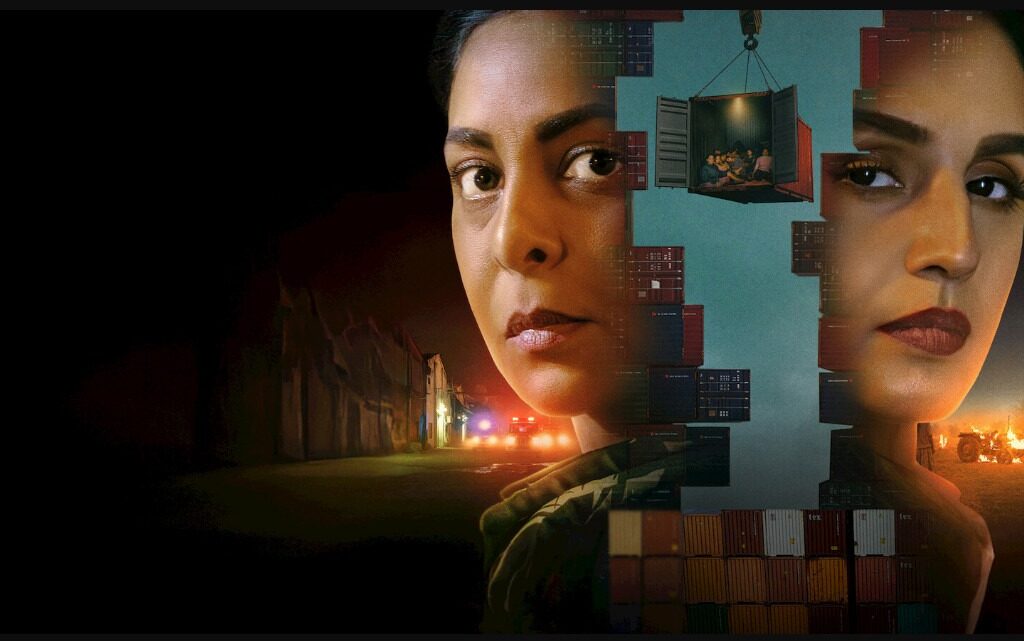
There is a particular kind of dread that Delhi Crime Season 3 opens with, not the loud, jump-cut kind you find in lesser crime dramas, but something slower, more suffocating. A badly injured infant. A hospital room. A silence that implies a story no one wants to tell.
And then, almost without warning, the season doubles its weight. Hundreds of kilometers away, DIG Vartika Chaturvedi pulls over a truck she expects to contain weapons. She finds girls instead. Terrified, deceived, transported under the fiction of job opportunities. That image, law enforcement expecting violence and finding something worse, sets the moral compass for everything that follows.
The Case That Refuses to Stay Simple
What could have been a straightforward child abuse investigation refuses to stay simple for long. Baby Noor’s case, at first glance a tragedy of domestic violence, is quietly stitched into something far larger: an organized trafficking network spanning Assam, Mizoram, Delhi, Haryana, Rajasthan, Surat, and eventually Mumbai.
DCP Neeti Singh anchors the Delhi end of the story while Vartika connects the interstate dots. The procedural rhythm here is careful and deliberate, not in a way that drags, but in a way that earns each revelation. You understand why the writers make you wait.
Rahul and Kalyani emerge early as key links between the infant case and the trafficking operation. Kalyani in particular is a fascinating, unsettling creation: a broker who recruits vulnerable women using the language of opportunity. Her arrest feels like a breakthrough. Her assassination outside a courtroom, in broad daylight, feels like a reminder that the police have only touched the surface.
The Architecture of Exploitation
What the show does exceptionally well is map the infrastructure of trafficking without ever reducing it to statistics.
The Haryana storyline is among the most uncomfortable the season produces. Community marriages that are, in practice, transactions. Young girls traded as brides in districts with severe gender imbalance. Survivors like Shabnam Bano carry these revelations, not as victims framed for audience sympathy, but as women who understand exactly what was done to them and why it was allowed to happen.
At the center of the network sits Meena, known throughout the operation simply as “Didi.” She is not written as a monster, which is precisely what makes her disturbing. Her past, a childhood scarred by forced marriage, doesn’t excuse her. But it explains the cold logic she uses to justify what she does. She is the cycle made human: someone who survived exploitation by learning to run it.
The Scene That Reframes Everything
The Baby Noor reveal is the season’s most emotionally disorienting moment, and intentionally so.
Khushi, a trafficked teenager, is the one who harmed the infant, not out of cruelty but out of exhaustion and trauma so profound it bypassed judgment entirely. The scene doesn’t ask you to forgive her. It asks something harder: whether guilt can even be assigned cleanly when someone has been systematically broken long before they cause harm.
That question sits with you for the rest of the series.
Characters Who Do the Work
Vartika remains one of Indian television’s most compelling investigators, not because she’s infallible, but because the show is honest about what sustained exposure to this kind of work costs. She doesn’t crack, but you can see the weight of it.
Sonam, a trafficking victim who quietly observes rather than panics, becomes unexpectedly central to the climax. Her arc is a deliberate counterpoint to the passive-victim trope: she is a survivor who acts, who notices, who contributes to her own rescue.
The international buyer subplot, represented by John Gupta, is the season’s most underexplored thread. He exists, he’s arrested, and the demand side of the equation is acknowledged, but not examined. It is one of the few places where the writing flinches.
Mumbai, and What Closure Actually Looks Like
The final confrontation in Mumbai, Vartika facing Meena as 30 girls wait in a shipping container, lands with genuine tension. Meena’s last attempt to reframe her crimes as social commentary falls apart under the weight of what’s in that container.
Her death closes the case. It does not close the question.
Because the season earns its ambiguity: networks like this one don’t die with their architects. The demand that created Meena still exists. The poverty and gender imbalance that made recruitment easy still exist. What the police saved was real and significant. What they didn’t reach is the show‘s final, uncomfortable thought.
Final Verdict
Delhi Crime Season 3 is not comfortable television, and it doesn’t try to be. It is a procedural that understands its subject well enough to know that efficiency and justice are not the same thing. The pacing stumbles occasionally under the weight of multiple simultaneous storylines, and a few subplots, particularly around international trafficking buyers, deserved more room to breathe.
But the core of it is strong: grounded performances, a story that trusts its audience, and a refusal to let either the police or the audience feel too clean at the end.
Rating: 8.5/10
Disturbing not because of what it shows, but because of what it makes you understand.