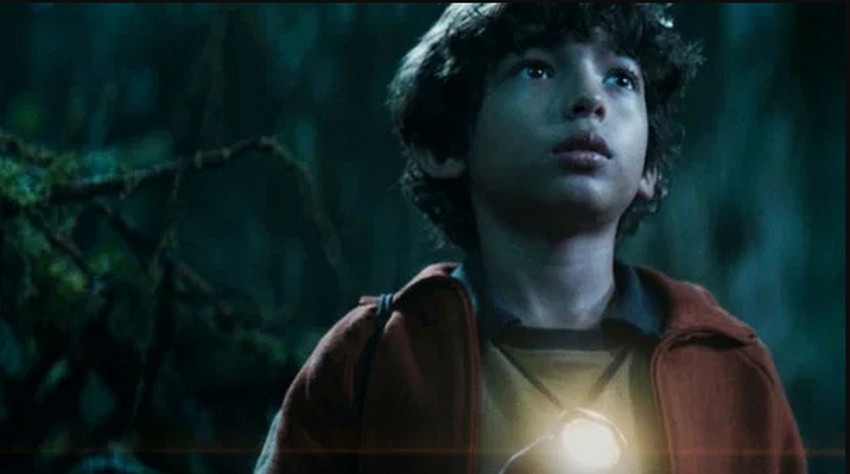
I’m Not Afraid kicks off with a jolt: a boy named Miguel wakes up flat on his back in the middle of the woods, disoriented and clearly hurt from a bad fall. His friends Chava, Calavera, and Maria are close by, calling out his name. Before we can catch our breath, Miguel scrambles upright and stumbles onto something nobody was prepared for: a hatch buried in the dirt. He pries it open, and inside is a makeshift bed with a kid chained to it. Miguel says the boy is Chuy. And just like that, the show has our full attention.
Back to ’86: A World Cup Summer and a Local Legend
From there, the episode rewinds to 1986, right in the middle of the World Cup. A younger Miguel is out kicking a ball around with his friends when talk turns to a local legend about an evil witch supposedly living in the Misty Forest. The story goes that anyone who wanders in there never comes back out. The kids, being kids, mostly roll their eyes at it. But the show uses this stretch to slow down and let us actually sit with these characters at home, and that’s where things get more interesting than a simple ghost story.
Felix and Chuy are living with their father Ramon, an alcoholic who’s checked out of being a real parent. There’s a heaviness to their scenes, the kind that comes from kids trying to hold a household together that an adult should be holding together instead. Miguel’s home life reads very differently. He and his sister Maria have two parents who clearly love them, Teresa and Pino, but the family is buried under serious financial strain. It’s not a happy household versus a broken one so much as two different flavors of hardship, and the show doesn’t rush past either of them.
Chuy Vanishes Without a Trace
Then morning hits and everything changes. Chuy and his parents are simply gone. Their house looks ransacked, and the immediate assumption among the adults is that they’ve been robbed. When the kids go snooping around on their own, they notice Chuy’s bike is missing too, which only deepens the mystery. It’s a genuinely unsettling turn, made worse by how ordinary the setup was just one scene earlier.
Five Years Earlier: Leaf Rust and a Truck They Can’t Afford
The episode then jumps back even further, to 1981, showing Felix working the fields alongside Pino and the rest of the men in town. Despite a good harvest, a raise isn’t even up for discussion for another eight months, which tells you everything about how tight things already are. Pino, never one to think too far ahead financially, talks Teresa into buying a truck on loan by painting a rosy picture of the life it’ll give them. She’s hesitant, but she eventually agrees. It’s a small decision that carries real weight once you see how precarious their finances already are.
Underneath all of this domestic drama sits a much bigger problem: leaf rust is spreading through the region’s crops. It’s already devastated harvests in Colombia, and it isn’t long before Mexico starts feeling the same effects. A year goes by, and the crops are wiped out entirely. The townsfolk are forced to burn their own fields, hoping it’ll stop the infection from spreading further, but there’s no guarantee it’ll work. This isn’t just background texture, either. It’s the slow-burning crisis that explains exactly why families like Miguel’s are struggling so hard to stay afloat.
The Witch’s House and the Hatch in the Ground
Back in the present timeline, Chava, Maria, and Calavera finally make their way to the abandoned house where the supposed witch is said to live. Miguel is the one who goes in alone, and while he’s poking around the orchard out back picking fruit, he loses his footing and falls, landing exactly where the episode began. It’s a smart bit of structuring, looping the opening scene back around so we finally understand how he got there. Rattled and confused, Miguel rejoins his friends without saying much of anything, unsure whether what he saw in that hole under the ground was even real.
That night, back home, Pino announces he’s heading out of town for a few days for work. Miguel barely sleeps, his mind stuck on the chained kid he thinks he saw. Was it real? Did he imagine it? The next day, he can’t shake it, so he goes back to the house alone to find out for himself. He opens the hatch again, and this time there’s no doubt. A chained kid looks straight back up at him.
The Episode Review
For a series premiere, I’m Not Afraid does a genuinely solid job of balancing its two halves. On one hand, you’ve got this creeping, superstitious dread built around the Misty Forest legend and whatever’s happening in that buried hatch. On the other, there’s a grounded, almost slow-cinema patience to how it handles the family dynamics, especially the financial pressure crushing Pino and Teresa’s household. The World Cup setting isn’t just a nostalgic backdrop, either. It works as the connective tissue that ties the different timelines together and gives the whole hour a sense of place.
What struck me most is how the show refuses to treat the horror elements and the domestic drama as separate stories running in parallel. The leaf rust plotline, on its own, could read as a dry economic subplot. But because we already know it’s pushing this village further into poverty, and we’ve already met kids who are one bad year away from losing everything, it lands with more weight than it has any right to for a farming crisis from 1981. That’s smart writing, letting one thread quietly explain the emotional stakes of another without spelling it out.
The final reveal is the real gut-punch here, though. Finding that chained kid isn’t just a jump-scare moment. It reframes everything we just watched, Chuy’s disappearance included, and immediately raises the question of whether this is where he’s been the whole time. It’s a genuinely effective cliffhanger because it doesn’t feel like a cheap twist; it feels earned, built on an hour of groundwork.
Is this a perfect premiere? Not quite. The time jumps ask a lot of viewers early on, and it takes a beat to orient yourself across three different years. But as opening episodes go, this one does what it needs to: it sets up a mystery worth following, gives its characters enough texture that you actually care what happens to them, and ends on a note that makes the next episode feel necessary rather than optional.