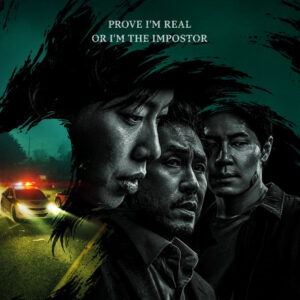
Episodes 5 and 6 of The Art of Sarah mark a decisive turning point in the series. What initially looked like a high-society fraud case now unfolds into something far more intricate, an intellectual duel between a con artist who thrives on loopholes and a detective running out of time. These two episodes peel back Sarah’s carefully curated persona while raising even bigger questions about identity, class, and calculated deception.
Rather than giving viewers straightforward answers, the drama doubles down on ambiguity. Sarah speaks openly, almost generously, about her past. Yet the more she reveals, the harder it becomes to pin her down.
How Sarah Built a Brand Out of Illusion
Episode 5 opens with a shocking development: someone repays the full 15 billion won that Yeo-jin embezzled and invested in Boudoir. This single transaction destabilizes the investigation. Without frozen accounts or clear financial loss, the fraud case weakens instantly.
Mu-gyeong pushes forward regardless. He believes public pressure will corner Sarah. But before he can even announce her name at a press conference, she walks in voluntarily. It is a bold move, one that immediately shifts the power dynamic.
During interrogation, Sarah maintains composure. She admits to crafting an image but denies committing a crime. She explains Boudoir’s business model with startling clarity: bags made in Seoul, handles produced in England, legally allowing the “Made in England” label. Low production cost. High exclusivity. Carefully engineered scarcity. Word-of-mouth prestige.
It is branding, not fraud, at least technically.
Flashbacks reveal her transformation from Du-a, an escort, into “Sarah Kim,” a supposedly wealthy Korean American. With help from Seong-sin and elite social circles, she constructs a persona that society is eager to believe. After all, exclusivity often depends more on perception than truth.
Even the brand’s fabricated 100-year British heritage is never directly stated by Sarah. Instead, others spread the myth for her. Rumors become marketing. Gossip becomes credibility.
When confronted about knock-off Boudoir bags, she casually admits she manufactured them herself, arguing that imitation signals success. Again, not illegal.
The investigation collapses further when Yeo-jin refuses to identify herself as a victim. If Boudoir is legitimate, her embezzlement becomes an “investment.” With no complainant and no airtight charge, Sarah walks free.
But the episode’s final act rewrites everything.
In a haunting flashback to Christmas 2018, Sarah chooses her alias from a magazine. After splurging extravagantly and donating money, she attempts suicide, only to stop when the stolen silver bag glitters under moonlight. Instead of dying, she rewrites her apology into a glowing review for Boudoir, even embedding the fake 100-year history.
Reinvention, once again.
Back in the present, Mu-gyeong notices something unusual in the interrogation tapes. Sarah references freezing to death, a detail never released publicly about Jane Doe. That slip allows him to arrest her for murder.
Yet even here, Sarah anticipates the law. Without a warrant, she must be released in 48 hours, and cannot be rearrested without new authorization. She smirks. The clock starts ticking.
The Investigation Tightens-and Expands
Episode 6 escalates the psychological tension. Mu-gyeong tries to provoke a confession, challenging Sarah to prove her innocence. She agrees to a DNA swab, knowing it will not match any database record. She calculated this outcome in advance.
With no progress, Inspector Lee is assigned to take over. But Sarah refuses to cooperate unless Mu-gyeong returns. In a rare moment of vulnerability, she comments on class disparity, how some people receive power and protection by birthright, while others must claw their way up.
This theme deepens as new evidence surfaces.
Sarah’s timeline places her at Samwol Department Store after the Boudoir launch party. Investigators discover the department store was secretly building a Boudoir branch, until it was abruptly dismantled. CCTV footage is erased.
Chairman Choi Chae-u initially denies involvement, but Mu-gyeong corners her. She admits deleting footage that showed Sarah dragging a suitcase, possibly containing a body,to the trash chute. She claims she acted to protect her business, not Sarah.
Their confrontation exposes mutual corruption. Both secretly record each other. In a symbolic gesture of fragile trust, they destroy their phones and agree to cooperate.
Flashbacks then reconstruct Sarah’s meticulous strategy at Samwol. Rejected by executive Kim Hong-mi, Sarah orchestrates social humiliation to manipulate Chairman Choi’s ego. She engineers rumors, seduction, and calculated “accidents” to position Boudoir as the next big luxury obsession.
She eliminates obstacles efficiently. Hyo-eun is blacklisted. Hong-mi is fired under false accusations. Chairman Choi becomes emotionally invested in Boudoir as both business opportunity and personal validation.
One critical detail resurfaces: weeks of rumors about a drunken “Sarah Kim” causing scenes across town. At the launch party, Chairman Choi sees a woman identical to Sarah, same build, same outfit, same hairstyle.
At the venue, forensic evidence confirms something unsettling. The DNA on sewing pins used during dress fittings matches Jane Doe. But it does not match blood or partial prints from the crime scene.
The implication is chilling.
Sarah may have used a double.
The Most Important Scenes That Shifted Everything
Several moments stand out across these episodes:
- Sarah’s interrogation in Episode 5: She confesses and denies simultaneously, redefining fraud as branding genius.
- The Christmas 2018 flashback: Her aborted suicide attempt reframes Boudoir as both survival mechanism and rebirth.
- The 48-hour legal loophole: Sarah weaponizes procedure against law enforcement.
- Chairman Choi’s erased CCTV confession: Evidence destruction exposes elite hypocrisy.
- The identical launch party figure: The possible existence of a double changes the entire murder narrative.
These scenes transform the show from a financial crime drama into a layered psychological thriller.
Twin Theory and Lingering Questions
The “twin theory,” once dismissed, now resurfaces with new weight. Could Jane Doe have been someone deliberately molded to resemble Sarah? Or was she manipulated into playing a role she did not fully understand?
Other unanswered questions linger:
- If Sarah engineered a double, how did she recruit her?
- Why does the DNA partially match some evidence but not others?
- Did Chairman Choi unknowingly assist in covering up murder?
- And perhaps most importantly, what is Sarah’s true endgame?
The show cleverly mirrors Sarah’s manipulation by misleading viewers. Just as characters are deceived, so are we.
Final Thoughts & Rating
Episodes 5-6 represent one of the strongest stretches of The Art of Sarah so far. The writing is sharp, layered, and confident. Sarah evolves from a mysterious figure operating in shadows into a fully realized manipulator whose intelligence feels both frightening and impressive.
Shin Hye-sun delivers a standout performance, seamlessly shifting between vulnerability and calculation. Her ability to command interrogation scenes makes every exchange feel like a chess match.
However, one weakness persists: Mu-gyeong remains underdeveloped. While hints of class resentment add dimension, his character still feels restrained compared to Sarah’s complexity. Hopefully, this groundwork leads to deeper exploration in upcoming episodes.
Overall, these episodes elevate the series from intriguing to gripping. The narrative is tighter, the stakes are higher, and the moral lines are increasingly blurred.
Rating: 9.5/10
The Art of Sarah is no longer just about a con artist selling luxury bags. It is about reinvention, social hierarchy, and the thin line between branding and deception. And as the layers peel away, one thing becomes clear, Sarah is always three steps ahead.