There are some dramas that are easy to move on from, and then there are stories that quietly stay with you. Life on Mars (2018) falls into the second category. It’s the kind of drama that feels different every time it’s rewatched, and somehow, it keeps pulling me back in.
Maybe it’s because of the time travel element. Or maybe it’s the emotional weight hidden beneath its crime-solving surface. Either way, this OCN series manages to blend mystery, humor, and introspection into something that feels both entertaining and strangely personal.
Adapted from the British series of the same name, the Korean version doesn’t just copy, it reshapes the story into something more grounded in emotion, memory, and identity.
When a Rational Mind Is Forced Into an Irrational World
Han Tae Joo is not your typical detective. He is cold, methodical, and completely reliant on evidence. As a forensic expert leading a major crime investigation team in Seoul, he believes in data more than people.
That belief is tested the moment everything changes.
While chasing a serial killer with a disturbing signature, victims who receive nail care before being murdered, Tae Joo gets into an accident. When he wakes up, the world is no longer familiar. It’s 1988.
- No advanced forensics.
- No DNA testing.
- No CCTV.
- No databases.
Just instincts, old-school policing, and a team that operates in ways he can’t fully understand.
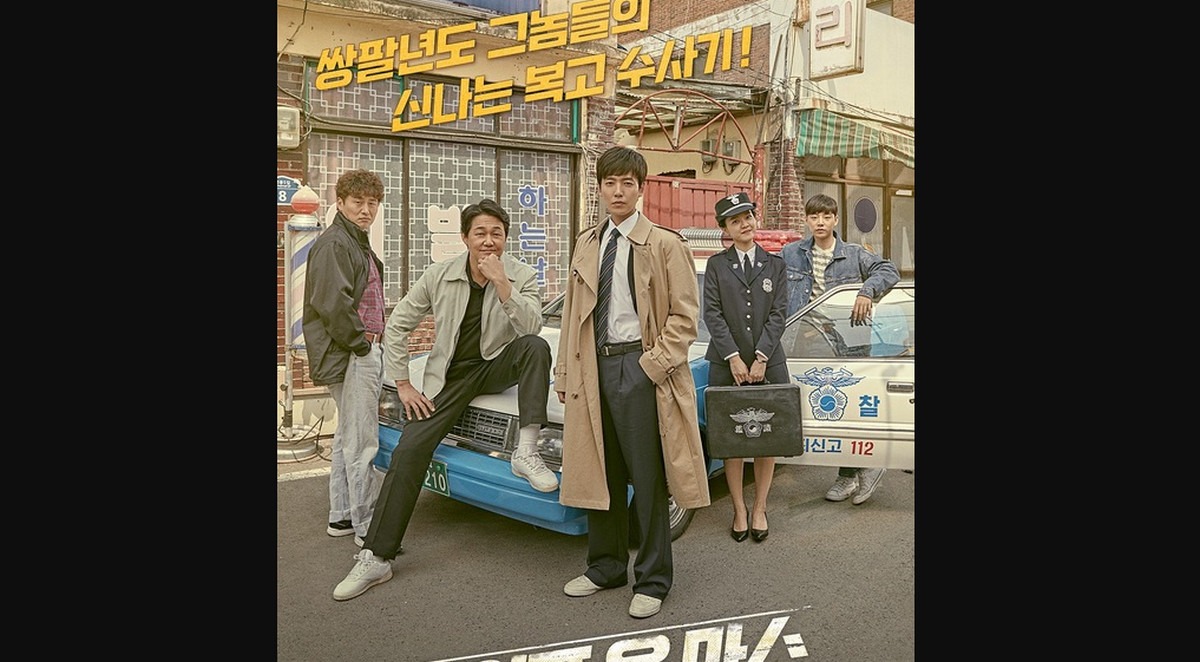
Assigned to the Seobu Insung Police Station, Tae Joo meets a group of detectives who feel like the complete opposite of him. There’s Captain Kang Dong Chul, loud, unpredictable, and often reckless, but surprisingly insightful. Then there’s Yoon Na Young, a talented officer held back by the limitations placed on women at the time. Alongside them are Sergeant Yong Gi and the young detective Nam Sik, both adding their own chaotic energy to the team.
At first, everything feels absurd. Tae Joo doesn’t know if he’s dreaming, hallucinating, or stuck in some kind of psychological limbo. But when a murder case in 1988 mirrors the serial killings from his present timeline, confusion turns into purpose.
Solving the case might be the only way back.
Solving Crimes Without the Comfort of Technology
One of the most interesting aspects of Life on Mars is how it contrasts modern investigative methods with the limitations of the past.
Watching Tae Joo struggle without technology is both frustrating and fascinating. He’s used to precision, data, and systems. Suddenly, he’s surrounded by handwritten reports, unreliable witness testimonies, and gut-based decisions.
And honestly, this is where the drama becomes unexpectedly fun.
There are moments that feel almost chaotic, interrogations that cross ethical lines, suspects being pressured aggressively, and the team relying on sheer instinct to solve cases. It even reminded me of the energy from older buddy-cop films like Bad Boys, where things are messy, loud, and unpredictable.
At one point, instead of searching a digital database, they gather local neighborhood heads just to track down information about a suspect. It’s inefficient, exhausting, and somehow effective.
It’s easy to notice how different and limited everything feels compared to modern standards. But at the same time, the drama quietly raises an interesting question: Was something lost as policing became increasingly reliant on technology?
The People Who Slowly Feel Like Home
If the plot pulls you in, the characters are what make you stay.
The dynamic between Han Tae Joo and Captain Kang is easily one of the highlights. Their constant clashes, logic versus instinct, control versus chaos, create both tension and humor. Tae Joo often looks irritated, confused, even emotionally distant. Meanwhile, Captain Kang keeps pushing his buttons with sarcasm and unpredictable behavior.
But underneath that friction, there’s respect.
And eventually, something that feels a lot like family.
Park Sung Woong’s performance as Captain Kang is especially memorable. He plays the character with a mix of roughness and warmth that makes him feel real. At first glance, he seems careless. But the more you watch, the clearer it becomes that he deeply cares about his team.
Then there’s Yoon Na Young.
Her character quietly stands out in a different way. Living in a time where female officers are often underestimated, she starts off being treated more like support staff than a real detective. But there’s intelligence and capability beneath her reserved demeanor.
I personally found her growth very satisfying to watch.
There’s a particular scene where she demonstrates a manual technique, simple, grounded, and completely in contrast to Tae Joo’s modern mindset. It’s a small moment, but it captures the essence of her character: underestimated, yet undeniably capable.
Go Ah Sung’s performance feels natural and sincere. She doesn’t overplay the role, and that restraint makes her character even more convincing.
A Reality That Feels Too Real to Be Just a Dream
As the story progresses, the biggest question becomes harder to ignore:
- Is Tae Joo really in 1988?
- Or is this all happening inside his mind?
The drama never gives easy answers. Instead, it layers the narrative with psychological tension, blurring the line between reality and illusion.
There are hints that this could be a coma-induced world. A defense mechanism. A way for Tae Joo to process trauma, especially memories connected to his father.
And this is where the story becomes more than just a crime drama.
1988 isn’t just a random timeline. It feels like a place tied to something deeply personal. A space where unresolved emotions resurface, where forgotten memories demand attention.
By the time Tae Joo is faced with a choice, return to his cold, structured present or stay in a messy but emotionally rich past, the dilemma feels real.
Because strangely enough, that past starts to feel more alive than his original life.
The Ending That Leaves More Questions Than Answers
I’ll be honest, this is where my feelings get a bit mixed.
The final episodes try to wrap up both timelines, but the resolution in the present day feels a little too convenient. After everything Tae Joo goes through, the payoff doesn’t hit as strongly as expected.
And then there’s that one scene.
The team heading to a crime scene… while singing cheerfully.
It feels oddly out of place. Yes, the victims are criminals, and yes, the tone of the show has always included humor. But in that moment, it creates a strange contrast that’s hard to fully accept.
Still, maybe that’s the point.
Maybe the drama isn’t aiming for perfect realism, but rather emotional closure. A reminder that, despite everything, these characters found something meaningful in each other.
And Tae Joo?
His final decision can be interpreted in different ways. Whether he truly returns, stays, or exists somewhere in between, it’s left open enough for viewers to form their own conclusions.
Final Thoughts: Imperfect, But Worth Experiencing
Life on Mars is not a perfect drama.
There are moments that feel inconsistent. The ending might not satisfy everyone. And some narrative choices can feel a bit too convenient.
But despite all that, it’s still a drama I keep coming back to.
Because at its core, it’s not just about solving crimes or traveling through time. It’s about connection. About memory. About the idea that sometimes, the place we feel most alive isn’t necessarily where we belong, but where we learn the most about ourselves.
And maybe that’s why it lingers.
Rating: 8.5/10