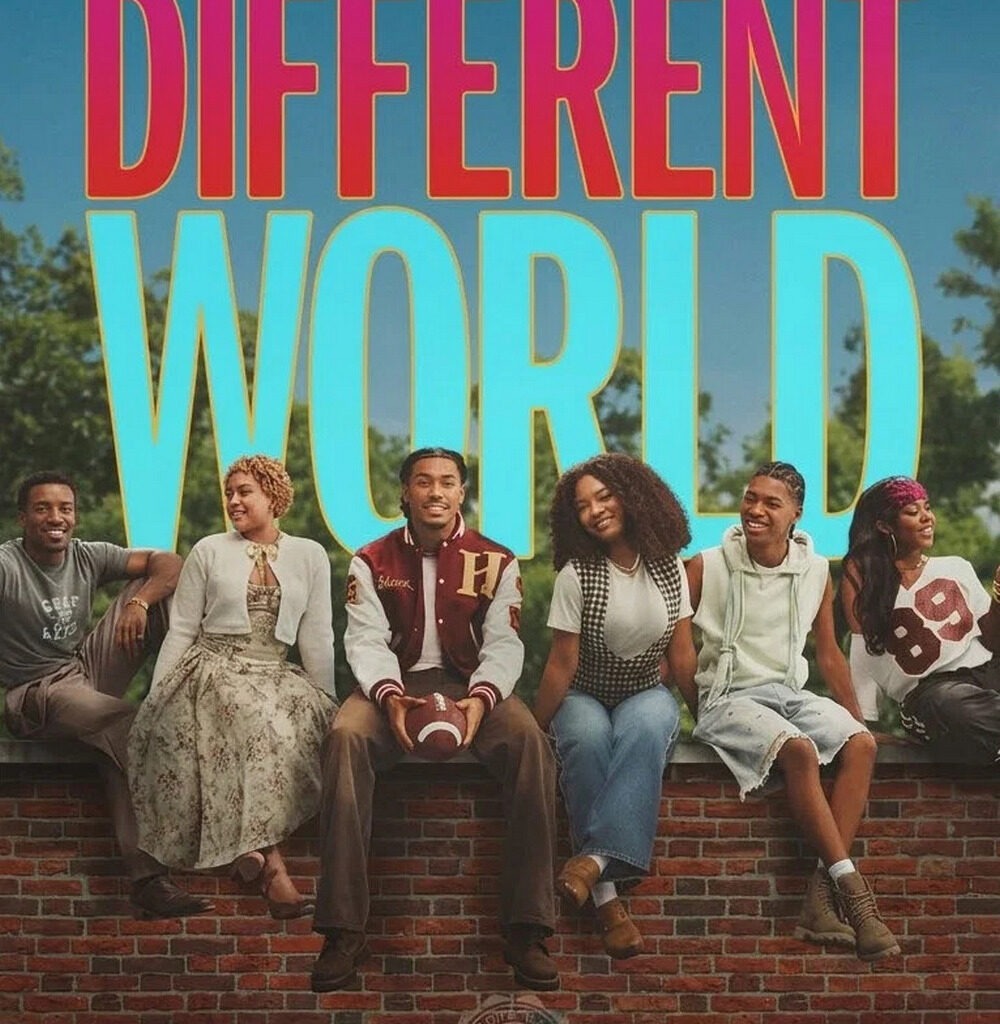
Some reboots chase nostalgia by simply putting old faces in new scenes. A Different World does something trickier: it hands the keys to Hillman College to an entirely new generation while making sure the ghosts of the original 1987 sitcom are felt in every hallway. Premiering on Netflix on September 24, 2026, exactly 39 years after the original series debuted, this sequel series follows Deborah Wayne, the youngest daughter of Hillman alums Dwayne Wayne and Whitley Gilbert, as she stumbles, protests, and falls in and out of love during her freshman year. It’s messy in the way college actually is, and that messiness turns out to be the show’s biggest strength.
Episodes 1-10 Recap
Episode 1 – “Irreconcilable Differences”: New students arrive at Hillman. Deborah, whose NYU Tisch acceptance was rescinded after an unnamed incident, is placed on academic probation. She’s roomed with Rashida, a scholarship student from Compton, and quickly befriends Hazel (a sheltered preacher’s daughter), Amir (dealing with a housing mix-up), and Kojo (a flirtatious UK-Nigerian/Ghanaian student). Football star Shaquille arrives late and clashes with his father, Ron, over choosing Hillman. After a curfew violation nearly gets the girls in trouble, Deborah uses her mother’s influence to bail them out, sparking early tension with Rashida. The episode ends with students learning their financial grants are being revoked, and Deborah leading a chant demanding answers.
Episodes 2-3: Character bonds form quickly, Amir and Hazel become close, and the group meets junior Jalen, who Hazel starts dating almost immediately. Early hints are dropped about Shaquille’s late mother, Jaclyn, and about Ellington, a new love interest for Deborah, discovering he has dyslexia.
Episodes 4-5: Hazel and Jalen’s relationship deepens quickly, while Amir starts noticing his own feelings for Jalen may run deeper than friendship. Rashida and Kojo begin officially dating, with Rashida asking to take things slow.
Episode 6: Amir begins to sense his connection with Jalen might be more than platonic.
Episode 7: Amir confesses to Hazel that he slept with Jalen, fracturing their friendship.
Episode 8: A pivotal episode: Deborah and Shaquille’s full backstory is revealed (see Story Analysis below), Rashida confides to Deborah that she lost her virginity to Andre rather than Kojo, Hazel reveals she’s been secretly dating a long-distance boyfriend named Roger, and Amir and Hazel reconcile.
Episode 9: Ron opens up to Shaquille about his late wife, Jaclyn, referencing an old storyline from the original series. Kojo and Rashida rediscover their spark after her flirtation with Andre fizzles out.
Episode 10 – “A Gift & The Curse” (Finale): Student protests over HBCU funding cuts reach a resolution as Dwayne and the board strike a deal. Deborah confronts her parents over secretly funding her enrollment, then reconciles with them at the “Light the Night” Gala. Amir and Jalen share a kiss and plan to meet privately, but Amir is blindsided by a probation violation warrant. Kojo overhears Rashida and Andre talking and breaks up with her. Hazel starts a connection with Xavier, only for her secret boyfriend Roger to announce he’s transferring to Hillman. Deborah, unable to reach Shaquille (who’s considering a transfer to Colorado), ends up kissing Ellington instead. The episode closes with an ICE agent confronting Kojo and his friend Nneka as they leave the gala.
Growing Up in Public, With the Whole Country Watching
The season’s central conflict isn’t romantic, it’s institutional. Running underneath every love triangle and roommate spat is the very real, very current threat of federal funding cuts to HBCUs, financial aid instability, and (in the finale’s gut-punch cliffhanger) immigration enforcement reaching directly onto campus. The show uses Deborah’s personal arc, impulsive spending, academic probation, an eventual ADHD diagnosis, as a lens for a broader theme: what does it mean to be young, Black, and trying to “figure it out” at a moment when the institutions meant to support you are themselves under threat?
The show is also, unapologetically, a story about miscommunication as the engine of heartbreak. Deborah and Shaquille’s central will-they-won’t-they is revealed by Episode 8 to hinge entirely on a communication breakdown: after their first night together ended in a warehouse fire and Shaquille’s father confiscating his phone, Deborah interpreted his silence as rejection rather than circumstance. The same pattern repeats with Amir and Hazel, and with Rashida and Kojo, nearly every conflict in the season traces back to someone choosing silence, secrecy, or assumption over an honest conversation.
Everyone Is a Little Bit of a Mess, On Purpose
Deborah Wayne anchors the season as a character defined by self-sabotage, racking up thousands in credit card debt, struggling academically, and repeatedly acting first and explaining later. Her arc across the season is less about becoming “fixed” and more about learning to be honest, culminating in her decision to lead the funding protest and her raw confrontation with her parents about their hidden financial support.
Shaquille spends the season torn between his father’s expectations, his unresolved grief over his late mother Jaclyn, and his complicated relationship with Deborah. His arc closes on a note of genuine ambiguity, packing for a possible transfer to Colorado, staring at his mother’s photo, choosing himself without a clear answer about what that means for Hillman or for Deborah.
Amir experiences the season’s most significant self-discovery, moving from an uncertain friendship with Jalen to acknowledging real romantic feelings, all while trying to protect his relationship with Hazel and manage a probation situation that finally catches up with him in the finale’s cliffhanger.
Rashida navigates guilt and self-image around virginity, intimacy, and honesty with Kojo, ultimately losing that relationship in the finale not because of what happened, but because of what she hid.
Ellington, introduced as a quieter, more grounded love interest for Deborah, is revealed by the finale to be the son of Denise Huxtable (from the original series’ Cosby Show crossover lineage), connecting the new show’s universe directly back to A Different World’s original 1987 premise.
Key Moments & Turning Points
- The financial grant revocation (Episode 1): Establishes the season’s institutional stakes from the very first episode.
- Deborah and Shaquille’s backstory reveal (Episode 8): Recontextualizes their entire push-pull dynamic around one avoidable miscommunication.
- Amir and Hazel’s rupture and reconciliation (Episodes 7-8): The season’s clearest illustration of chosen family surviving real betrayal.
- Ellington’s identity reveal (Episode 10): Ties the new series directly into the original show’s extended universe via the Huxtable family.
- The ICE cliffhanger (Episode 10): The season’s boldest and most sobering final image, grounding the show’s romantic melodrama in a genuinely urgent, real-world issue.
Hidden Meanings & Deeper Insights
The show repeatedly frames financial precarity as a kind of inherited trauma, Deborah’s careless spending isn’t just an “irresponsible rich kid” cliché, it’s set against Rashida’s very real fear of losing her scholarship and the wider student body’s fear of losing their grants entirely, making clear that not everyone at Hillman is playing with the same safety net. Ellington’s reveal as a Huxtable, and the callback to Clair Huxtable’s 1963 sit-in and Theo Huxtable’s dyslexia storyline, isn’t just a nostalgia easter egg; it’s the show explicitly arguing that student activism and self-advocacy are generational inheritances passed down through this fictional Black community, not new inventions of Gen Z.
What Works and What Doesn’t
What works: Critics have praised the show‘s willingness to let its characters be genuinely messy without moralizing at them, and the chemistry among the new ensemble cast has been singled out as a highlight. The decision to ground contemporary issues, HBCU funding, immigration enforcement, in specific, personal stories rather than abstract speeches has largely landed well.
What doesn’t: Multiple reviews have noted the season’s biggest limitation is simply runtime, ten half-hour episodes covering a full school year leaves little room to breathe, and some of the “very special episode” social commentary can tip into feeling rushed or occasionally preachy.
Conclusion
A Different World’s 2026 revival succeeds by resisting the urge to simply replay its predecessor’s greatest hits. It borrows the original’s DNA, a Black college setting unafraid of real-world issues, a sprawling ensemble of flawed and lovable students, while building something that feels specific to right now. The finale’s unresolved threads (Shaquille’s transfer, Amir’s legal jeopardy, the ICE confrontation) leave plenty of urgent reasons to want a Season 2.