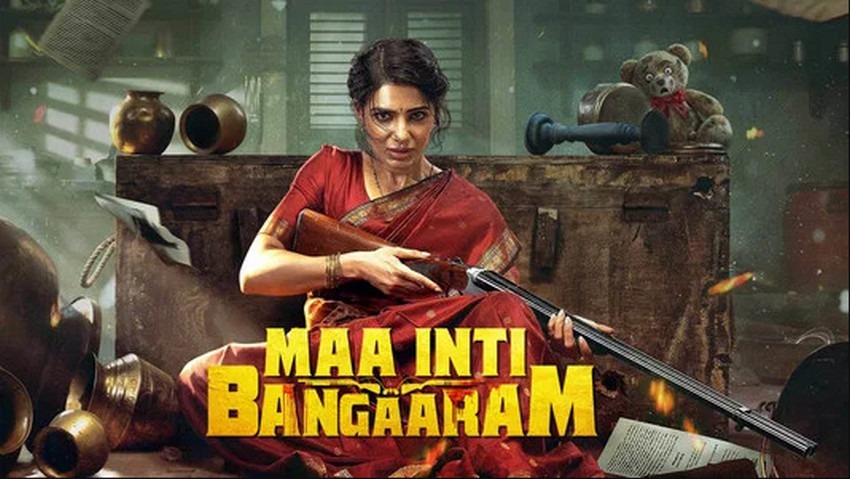
I’ll admit upfront that Maa Inti Bangaaram isn’t the kind of Telugu film I usually gravitate toward. My taste runs toward the ones built around social commentary, something like Ronth, where the story sits with a real issue and lets it breathe instead of rushing past it. This one is the opposite: bright, loud, action-forward, and built to entertain rather than provoke thought. I only pressed play because it was trending everywhere, and I figured I’d give it a shot. A few weeks and one confirmed box office milestone later, I get why.
The Story, In Short
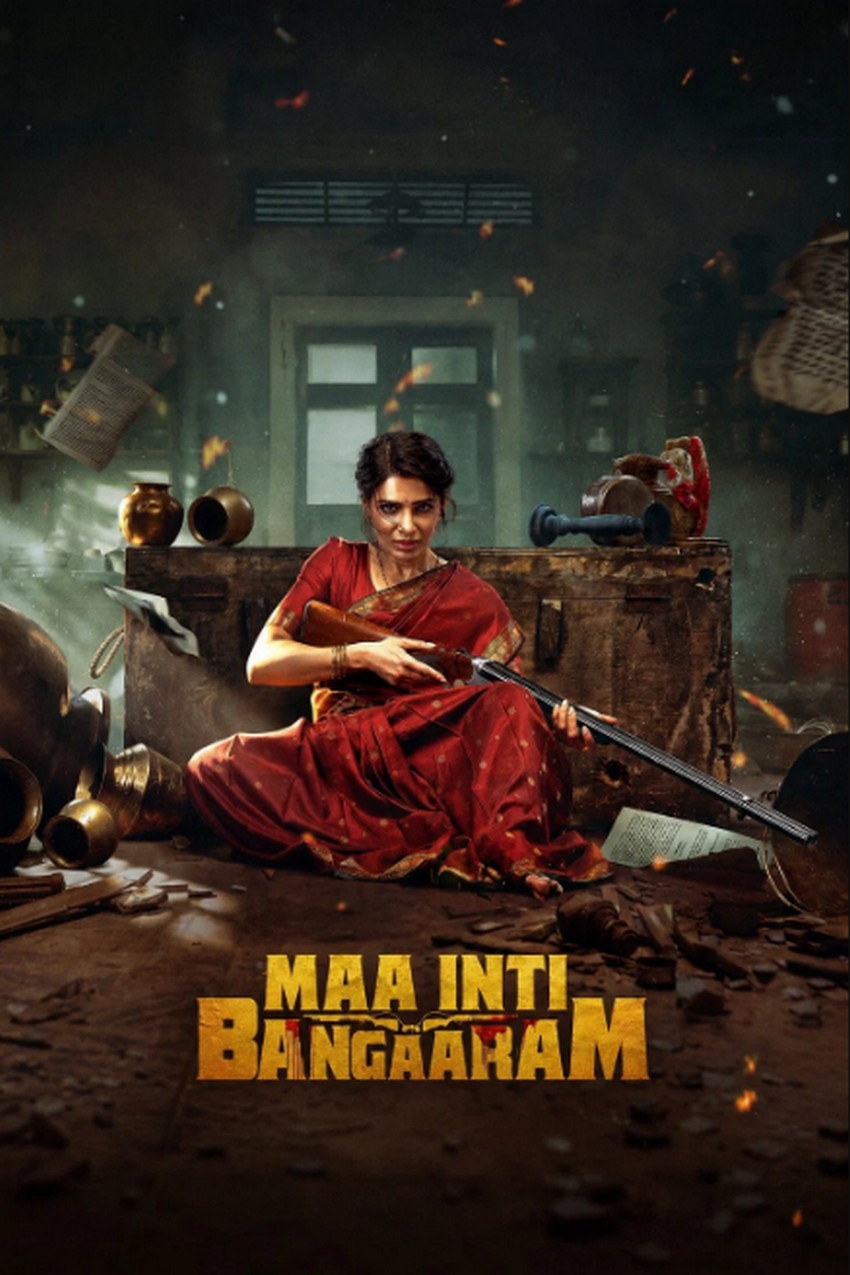
The title translates to “The Gold of Our Home,” and the family framing in that name matters more than it seems at first. The woman at the center of the story, Swarna, has built a quiet, respectable life for herself by marrying into a family that has no idea what she used to be. She’s not hiding a vague “dark past” in the generic sense, she used to be an assassin, and the skills that came with that life never actually left her. When people connected to her old world resurface and put her new family in danger, she’s forced to become that version of herself again, all while trying to keep the truth from the very people she’s protecting.
That setup gives the film its central tension: how do you protect the people you love without letting them see who you really were before them? It’s a solid hook, and it’s also familiar territory if you’ve seen enough action-thrillers built around a protagonist with a hidden combat background. What makes it worth watching here isn’t the originality of the premise, it’s the execution of the action and the way Samantha commits to it.
Samantha Ruth Prabhu plays Swarna, and this is her comeback to a full leading role after a rough patch that included the widely panned Shaakuntalam. She clearly picked this project to prove something physically and dramatically, and on the action front, she delivers. Diganth Manchale plays her husband, Dr. Alluri Anirudh Raju, a character who spends much of the film in the dark about who his wife really is, which gives their scenes together a quiet tension even when nothing violent is happening on screen.
The People Behind It
This isn’t the first time Samantha and director B. V. Nandini Reddy have worked together, this is actually their third collaboration, going back to Jabardasth in 2013 and continuing with the hit Oh! Baby in 2019. That history shows in how comfortable Samantha looks under Reddy’s direction, even when the material asks her to do something far removed from the emotional, character-driven work Reddy is usually known for.
The story itself comes from Raj Nidimoru, who also happens to be Samantha’s husband and is best known internationally for creating The Family Man. The three of them, Raj, Samantha, and producer Himank Duvvuru, backed the film together under their own production banner, Tralala Moving Pictures, making this a genuinely personal project rather than just another studio assignment. That kind of behind-the-scenes investment tends to show up in how confidently a film commits to its lead actress, and this one does exactly that.
On the technical side, Santhosh Narayanan handled the music, Om Prakash shot the cinematography, and Dharmendra Kakarala edited it down to a runtime just over two and a half hours. The action choreography in particular benefits from that combination, the camera stays close enough to feel the impact of each sequence without turning into the kind of chaotic, over-edited mess a lot of mid-budget action films fall into.
What Worked, What Didn’t
Samantha’s action sequences carry real weight, she’s clearly put in the physical work, and it shows in how grounded the fight choreography feels compared to a lot of films in this genre. Gulshan Devaiah, playing the antagonist, brings a presence that makes his scenes memorable even when his character isn’t given much depth on paper. The friction between Swarna and her best friend Kiranmayi, played by Manjusha Mukkavilli, also gives the film some of its more entertaining, lower-stakes stretches, and Gauthami rounds out the family dynamic well in a supporting role.
Where it falls short is depth. A lot of relationships and backstory threads get set up and then left half-finished, like the film ran out of patience to actually dig into them. The dynamic between Swarna and her husband, in particular, had room to be a lot more interesting than it ends up being, there’s real dramatic potential in a marriage built on a secret that big, and the film mostly uses it for tension rather than genuinely exploring it. It’s the kind of movie where you can tell there was a more layered version buried somewhere in the writing process, but the final cut settled for “entertaining enough” instead of chasing that version down.
The ending goes for a clean, happy resolution, no surprises there, and after two-plus hours of tension it’s honestly a relief rather than a letdown. I just wish a few of the threads it built up along the way had gotten a proper payoff instead of a quick wrap-up.
How It’s Doing With Everyone Else
For what it’s worth, I wasn’t alone in watching this one purely because it was everywhere. Since its release on June 19, 2026, Maa Inti Bangaaram has turned into a genuine box office success, reportedly closing in on the ₹100 crore mark worldwide within its first few weeks and holding a strong second-place spot against major releases on more than one weekend. It’s also being talked about as one of the highest-grossing female-led Telugu films to date, which says a lot considering it opened without the usual mega-budget marketing push behind it. That kind of commercial run doesn’t happen on action sequences alone, it usually means the family-drama layer, thin as I found parts of it, is landing with a wider audience than just people like me looking for something to fill an evening.
Should You Watch It?
If you’re after something purely entertaining, with strong action and a lead actress clearly enjoying being back on screen, it delivers. If you’re looking for the kind of layered social drama Telugu cinema does so well elsewhere, this isn’t that film, and it isn’t trying to be. Go in expecting a mass entertainer with a personal story behind the camera, and you’ll probably walk away as satisfied as I did.