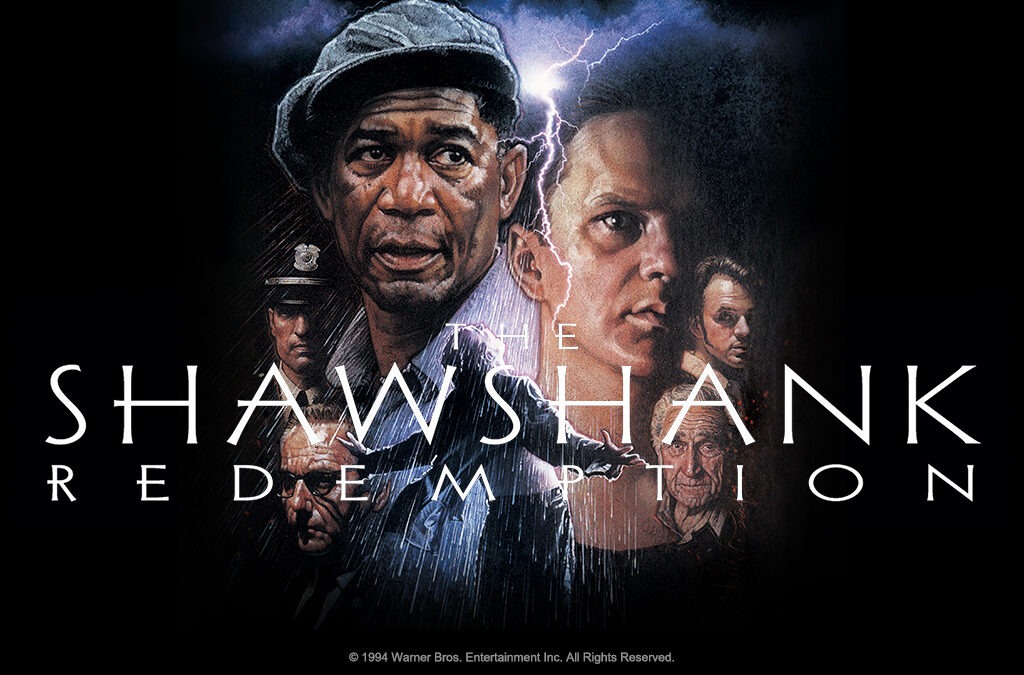
Every year, IMDb’s Top 250 shuffles a little. A new prestige drama climbs in, a beloved trilogy trades places with itself, some superhero movie has its moment before gravity pulls it back down. And every year, at the very top of that list, sits the same 1994 film about a wrongfully convicted banker and the friend he makes in a Maine state prison.
The Shawshank Redemption has held the #1 spot on IMDb since 2008, highest-rated movie of all time, when it finally pulled ahead of The Godfather. Nearly two decades later, it’s still there, currently sitting at a 9.3 out of 10 from more than 3.2 million votes. For context, that’s higher than The Godfather, higher than The Dark Knight, higher than every Marvel movie, every Best Picture winner of the last thirty years, and every algorithm-optimized blockbuster released since. It shouldn’t still be there. And yet.
So what is it about this particular film that refuses to lose its grip on audiences three decades on? Here’s the honest breakdown.
It Isn’t Really a Prison Movie
Strip away the setting and The Shawshank Redemption is a film about waiting. Andy Dufresne (Tim Robbins), a banker convicted of murdering his wife and her lover, arrives at Shawshank State Penitentiary insisting on his innocence and spends the next nineteen years proving it in the quietest way possible: patience, competence, and a refusal to let the institution decide who he is.
That’s the part that keeps people coming back. Hope isn’t treated as a naive feeling here; it’s treated as a discipline, something Andy practices deliberately even when everyone around him has stopped believing in it. Frank Darabont, reflecting on the film around its 30th anniversary, told People it was ultimately a story about redemption and about people’s ability to make the world around them a little better. Letters from viewers who said the film changed their lives are, in his words, a legacy he doesn’t take lightly.
Two Performances That Haven’t Aged a Day
Robbins plays Andy with almost no outward defiance, which is exactly what makes his resilience so unsettling to watch. He doesn’t yell. He barely raises his voice. The performance works because you can see him deciding, scene after scene, not to be broken.
Morgan Freeman’s Red is the film’s actual center of gravity. His narration doesn’t just move the plot along, it gives the entire story a reflective, lived-in quality that a straightforward telling wouldn’t have. It’s worth remembering how differently this cast could have looked: Tom Cruise reportedly attended table reads for the role of Andy before passing, and names like Gene Hackman, Robert Duvall, Paul Newman, Tom Hanks, and Kevin Costner were floated at various points before Darabont cast Robbins, based partly on his work in 1990’s Jacob’s Ladder. It’s hard to imagine now, but the film we know almost had an entirely different center.
Nothing Rushed, Nothing Wasted
At two hours and twenty-two minutes, The Shawshank Redemption takes its time in a way most modern studio films aren’t allowed to anymore. Every scene earns its place, whether it’s Andy slowly chipping away at a cell wall or Brooks Hatlen struggling to function after decades of institutionalization. None of it feels padded, because none of it is filler. It’s patience as a storytelling choice, and it’s part of why the film rewards rewatching instead of wearing thin.
Themes That Don’t Expire
Freedom against confinement. Institutional injustice. Loyalty that survives decades. Redemption that has to be earned rather than declared. None of these ideas are tied to 1994, which is exactly why a teenager discovering the film today responds to it roughly the same way an adult did on VHS in the late nineties. The prison is specific. What it’s actually about isn’t.
An Ending That Sticks
Without spoiling it for the handful of people who’ve genuinely never seen it: the final act delivers on everything the film spent two hours building toward, and it does so without cutting corners. It’s the kind of ending that makes people go back and rewatch the first act immediately, just to notice what they missed the first time.
A Flop That Became a Phenomenon
Here’s the part that tends to surprise people: The Shawshank Redemption barely made money. Produced on a $25 million budget, it earned only around $16 million during its original 1994 theatrical run, undercut by stiff competition that same fall from Pulp Fiction and Forrest Gump, the latter of which went on to sweep the Oscars that year. Shawshank picked up seven Academy Award nominations, including Best Picture, Best Actor, and Best Adapted Screenplay, and lost every single one.
What saved it was television reruns and home video. TNT aired it constantly through the late nineties, and viewers who caught it accidentally on a random weeknight kept telling other people to watch it. That word-of-mouth snowball, rather than any marketing campaign, is what eventually pushed its box office take well past its original numbers and built the kind of loyal audience that shows up, year after year, to keep rating it a perfect ten.
Still Standing, Decades Later
The Shawshank Redemption currently holds a certified-fresh 89% from critics on Rotten Tomatoes, alongside a remarkable 98% from audiences, a gap that tells you plenty about which crowd fell harder for it. It’s based on Stephen King’s 1982 novella Rita Hayworth and Shawshank Redemption, and it remains, by King’s own reputation as an author, one of the most well-regarded adaptations of his work ever made, horror or otherwise.
In an industry that releases thousands of new titles every year, few films manage to appeal equally to casual viewers, working critics, and lifelong cinephiles at once. The Shawshank Redemption still does, which is exactly why it hasn’t budged from the top of that list since Barack Obama’s first term.
Do you think anything will ever knock The Shawshank Redemption off the top spot? Tell us what you’d nominate, and let’s argue about it in the comments.