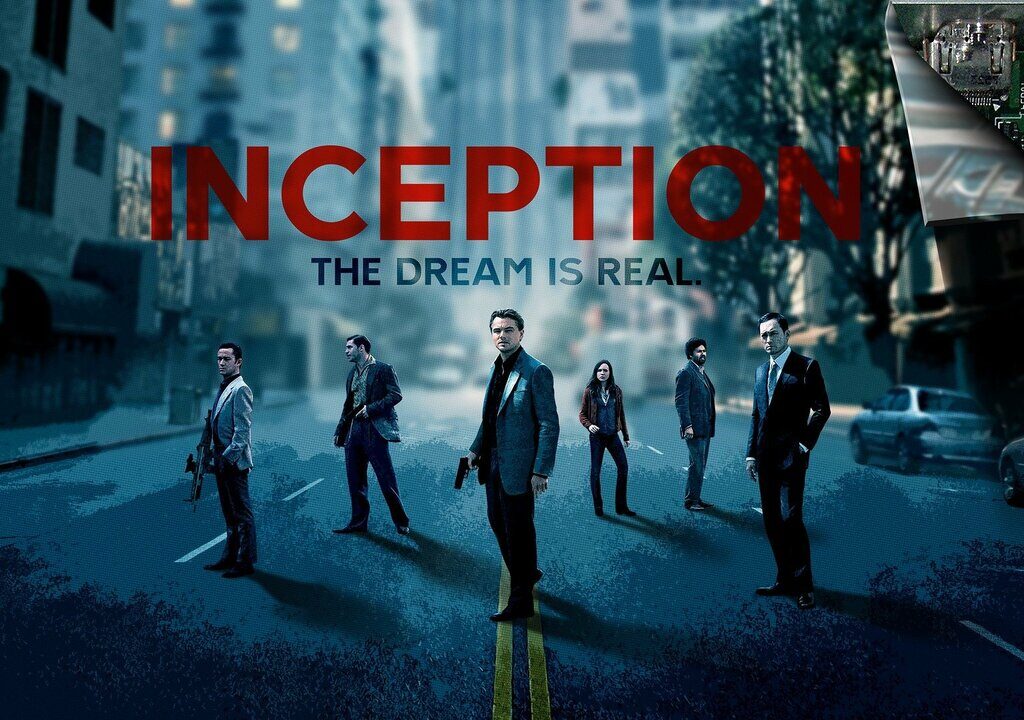
Inception isn’t just a piece of entertainment, it’s a cinematic experience that pushes back against passive viewing. Since it hit theaters in 2010, the film has stayed in the cultural conversation, picked apart and debated in ways few blockbusters manage. More than a decade later, it’s still regarded as one of the most layered and influential films of modern moviemaking, and in 2026 the Library of Congress made that recognition official, selecting the film for preservation in the National Film Registry as culturally, historically, or aesthetically significant.
Written and directed by Christopher Nolan, Inception is a 2010 science fiction action film that fuses genre thrills with something closer to a psychological puzzle box, built around grief, guilt, and the slippery line between what’s real and what isn’t. Leonardo DiCaprio stars as Dom Cobb, a professional thief who steals information by infiltrating the dreams of his targets, and he’s surrounded by an Oscar-pedigreed cast including Joseph Gordon-Levitt, Elliot Page, Tom Hardy, Ken Watanabe, and Marion Cotillard.
At just over two hours, the film asks for your full attention and doesn’t really let up. Every line of dialogue, every recurring object, every small detail is doing structural work, building a dream architecture that folds in on itself the deeper you go.
Quick Synopsis
Dom Cobb is an “extractor”, someone who can slip into a person’s subconscious while they’re dreaming and pull secrets out of their mind. In the world of corporate espionage, that’s an extremely valuable skill, but it’s also made Cobb a fugitive who can’t go home to his own children.
Then a businessman named Saito approaches him with a different kind of job. Instead of stealing an idea, Cobb is asked to do something far riskier: plant one. The process is called inception.
The target is Robert Fischer, heir to a business empire, and if the job succeeds, Cobb is promised a clean slate and a way back to a normal life. He assembles a team of specialists to pull it off, diving into dreams within dreams, sometimes several layers deep. The complication is that Cobb’s own subconscious keeps interfering—specifically, the recurring, destabilizing presence of his late wife, Mal.
The Rules of the Dream World
One of the film’s biggest strengths is how consistently it applies its own internal logic. Nolan doesn’t just throw abstract dream imagery at the audience; he lays out the rules methodically, piece by piece.
A few of the core mechanics:
- Time moves far more slowly inside a dream than it does in the waking world
- Dreams can be constructed and designed by an “architect”
- The target’s subconscious generates “projections” that actively resist the intrusion
- Dying inside a dream doesn’t necessarily mean waking up, especially under heavy sedation
It’s this layered structure that turns the film into something closer to a massive puzzle. At one stretch, the story is tracking four separate dream levels simultaneously, each running on its own internal clock.
Rather than collapsing under its own complexity, the film manages to stay intellectually engaging rather than just confusing. You’re asked to actively track cause and effect across every layer, and that active participation is a big part of why the film rewards rewatching.
Dom Cobb’s Psychological Weight
Underneath all the dream mechanics, Inception is a deeply personal story, and Cobb is where that personal weight lives.
He’s not a clean hero. He’s sharp and capable, but he’s also carrying real damage. The center of that damage is Mal, his wife, whose death he believes he caused indirectly, through an idea he once planted in her mind.
Mal came to believe that the waking world wasn’t actually real. That belief eventually cost her everything, and she chose death as what she saw as a way home. Since then, she’s existed as a dangerous recurring projection in Cobb’s dreams, standing in for his guilt, his regret, and his inability to let go of what happened.
That internal conflict is what elevates Inception past pure science fiction. It becomes a story about how the human mind can turn into its own worst trap.
Action That Stays Grounded
Despite all the philosophical dialogue and abstract world-building, the film still delivers genuinely iconic action sequences, the zero-gravity hallway fight, the dream-city chase, the synchronized explosions timed across multiple dream levels.
Nolan is known for favoring practical effects over heavy CGI, and that choice is a big reason these sequences still feel weighty and tactile. The tension doesn’t just come from explosions or gunfire; it comes from a ticking clock running differently across every layer of the dream.
Ending Explained: Is Cobb Still Dreaming?
The most talked-about part of Inception is, without question, its final scene, a moment that’s fueled debate for well over a decade.
After the mission wraps, Cobb makes it back to the United States, clears immigration without incident, and returns home. In the backyard, he sees his kids, a sight he’s been away from for years.
Before he goes to them, he spins his totem, a small top. The totem exists to tell him whether he’s awake or still dreaming. In a dream, it spins forever. In reality, it eventually falls.
The camera lingers on the spinning top. It starts to wobble, just slightly, and then the screen cuts to black.
So, real or dream? Nolan never gives a definitive answer, and that’s deliberate. But there are a few details worth paying attention to:
1. Cobb’s focus has shifted. For the first time in the film, he doesn’t wait around for the totem’s result. He walks toward his kids instead. That’s a meaningful change from a man who’s spent the entire film obsessed with confirming what’s real.
2. The top may not even be his totem. A popular reading argues the spinning top actually belonged to Mal, not Cobb. His real totem is his wedding ring, and in the “real world” scenes, he’s not wearing it.
3. The wobble. The top never fully falls on screen, but it visibly destabilizes, something that’s never happened to it in a dream sequence before.
Ultimately, the point of the ending isn’t to hand you a verdict. It’s about choice. Cobb chooses to live, to accept whatever reality he’s in, and to let go of the guilt he’s been carrying, regardless of what’s technically “real.”
The Bigger Idea Underneath It All
At its core, Inception is asking one question: what actually makes something feel real?
Is reality about objective fact, or is it about the emotional weight of what we experience? For Cobb, “real” eventually stops being about a physical location and becomes about being with his children and finally making peace with himself.
The film is also making a quieter argument about the power of ideas, how something small, planted deep enough, can grow into a belief strong enough to reshape a person’s entire life, for better or worse.
Final Thoughts
Inception refuses to be simplified. It grossed $839 million worldwide, becoming the fourth-highest-grossing film of 2010, and picked up four Academy Awards, Best Cinematography, Best Sound Editing, Best Sound Mixing, and Best Visual Effects, tying with The King’s Speech for the most wins at the 83rd Academy Awards. Numbers aside, its real legacy is how much it asks of its audience: to think, to feel, and to sit with an ending that was never meant to be resolved.
More than a movie about dreams, Inception is a film about guilt, memory, and the choices we make about what to believe. That’s probably exactly why people are still writing about it, all these years later.
Before you move on to the next mind-bending pick on your list: do you think Cobb actually woke up, or did he just decide to stop asking the question?