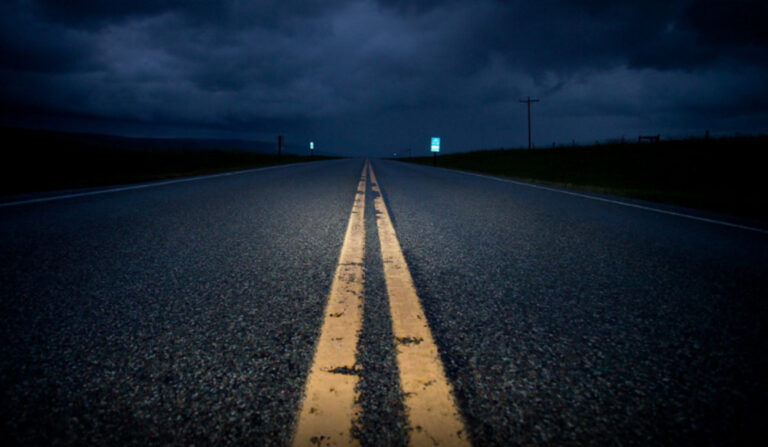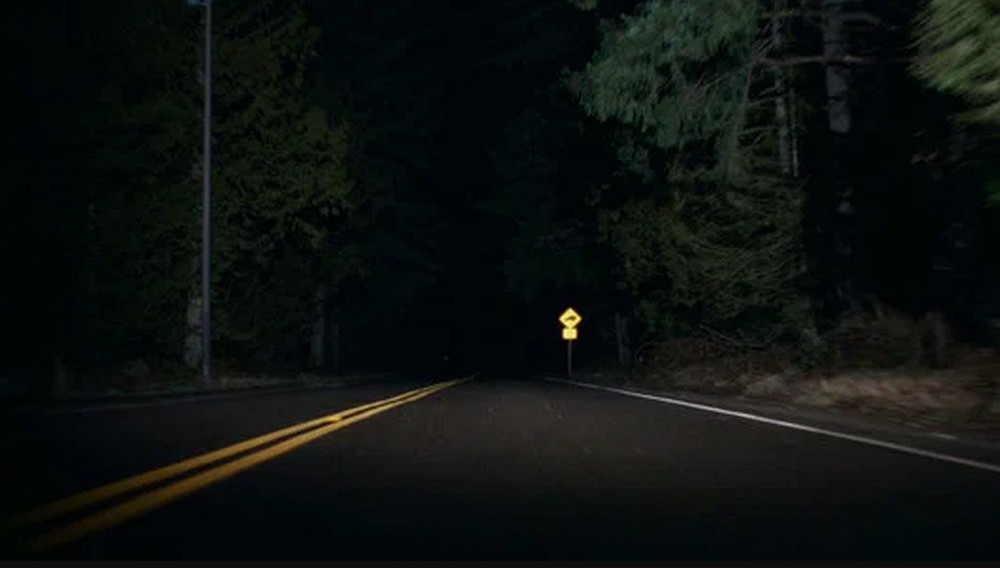
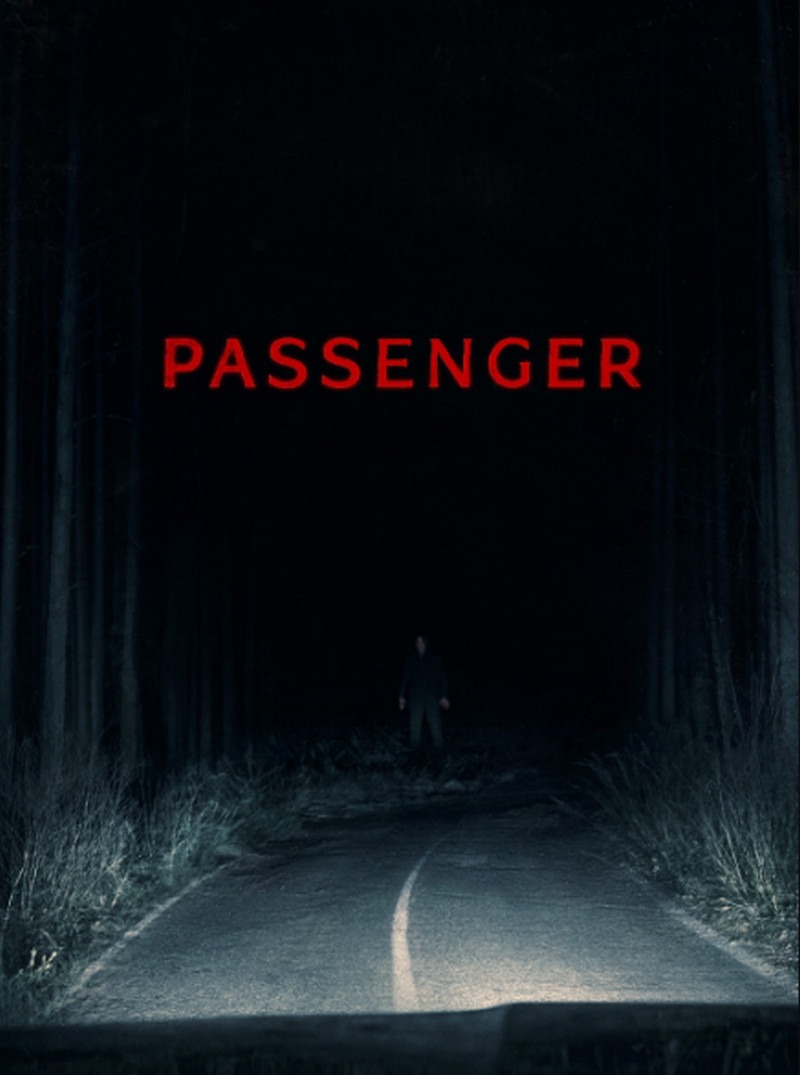
There’s a stat that’s been floating around for years, the kind that sounds made up until you actually sit with it: roughly 130 million people take road trips every year, and somewhere around 15,400 of them never make it home. Whether or not you buy the exact number, it taps into something real, the specific dread of an empty highway at 2 a.m., no cell signal, nothing but your headlights and whatever’s out there in the dark. Passenger builds an entire movie out of that feeling, and honestly, it works better than it has any right to.
Why This Movie Is Worth Talking About
Passenger isn’t trying to be prestige horror. It’s not chasing an A24 arthouse vibe or a Blumhouse mythology-building franchise. This is a lean, mid-budget Paramount horror flick, produced by Walter Hamada’s 18hz Productions and Gary Dauberman’s Coin Operated banner, two names that know their way around this kind of genre picture. What makes it interesting isn’t ambition. It’s craft.
Director André Øvredal is the reason this movie is getting talked about at all. He’s the guy behind The Autopsy of Jane Doe and The Last Voyage of the Demeter, someone who’s built a career on squeezing real tension out of small, contained horror premises. Here, he takes a script from Zachary Donohue and T.W. Burgess that could easily have been forgettable and turns it into something genuinely tense to sit through, even if it never quite becomes something new.
What Actually Happens (Without Spoiling Everything)
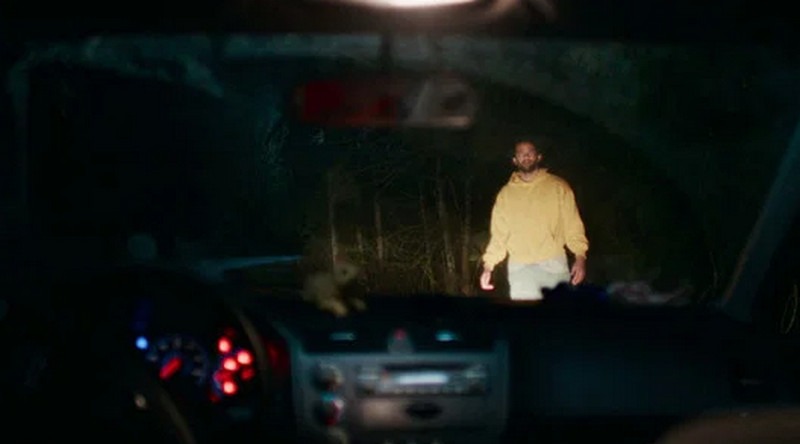
The film opens with two friends, Daniel and Lucas, driving down a dark backroad at night. Lucas pulls over so he can relieve himself on the side of the road, and that’s when Daniel is killed by something the audience never fully sees. It’s a short, brutal cold open, and it sets the rules of the movie before the main characters even show up.
From there, we jump to Tyler (Jacob Scipio) and Maddie (Lou Llobell), a young couple trading their Brooklyn apartment for van life. Tyler’s been dreaming of this for years; Maddie’s a little more on the fence, but she goes along with it anyway. Along the way, Tyler proposes, awkwardly interrupted by an overzealous neighborhood watch volunteer, and Maddie says yes, though she notably doesn’t put the ring on.
Six weeks into their trip, they witness a horrific one-car accident on a remote road and stop to help. They can’t save the driver, but they don’t leave the scene alone, either. A three-clawed scratch mark on their van matches one on the wrecked car. Maddie spots a figure watching them in a parking lot. And soon it becomes clear: something followed them home, and it’s not going to stop until they’re dead.
The Real Conflict Isn’t the Monster, It’s the Choice They Made
Strip away the supernatural stuff, and Passenger‘s conflict is almost uncomfortably simple: Tyler and Maddie did the decent thing. They stopped to help someone in trouble. And that single, human decision is what puts a target on their backs. There’s no ancient curse to untangle, no elaborate rulebook, just an unspoken road-trip law they didn’t know existed: don’t stop for accidents at night, because whatever’s out there might decide to come with you.
That’s really the engine of the whole film, and it’s smarter than it first appears. The horror isn’t about punishing bad people for bad choices. It’s about how being kind, in the wrong place at the wrong time, can cost you everything. There’s also a quieter thread running underneath it about the fantasy of van life itself, the appeal of no fixed address, no walls, no commitments, and how quickly that same freedom turns into total exposure the moment something starts hunting you. Nowhere to lock the doors that actually keeps anything out. Nowhere to hide when home is just wherever you parked last night.
Tyler and Maddie: Together, But Not on the Same Page
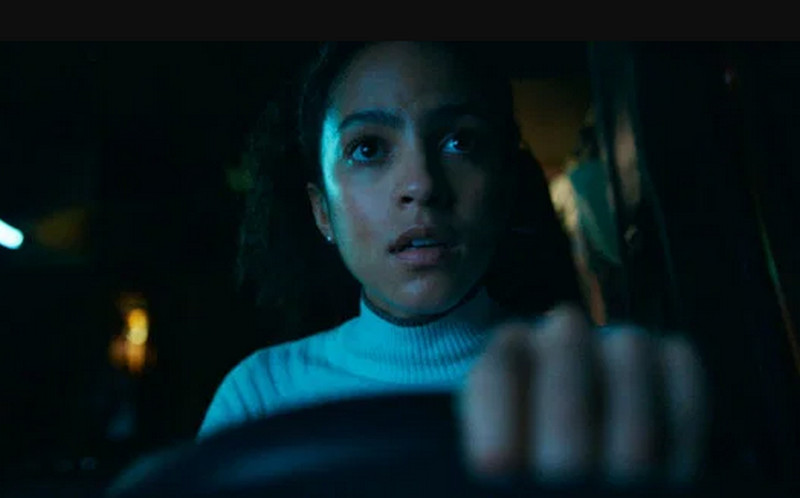
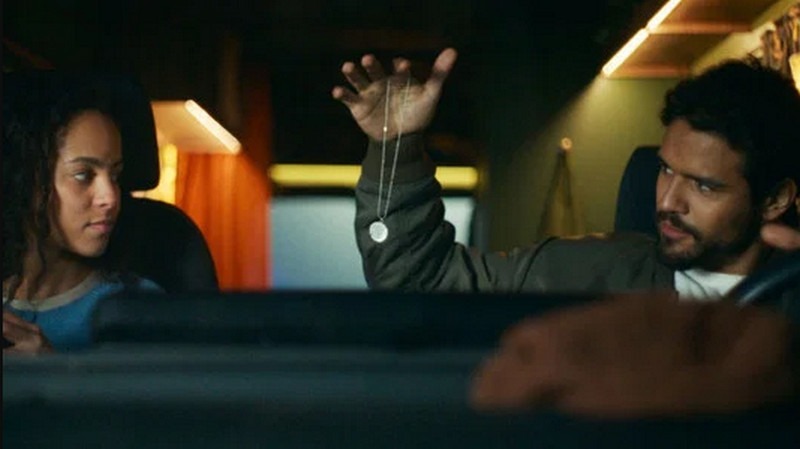
What keeps the human side of the movie from feeling like a total afterthought is that Tyler and Maddie aren’t written as interchangeable horror-movie leads. According to background details from the production, both characters carry baggage from difficult childhoods that shaped what they each want out of life, Tyler craving an untethered, nomadic existence, Maddie quietly wanting something more stable. That tension is present from the start, even during the proposal, even in the detail of Maddie saying yes without wearing the ring.
The accident and everything that follows force that unresolved tension to the surface. Tyler’s dream of endless freedom on the road starts to look a lot more like recklessness once something starts hunting them. Maddie, meanwhile, has to reconcile the guy she said yes to with the situation he’s driven them into. It’s not a deep character study, but there’s a real emotional throughline: two people who loved each other and disagreed about what a future together should look like, now trapped in a van with something that wants them both dead.
Melissa Leo shows up as Diana, an older woman who becomes something of a guide once Tyler and Maddie realize they’re in over their heads, providing the exposition the couple (and the audience) badly needs about what, exactly, is chasing them.
The Scenes That Actually Get Under Your Skin
A handful of sequences do most of the film’s heavy lifting:
The cold open. Before we even meet the main couple, the Daniel-and-Lucas roadside sequence establishes the tone in just a few minutes, proof that Øvredal doesn’t need the full cast in place to start generating dread.
The parking lot sequence. An ordinary, brightly lit-adjacent setting becomes one of the tensest scenes in the film, built almost entirely out of patient camera movement and editing rhythm rather than obvious scares.
The projector scene. Easily the film’s most inventive idea, using an old black-and-white classic playing on a projector as a vehicle for dread. It’s a genuinely surprising image, and it’s the kind of scene that sticks with you after the credits roll.
The reveal of what’s actually following them. The entity itself, played by Joseph Lopez, styled as a gaunt, pale, preacher-like figure, isn’t the most original creature design in recent horror, but the way it’s shot (mostly in shadow, mostly at a distance) makes it work better than it should.
What the Movie Is Quietly Saying
There’s something worth sitting with in the choice to use a classic old film, one about someone briefly escaping duty to taste real freedom, as a tool of horror inside a story about a couple who literally left their home behind to chase freedom of their own. Intentional or not, it lands as a wry little irony: the romantic idea of an unanchored life always comes with a bill eventually.
The “never stop” rule at the center of the film’s mythology works the same way. It’s less a rule about ghosts and more a stand-in for every piece of hand-me-down road safety advice, don’t pick up strangers, don’t stop for accidents at night, lock your doors, dressed up as folklore. The vague, underexplained nature of the Passenger itself almost works in the film’s favor here: it doesn’t need a deep backstory because, symbolically, it’s already standing in for something we all recognize.
What Works, and What Doesn’t
What works: Øvredal’s direction is doing a lot of quiet heavy lifting. Cinematographer Federico Verardi shoots the night driving sequences beautifully, leaning on headlights and taillights the way old haunted house movies used candlelight, a small, smart touch that gives the film a distinct visual identity. Christopher Young’s score adds another layer of unease without ever feeling intrusive. Scipio and Llobell also have real chemistry, which goes a long way toward making the quieter, non-horror stretches of the film watchable.
What doesn’t: The creature itself is fairly generic, critics have compared it to a lesser cousin of the Tall Man from Phantasm, and the mythology never gets much deeper than “it won’t stop until you’re dead.” The ending, after two acts of careful pacing, arrives abruptly and undercuts some of the tension built up earlier. It’s the kind of wrap-up that makes the whole experience feel a little more amateur than the craftsmanship elsewhere deserves.
For context on how it landed with critics: Passenger opened in US theaters on May 22, 2026 through Paramount Pictures (moved up a week from its original May 29 date to dodge competition from other releases), and pulled in a mixed response, around 47% positive from critics on Rotten Tomatoes, with an average score just above 5 out of 10, and roughly $31 million at the box office. The general critical consensus lands close to how this review sees it: stylish, competently made, but weighed down by how familiar it all feels.
Final Thoughts
Passenger isn’t reinventing road-trip horror, and it’s not really trying to. What it does instead is take a familiar, almost campfire-story premise and execute it with real confidence, a director who knows exactly how to build tension out of a dark highway, a couple of leads with enough chemistry to make you care, and at least one genuinely inspired sequence involving an old film projector that you won’t see coming.
The rushed ending keeps it from being a standout, but as a pure “watch this in a dark room and feel your pulse spike” experience, it earns its spot. Next time you’re driving an empty stretch of road late at night, and something catches your eye in the rearview mirror, you might think of this one.
Movie Details
- Genre: Supernatural Horror
- Runtime: 94 minutes
- US Theatrical Release: May 22, 2026 (Paramount Pictures)
- Indonesia Release: May 27, 2026
- Production Companies: 18hz Productions, Coin Operated
- Director: André Øvredal
- Writers: Zachary Donohue, T.W. Burgess
- Composer: Christopher Young
- Cast: Jacob Scipio (Tyler), Lou Llobell (Maddie), Melissa Leo (Diana), Joseph Lopez (The Passenger)
- Critical Reception: ~47% on Rotten Tomatoes (79 critics), average score 5.3/10
- Box Office: ~$31 million