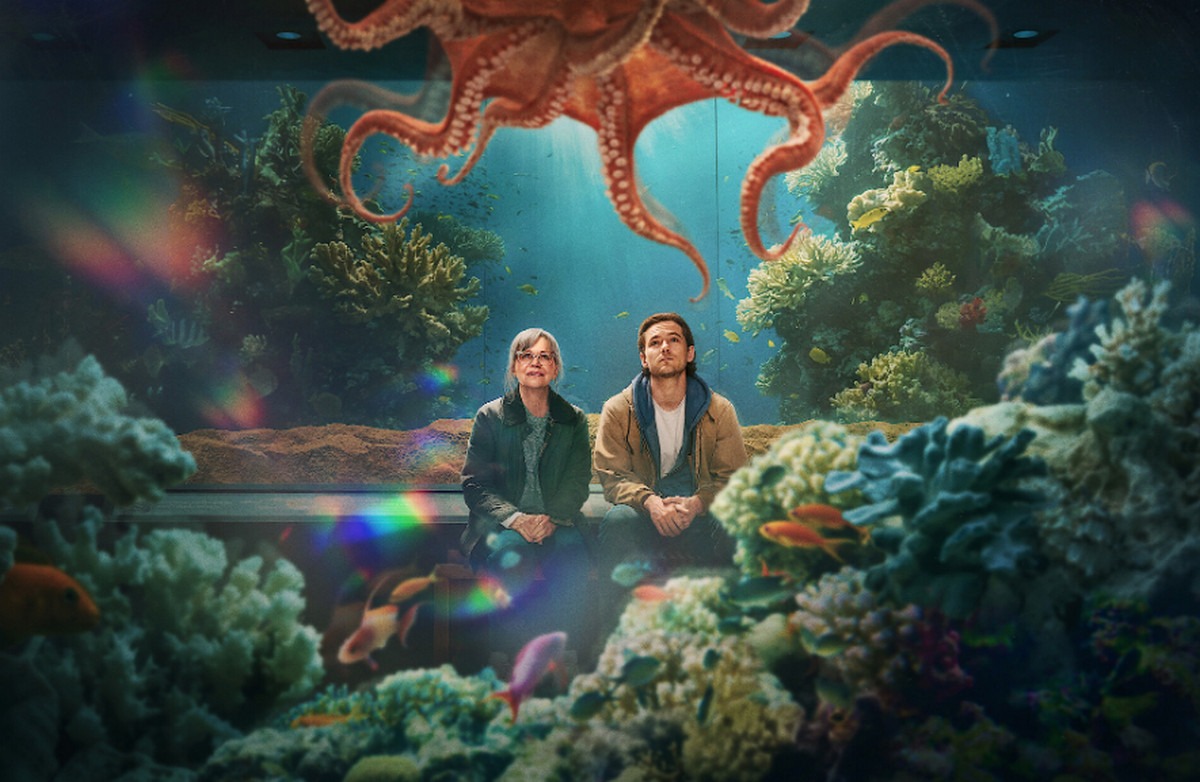
Remarkably Bright Creatures is soft-spoken, patient, and deeply interested in the quieter corners of human loneliness. Adapted from Shelby Van Pelt’s bestselling novel, the Netflix drama takes a deceptively simple premise, an elderly aquarium cleaner forming an unlikely bond with a giant Pacific octopus, and turns it into a reflective story about grief, aging, memory, and second chances.
At first glance, the film may sound whimsical in a way that risks becoming overly sentimental. Yet beneath the unusual setup lies something far more grounded. The story understands isolation in a very human way. It explores how people slowly build walls around themselves after loss, and how unexpected relationships can sometimes reopen doors that seemed permanently closed.
Directed by Olivia Newman and led by a quietly compelling performance from Sally Field, Remarkably Bright Creatures settles into the growing category of intimate Netflix dramas designed less for adrenaline and more for emotional comfort. It is not a film driven by twists or dramatic reveals. Instead, it unfolds carefully, allowing conversations, pauses, and small gestures to carry emotional weight.
For viewers looking for a calm, thoughtful drama with emotional sincerity and a touch of magical warmth, Remarkably Bright Creatures offers a surprisingly soothing experience.
Film Details
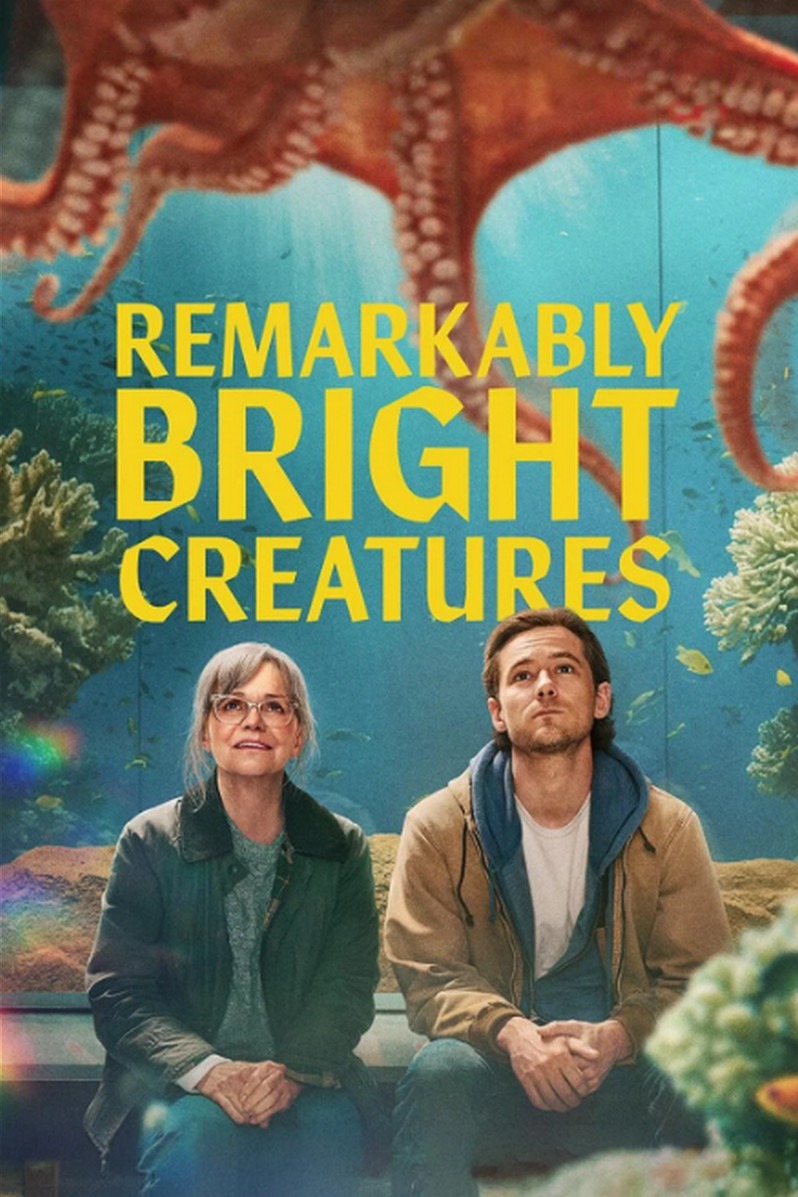
- Title: Remarkably Bright Creatures
- Alternative Titles: No widely used alternative titles currently known.
- Genre: Drama, Family Drama, Literary Adaptation, Slice-of-Life
- Director: Olivia Newman
- Writer: Adapted from the novel by Shelby Van Pelt
- Main Cast: Sally Field as Tova Sullivan, Lewis Pullman as Cameron, Alfred Molina as the voice of Marcellus the octopus, Colm Meaney, Sofia Black-D’Elia
- Release Date: 2026 (Netflix Release)
- Production / Distribution: Distributed by Netflix
Story Overview
At the center of Remarkably Bright Creatures is Tova Sullivan, an aging widow living in a quiet coastal town. Her life follows a predictable rhythm. She cleans the local aquarium at night, keeps conversations brief, and avoids becoming emotionally dependent on anyone around her. Years earlier, her son Erik disappeared under tragic circumstances, leaving behind a wound that never fully healed.
Tova’s loneliness does not present itself dramatically. It exists in routines. In silence. In the way she keeps herself busy to avoid confronting memories that still linger beneath the surface. Sally Field plays her with restraint, never forcing emotion but allowing it to slowly reveal itself through exhaustion, humor, and guarded warmth.
Her closest companion becomes Marcellus, a giant Pacific octopus living inside the aquarium. Voiced by Alfred Molina, Marcellus serves as both observer and narrator. He is intelligent, cynical, and quietly perceptive about human behavior. Though physically trapped inside a tank, he understands people better than they understand themselves.
Their relationship begins through simple nightly conversations. Tova speaks openly to Marcellus while cleaning, perhaps because talking to a creature feels safer than talking to another person. Marcellus listens carefully, piecing together truths about her life while offering thoughtful internal commentary about humanity’s strange emotional habits.
Meanwhile, the story introduces Cameron, a struggling young man drifting through life with little stability. He arrives in town searching for his estranged father while dealing with financial troubles and uncertainty about his future. Desperate for work, he takes a temporary job at the aquarium, where he eventually crosses paths with Tova.

At first, their relationship feels awkward and uneven. Tova is reserved and skeptical, while Cameron carries the messy energy of someone still trying to figure himself out. Yet both characters share something deeper beneath their differences: unresolved grief and a sense of emotional displacement.
The film slowly builds their connection through everyday interactions rather than dramatic confrontations. They talk while working. They share fragments of personal history. They irritate each other, then gradually learn to trust each other.
Marcellus, observing everything from his tank, becomes the silent force gently pushing them toward emotional honesty.
As the story progresses, Remarkably Bright Creatures begins revealing hidden connections between the characters. Cameron’s search for his father eventually uncovers truths tied to Tova’s past and her missing son Erik. What initially appears to be a small-town drama slowly transforms into a story about family, forgiveness, and emotional reconciliation.
The emotional core of the film ultimately rests on acceptance. Not every loss can be repaired. Not every question receives a perfect answer. But the film suggests that healing sometimes begins when people stop running from grief and allow themselves to reconnect with others again.
Even Marcellus carries his own emotional journey. Aging and nearing the end of his life, he longs to return to the ocean rather than remain confined in captivity. His story parallels Tova’s struggle in subtle ways. Both characters are confronting endings. Both are trying to find peace before time runs out.
The final act ties these emotional threads together gently rather than explosively. The revelations themselves are not especially shocking, but the emotional payoff works because the film prioritizes sincerity over melodrama. By the end, the characters are not magically transformed into happier versions of themselves. Instead, they simply become more open, more honest, and less afraid of vulnerability.
That restraint becomes one of the film’s greatest strengths.
One of the most appealing aspects of Remarkably Bright Creatures is its emotional simplicity. The film never tries to appear more complicated than it is. Rather than relying on heavy dramatic twists, it focuses on atmosphere, relationships, and emotional sincerity.

In an era where many streaming dramas compete to become louder or darker than everything else, this film feels unusually calm.
Sally Field’s performance anchors the entire story. Without her presence, the film could easily drift into sentimentality. Instead, she gives Tova emotional credibility. Her portrayal captures the exhaustion of someone who has spent years carrying unresolved grief while pretending to function normally. There is humor in her performance too, but it feels organic rather than forced.
Field also brings dignity to a type of character Hollywood often overlooks: older women dealing with loneliness and emotional uncertainty. The film allows Tova to remain complex without reducing her to comic relief or inspirational stereotypes.
Alfred Molina’s voice work as Marcellus is another standout element. The octopus could have become a gimmick in less careful hands, but Molina gives the character intelligence, sarcasm, and warmth. His narration adds texture to the film, often observing human behavior with dry humor and surprising emotional insight.
Visually, the aquarium setting contributes heavily to the film’s atmosphere. The underwater imagery creates a quiet sense of isolation while also emphasizing beauty and mystery. The small coastal town feels intimate and lived-in, adding to the comforting rhythm of the story.
The film also benefits from its pacing. Some viewers may find it slow, but the deliberate tempo matches the emotional themes. The pauses between conversations, the moments of silence, and the reflective scenes all help create a sense of emotional realism.
Another strength lies in how the story handles grief. Rather than presenting healing as dramatic closure, the film treats grief as something people slowly learn to live beside. Tova does not suddenly “move on” from her son’s death. Cameron does not instantly solve his identity crisis. Instead, both characters gradually rediscover connection and purpose through small acts of honesty and companionship.
That grounded approach makes the emotional moments feel more authentic.
Viewers expecting a highly dramatic literary adaptation may be surprised by how understated Remarkably Bright Creatures actually is. The film is closer in spirit to reflective slice-of-life dramas than emotional prestige cinema.
Its tone remains warm, gentle, and occasionally bittersweet throughout.
There are moments of humor, mostly emerging from Marcellus’ observations and the awkward dynamics between characters, but the comedy never overwhelms the emotional foundation. Likewise, the dramatic scenes avoid becoming overly manipulative.
The film seems most interested in emotional comfort rather than emotional devastation.
That does not mean the story lacks depth. In fact, some of its strongest moments come from subtle emotional realizations rather than major plot events. A conversation held too long in silence. A character choosing to stay instead of leaving. A simple acknowledgment of pain after years of avoidance.
The pacing may not work for everyone. Audiences looking for fast-moving storytelling or high emotional intensity could find the narrative too restrained. Certain side plots, particularly romantic subplots involving supporting characters, feel underdeveloped and occasionally distract from the stronger emotional core between Tova, Cameron, and Marcellus.

Still, the film succeeds because it understands exactly what kind of story it wants to tell.
There is also something refreshing about seeing a streaming drama centered around older characters without turning age itself into either tragedy or comedy. Tova’s story is not about reclaiming youth. It is about learning how to keep living meaningfully after profound loss.
The emotional atmosphere often resembles a comforting afternoon read translated onto the screen. It feels reflective without becoming heavy, sentimental without becoming overly artificial.
For fans of quiet literary adaptations, emotionally grounded dramas, and character-driven storytelling, Remarkably Bright Creatures offers a calm viewing experience that lingers softly afterward.
Closing Reflection
Remarkably Bright Creatures may not completely reinvent the emotional drama genre, but it does not need to. Its strength comes from its sincerity and patience. The film understands that not every story requires grand revelations or overwhelming spectacle to leave an impression.
Sometimes a meaningful story can emerge from ordinary people quietly carrying pain through everyday life.
Sally Field gives the film emotional gravity, while Alfred Molina’s thoughtful narration adds warmth and unexpected charm. Together, they help transform what could have been a quirky concept into something surprisingly human.
The octopus itself becomes more than a symbol of wisdom or emotional healing. Marcellus represents perspective, the ability to observe human fragility from a distance while still recognizing the beauty in connection. His presence gives the film its gentlest emotional moments.
What lingers most after the credits is not necessarily the mystery or even the emotional revelations. It is the atmosphere. The calm rhythm of the aquarium at night. The small-town quietness. The feeling that healing sometimes happens slowly, through ordinary interactions rather than dramatic breakthroughs.
As an adaptation, Remarkably Bright Creatures succeeds by preserving the emotional softness that made the original novel resonate with readers. It leaves enough emotional and thematic material for future discussions about grief, aging, found family, and human connection without pretending to have all the answers.
It is the kind of film that may not overwhelm viewers immediately but could quietly grow more meaningful over time.
And much like Marcellus himself, the film seems content simply observing people as they try, imperfectly, awkwardly, but sincerely, to find their way back to each other.