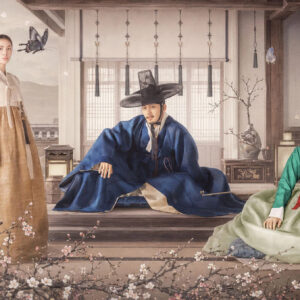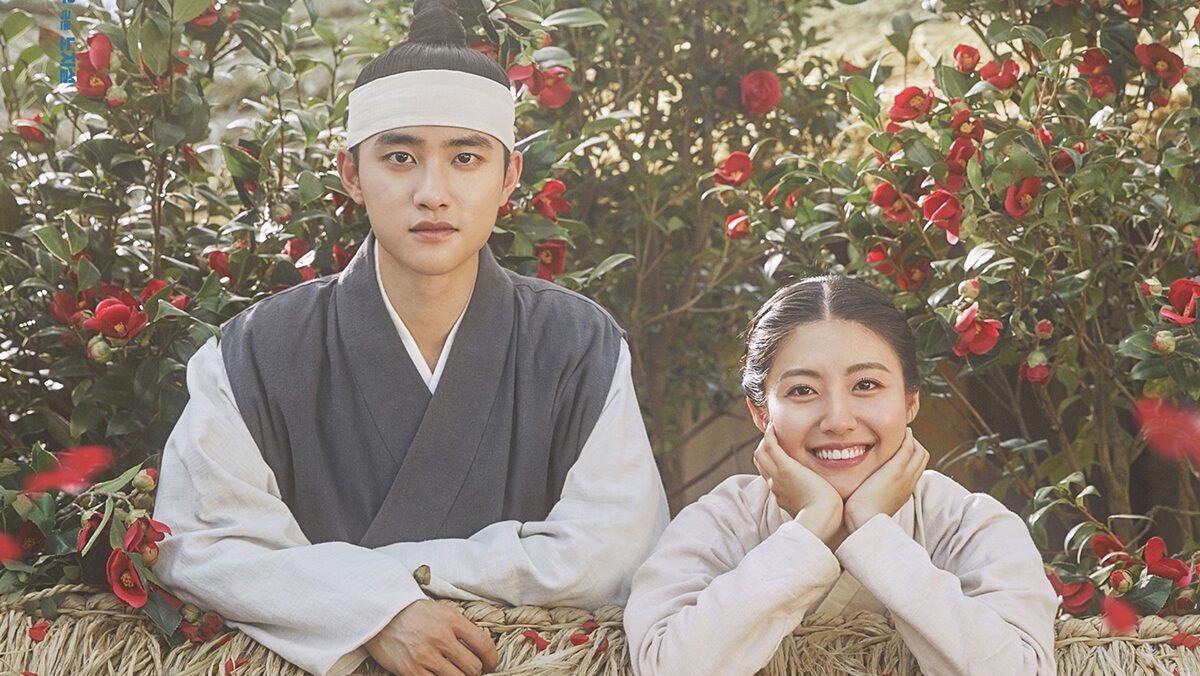
Set in the Joseon era, 100 Days My Prince offers a gentle mix of romance, comedy, and political intrigue. At first glance, it feels like a familiar historical drama, but the emotional core lies in something simpler: what happens when a powerful man loses everything that defines him, and finds something more meaningful in the process.
Starring Do Kyung-soo (D.O. of EXO) and Nam Ji-hyun, the drama unfolds across 16 episodes and gradually builds a story that balances lighthearted village life with darker palace politics. It’s a series that doesn’t rush its narrative, instead allowing its characters to grow through small, everyday moments.
When a Prince Becomes a Commoner
Lee Yool, the Crown Prince of Joseon, is known for his cold personality and perfectionist nature. His life inside the palace is rigid, controlled, and emotionally distant. Beneath that surface, however, is a man shaped by loneliness and unresolved trauma, particularly surrounding his family and the political forces controlling the throne.
In an attempt to impose order on society, Lee Yool enacts a law requiring all unmarried citizens of a certain age to marry. It’s a decision made from a place of logic rather than empathy, something that later comes back to define his journey.
Everything changes after an assassination attempt leaves him severely injured. He survives, but with no memory of who he is. Stripped of his royal identity, he is taken in by villagers and given a new name: Won-deuk.
Now living as a commoner, Lee Yool unknowingly experiences the consequences of his own policies. In a twist of fate, he ends up marrying Hong-shim, the oldest unmarried woman in the village, because of the very law he created.
What follows is not just a romance, but a quiet exploration of identity. Without his memories, Won-deuk is still intelligent and principled, but also awkward and out of place. He struggles with basic survival tasks, often frustrating those around him. Yet, these moments of discomfort become the foundation of his growth.
Meanwhile, the palace continues to operate without him, controlled largely by the manipulative Vice Premier Kim Cha-eon. As political tensions rise, the absence of the Crown Prince creates a dangerous imbalance of power.
The story moves between these two worlds, the simplicity of village life and the complexity of royal politics, until they inevitably collide again.
People Who Shape the Story
At the heart of the drama is the relationship between Lee Yool (Won-deuk) and Hong-shim. Hong-shim is not a typical female lead. She is practical, independent, and emotionally guarded. Once a noblewoman herself, she now lives under a hidden identity while running a problem-solving agency in her village.
Her dynamic with Won-deuk feels natural and grounded. Their relationship is built on constant bickering, shared struggles, and gradual understanding rather than instant attraction. This slow development makes their emotional connection more believable.
Do Kyung-soo delivers a surprisingly nuanced performance, especially in portraying the contrast between the cold Crown Prince and the confused yet sincere Won-deuk. His comedic timing adds charm, while his quieter moments reveal emotional depth.
Nam Ji-hyun complements this perfectly with a performance that feels steady and authentic. Hong-shim’s strength never feels exaggerated, and her vulnerability is shown in subtle ways.
The supporting characters add further layers to the story:
- Jung Jae-yoon (Kim Seon-ho) brings warmth and quiet intelligence. His one-sided love for Hong-shim and his unique condition, face blindness, make him one of the more memorable characters. His moral compass often stands in contrast to the corruption around him.
- Kim Cha-eon, the Vice Premier, represents the darker side of power. Ruthless and calculating, he manipulates both the king and the court to maintain control.
- The King, though technically in power, is portrayed as weak and conflicted, reflecting the instability of the political system.
- Kim So-hye (Crown Princess) offers a tragic perspective. Forced into a loveless marriage, her personal choices lead to consequences that ripple throughout the story.
- Moo-yeon, a skilled assassin with a complicated past, adds emotional tension. His connection to Hong-shim and his internal conflict between duty and freedom make his storyline particularly compelling.
Each character feels connected to the central theme: the tension between identity and circumstance.
What the Story Quietly Suggests
Beyond its romantic and comedic elements, 100 Days My Prince raises subtle questions about power, responsibility, and human connection.
One of its most interesting ideas is how identity shapes behavior. As Crown Prince, Lee Yool governs with strict logic, detached from the lives of ordinary people. As Won-deuk, he experiences those same realities firsthand. The shift is not dramatic, but gradual, he begins to understand what it means to live without privilege.
The drama also reflects on the nature of authority. Power without empathy creates distance, while lived experience builds understanding. This contrast becomes more apparent as Lee Yool regains his memory and must reconcile his two identities.
The “100 days” themselves symbolize more than just a timeline. They represent a transitional space, a period where the character exists between who he was and who he could become.
The ending ties these ideas together in a relatively satisfying way. Without going into heavy spoilers, the resolution focuses on restoration rather than transformation. Lee Yool returns to the palace, but he is no longer the same person. His experiences as Won-deuk leave a lasting impact on how he views both his role and the people he serves.
At the same time, the romance between him and Hong-shim is tested by reality. Their relationship must adapt to a world that is very different from the one where it began.
Final Thoughts and Rating
100 Days My Prince may not be the most intense historical drama, but its strength lies in its balance. It doesn’t rely heavily on plot twists or high-stakes action. Instead, it builds its story through character interactions, emotional growth, and small, meaningful moments.
The pacing can feel slow at times, especially in the middle episodes. However, for viewers who enjoy character-driven narratives, this approach works in its favor.
The blend of humor and emotion is handled well. The comedic elements never feel forced, and they help make the characters more relatable. At the same time, the drama doesn’t shy away from exploring heavier themes like loss, power, and identity.
Do Kyung-soo’s performance stands out as one of the highlights, showing a range that goes beyond expectations. Combined with Nam Ji-hyun’s grounded portrayal, the central relationship becomes the emotional anchor of the series.
In the end, 100 Days My Prince is less about grand historical events and more about personal change. It tells a story where stepping away from power becomes the key to understanding it.
Rating: 8.3/10
A warm and reflective historical romance that finds its strength in simplicity, character growth, and a quietly meaningful message.