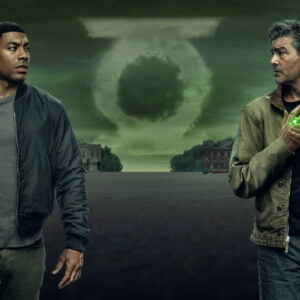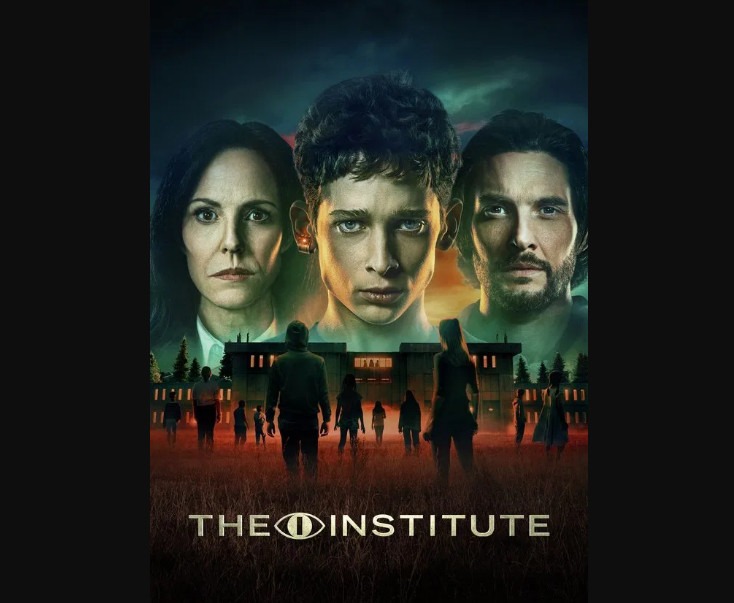
Stephen King’s stories have always explored the fear hidden beneath ordinary life. The Institute (2025) continues that tradition with a chilling premiere episode that immediately pulls viewers into a world where gifted children are taken, monitored, and manipulated for a so-called greater good.
Episode 1, titled “The Boy,” introduces two parallel storylines: Luke Ellis, a teenage genius abducted into a secret facility, and Tim Jamieson, a former police officer unknowingly drifting toward the same dark orbit. The result is a tense opening chapter filled with mystery, psychological pressure, and quiet dread.
A Brilliant Mind Trapped in a Controlled Nightmare
Luke Ellis is only fourteen, but he has already been accepted to MIT. His life appears destined for greatness, until it is violently interrupted. In one of the episode’s most unsettling scenes, Luke is kidnapped by an armed group in a restaurant. The moment is staged with eerie precision, signaling that this is not a random crime but a calculated operation.
When Luke regains consciousness, he finds himself inside a facility known as The Institute. His room has been recreated to look exactly like his bedroom at home. The illusion of comfort is clearly intentional, an attempt to calm him while stripping away his freedom.
Inside the Institute, Luke meets other children who possess extraordinary abilities. Some have telepathy (TP), others telekinesis (TK). They are told they are participating in important work for the benefit of the world. Yet the constant surveillance, strict routines, and looming threat of punishment suggest something far more sinister.
The facility is divided into two areas: the Front Half, where new arrivals are closely monitored, and the mysterious Back Half, where children are sent after “progress.” The Back Half promises more freedom, but hints of danger surround it. What exactly happens there remains unclear, but the fear is palpable.
A Former Cop on an Unexpected Path
While Luke’s story unfolds in captivity, Tim Jamieson’s journey begins almost accidentally. A former police officer with a complicated past, Tim was on his way to New York when an overbooked flight forces him to change plans. He ends up in Dennison, Maine, a quiet town that feels deceptively peaceful.
Tim takes a job as a night knocker, walking the streets and maintaining order. On the surface, his storyline appears disconnected from Luke’s imprisonment. However, subtle narrative cues suggest that these two paths will eventually collide.
Tim’s backstory adds emotional weight. He once shot a teenage suspect in the line of duty, an act that left psychological scars. His reflective and restrained personality contrasts sharply with the calculated cruelty of the Institute. He feels like a moral counterbalance waiting to enter the larger conflict.
His encounters with locals, including Annie, a conspiracy-minded wanderer, quietly plant seeds of foreshadowing. The small town may not be as innocent as it seems.
The Children, the System, and the Psychology of Control
The emotional core of the episode lies in the children themselves. Luke quickly learns that survival inside the Institute requires strategy. Some kids comply with the rules. Others resist.
Kalisha acts as a guide, helping Luke understand the hierarchy within the facility. Nicky, rebellious and visibly injured, becomes a symbol of resistance. George appears more trusting of the system. Iris adds another layer to the social dynamics. These internal tensions deepen the narrative beyond a simple good-versus-evil structure.
Ms. Sigsby, the head of the Institute, insists that everything happening is legal and necessary. Yet her calm demeanor hides ambiguity rather than reassurance. Stackhouse, the security chief, embodies the more direct threat—efficient, ruthless, and unflinching.
One particularly shocking twist involves Michelle, who initially appears sympathetic but is ultimately eliminated. The scene reinforces a chilling message: loyalty is tested, and failure is fatal.
The chess game between Luke and Nicky near the end of the episode becomes symbolic. It reflects the larger strategy unfolding inside the Institute, obedience versus defiance, survival versus sacrifice. Every move matters.
What Is Really Happening in the Back Half?
Episode 1 carefully avoids revealing too much about the Institute’s ultimate purpose, but several clues point toward large-scale manipulation. The division between Front Half and Back Half suggests a process of conditioning. The promise of privileges in the Back Half may be nothing more than psychological bait.
My theory is that the Institute is less concerned with nurturing powers and more focused on weaponizing them. The repeated emphasis on “saving the world” feels like institutional propaganda. The children are likely being used in operations far beyond what they understand.
Tim’s arrival in Dennison hints at a future rescue arc, but it may not be straightforward. Stephen King’s adaptations rarely offer simple victories. The emotional cost will likely be significant.
The premiere ends without clear answers, but it plants enough uncertainty to build anticipation. The real horror is not just supernatural it is systemic.
Final Thoughts: A Promising but Imperfect Beginning
Episode 1 succeeds in establishing tone and atmosphere. The sterile design of the Institute contrasts sharply with the warm yet uneasy calm of Dennison. Cinematography and sound design effectively create tension, though a few scenes feel slightly overdramatized.
The dual narrative structure works, but pacing occasionally slows due to heavy exposition. Some foreshadowing feels overly explicit, reducing subtlety. Still, the performances of the young cast members stand out. Luke, Kalisha, and Nicky convincingly portray confusion, fear, and quiet rebellion.
Mary-Louise Parker as Ms. Sigsby delivers a controlled performance, though her character does not yet feel as terrifying as the role demands. There is room for the series to deepen her menace.
Overall, this is a solid and intriguing opener that captures the unsettling spirit of Stephen King’s world, even if it has not fully reached its potential.
Rating: 7.5/10
The Institute (2025) begins with tension, mystery, and moral unease. If future episodes strengthen the pacing and explore the darker implications of the Back Half, this adaptation could evolve into one of the more compelling Stephen King series in recent years.