As someone who has spent over a decade deep-diving into the emotional world of Korean Dramas, I often find myself searching for that same raw, visceral intensity in other cinematic cultures.
We often talk about the “mother’s sacrifice” in K-Dramas like Under the Queen’s Umbrella or the gritty survival themes in modern thrillers. However, my journey recently led me back to a 2002 Bollywood masterpiece that defines the word “intensity”: Shakti: The Power.
While many global audiences recognize Indian cinema for its vibrant colors and musical numbers, Shakti stands as a haunting exception—a dark, gripping tale of a mother trapped in a feudal nightmare, fighting for her son’s life. In this review, I’ll break down why this cult classic resonates so deeply with the same emotional chords we love in our favorite K-Dramas.
Shakti: The Power (2002) – Full Synopsis, A Strong Mother’s Struggle, and Shah Rukh Khan’s Iconic Appearance
Shakti: The Power (2002), a Hindi-language drama that blends family conflict, crime, and emotional intensity into one powerful story about a mother’s fight for her child.
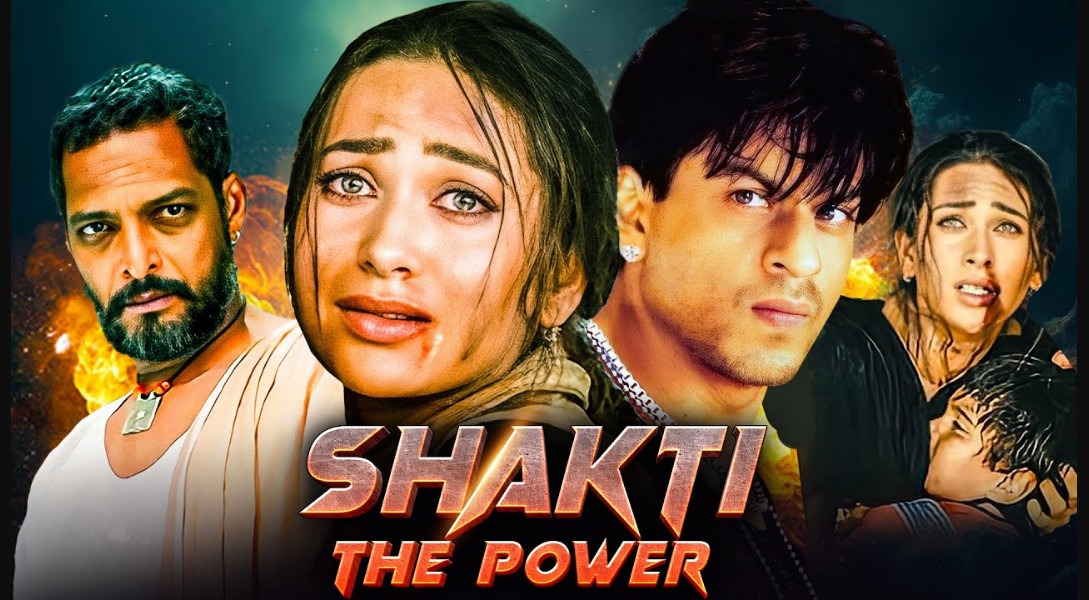
Released on September 20, 2002, and directed by Pasupuleti Krishna Vamsi, the film was produced by Sridevi and distributed by Eros International. The movie stars Karisma Kapoor, Nana Patekar, Sanjay Kapoor, and Shah Rukh Khan, with music composed by Mani Sharma and Ismail Darbar.
But beyond its cast and production details, Shakti: The Power stands out for its emotional core — a mother standing against a violent patriarchal system to protect her son.
Film Details
- Title: Shakti: The Power (2002)
- Release Date: September 20, 2002
- Country: India
- Language: Hindi
- Director: Pasupuleti Krishna Vamsi
- Producer: Sridevi
- Cast: Karisma Kapoor, Shah Rukh Khan, Nana Patekar, Sanjay Kapoor
- Music: Mani Sharma, Ismail Darbar
- Distributor: Eros International
Plot Synopsis of Shakti: The Power
The story follows Shekhar (Sanjay Kapoor) and Nandini (Karisma Kapoor), an Indian couple living peacefully in Canada. Their life seems stable and modern, far removed from the violence of Shekhar’s ancestral home in India.
However, when news of escalating conflict reaches Shekhar, he decides to return with Nandini and their young son to his family’s rural hometown in eastern India. What was meant to be a visit soon turns into a nightmare.
On their journey, they are attacked by a rival gang — enemies of Shekhar’s powerful father, Narasimha (Nana Patekar). They survive only because Narasimha’s men intervene. For Nandini, this is the first terrifying glimpse into the violent world her husband once left behind.
Once they arrive at the ancestral home, Nandini becomes increasingly uncomfortable. Narasimha is not just a strict patriarch — he is deeply entrenched in a brutal gang war. His authority is absolute, and his worldview leaves little room for compromise.
The conflict escalates when Narasimha’s rival is killed, and revenge becomes inevitable. The enemies target Shekhar, and in a tragic turn of events, he is murdered. His death shatters the family and leaves Nandini alone in a world she never chose.
But the tragedy does not end there.
After Shekhar’s death, Narasimha declares that his grandson must stay and eventually inherit his legacy. Leaving the village is not an option. For him, bloodline and power matter more than anything else.
For Nandini, however, only one thing matters: her son’s safety.
Determined to protect her child from a cycle of violence, she plans to return to Canada. Her decision directly opposes Narasimha’s will, turning the house into a silent battleground between tradition and maternal instinct.
When Nandini attempts to escape and seeks help from the police, she is captured by Narasimha and locked away. The tension deepens as even Shekhar’s mother and sister begin to question Narasimha’s rigid stance.
Eventually, with their help, Nandini manages to flee with her son. But danger follows closely behind. Narasimha’s enemies attack once again during their escape.
And then, in one of the film’s most memorable moments, Jai Singh (Shah Rukh Khan) appears.
Karisma Kapoor as the “Strong Mother”
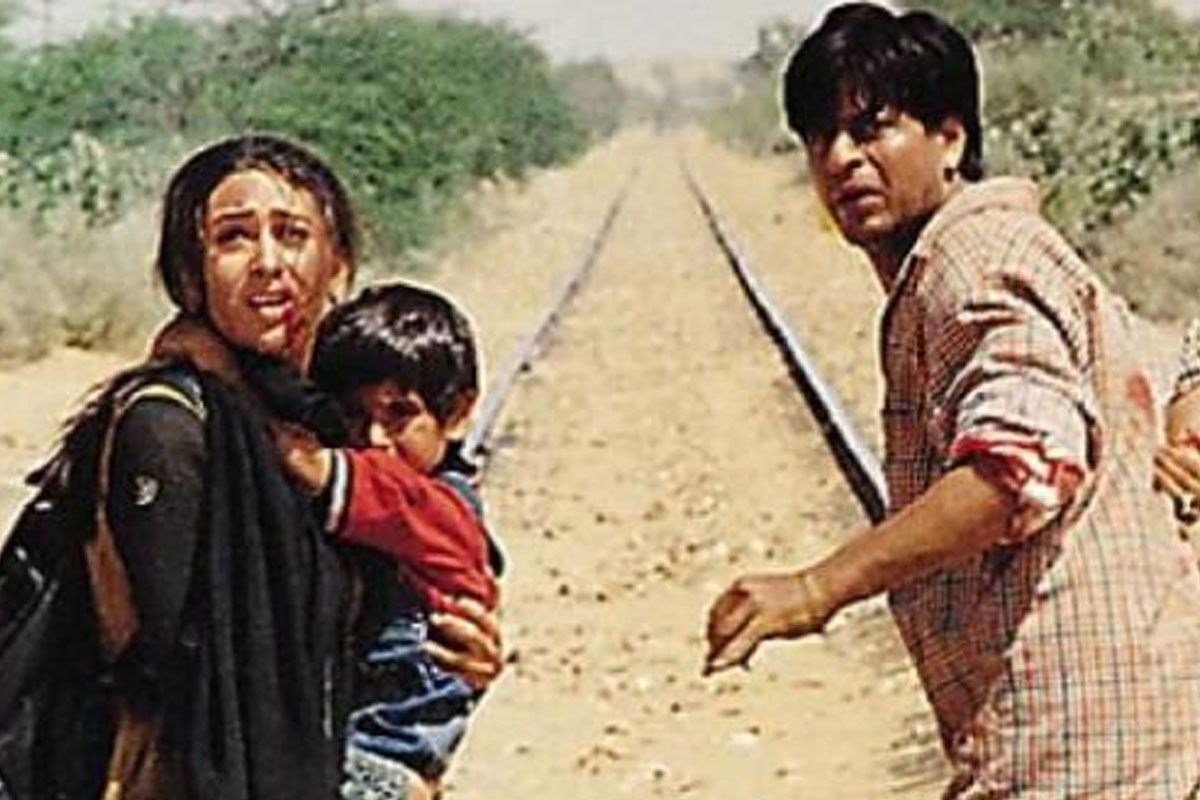
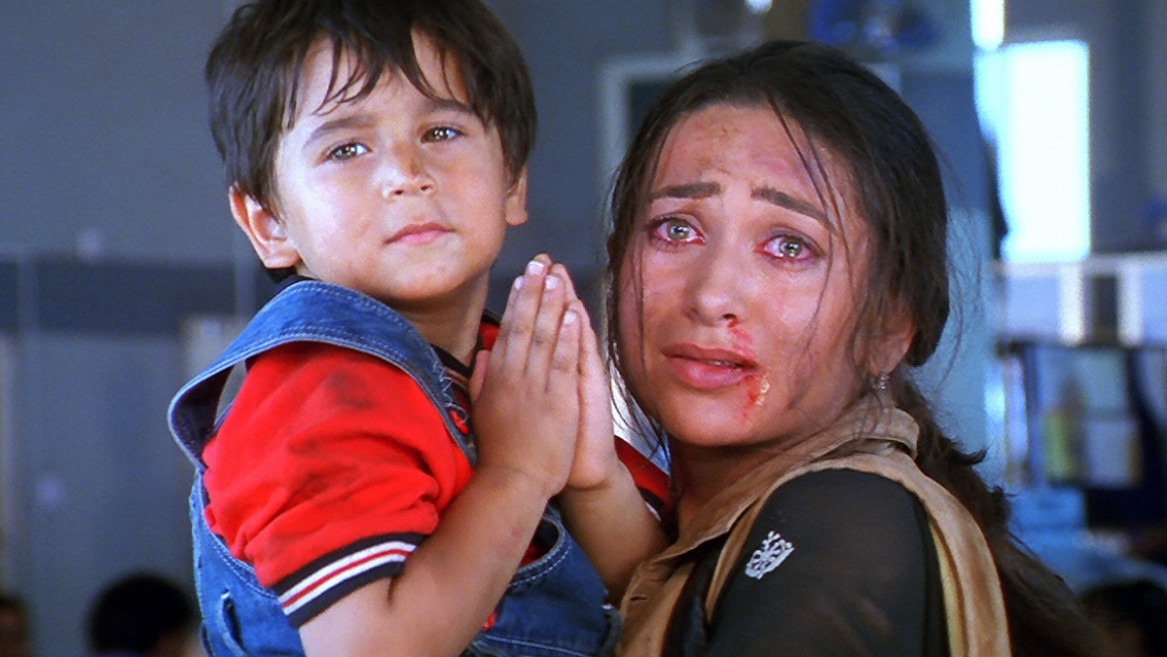
At the heart of Shakti: The Power is Karisma Kapoor’s performance as Nandini — a portrayal that redefined her image at the time.
Nandini is not a loud or physically dominant character. Her strength is emotional, quiet, and unwavering. She begins as a loving wife adjusting to unfamiliar surroundings, but circumstances force her into a position where she must confront powerful men and a violent system.
Her transformation feels organic. Grief does not paralyze her. Instead, it sharpens her resolve.
In many ways, the film becomes less about gang rivalry and more about a mother’s resistance against patriarchy. Narasimha represents a rigid, tradition-bound authority figure who believes power must be inherited and preserved. Nandini represents change — a future where her son is free from inherited violence.
The emotional weight of the story rests heavily on her shoulders, and Karisma Kapoor carries it with vulnerability and conviction. Her fear feels real. Her desperation feels raw. And her determination feels earned.
Shah Rukh Khan’s Iconic Appearance
Although Shah Rukh Khan’s screen time is limited, his appearance as Jai Singh leaves a strong impression.
He enters the story at a critical moment — when hope seems nearly lost. Jai helps Nandini and her son reach a train to Jaipur, standing between them and imminent danger. A fight breaks out, and Jai fiercely defends them, allowing mother and child a chance to escape.
But his bravery comes at a cost.
After sustaining multiple injuries, Jai ultimately dies. His sacrifice adds another emotional layer to the narrative. It is a brief role, yet deeply impactful — a reminder that sometimes heroism appears quietly and disappears just as quickly.
For many viewers, Shah Rukh Khan’s cameo became one of the film’s most talked-about elements. His presence, even for a short duration, elevated the intensity of the climax.
The Emotional Resolution
As Nandini and her son reach the airport, freedom seems within reach. But Narasimha arrives once more.
This confrontation could have ended violently. Instead, something shifts.
When Narasimha interacts with his grandson, the hardened patriarch softens. The emotional weight of loss — his son, his legacy, his fractured family — finally catches up to him.
In a rare moment of vulnerability, he allows Nandini and the child to leave for Canada.
It is not a triumphant ending. It is bittersweet. The cost has been heavy, but the cycle of violence is finally broken — at least for one generation.
Shakti: The Power (2002) is more than a crime drama. It is a story about generational conflict, patriarchal dominance, and above all, a mother’s unwavering determination to protect her child.
Karisma Kapoor delivers one of her most emotionally grounded performances, while Nana Patekar embodies a complex antagonist shaped by tradition and pride. Shah Rukh Khan’s cameo, though brief, remains unforgettable.
Two decades later, the film still resonates — not because of its action sequences, but because of its emotional truth.
Sometimes, the greatest power is not in weapons or legacy.
It is in a mother’s choice to walk away.
Final Thoughts
In a world where we often binge-watch the latest K-Dramas for their emotional stakes, Shakti: The Power serves as a powerful reminder that the language of a mother’s love and survival is universal. It possesses the same “Makjang” intensity that keeps us on the edge of our seats, combined with legendary performances that have stood the test of time for over two decades.
If you are a fan of high-stakes family melodramas or thrillers that push characters to their absolute limits, this film deserves a spot on your watchlist. It’s more than just a Bollywood movie; it’s an emotional rollercoaster that will leave you breathless long after the credits roll.
What do you think? Does the intense struggle in Shakti remind you of any specific K-Dramas you’ve watched? Or perhaps you have another Bollywood recommendation that gives off strong “K-Drama vibes”? Let’s discuss in the comments below!
I’d love to hear your thoughts, especially if you’re discovering this gem for the first time through my blog.