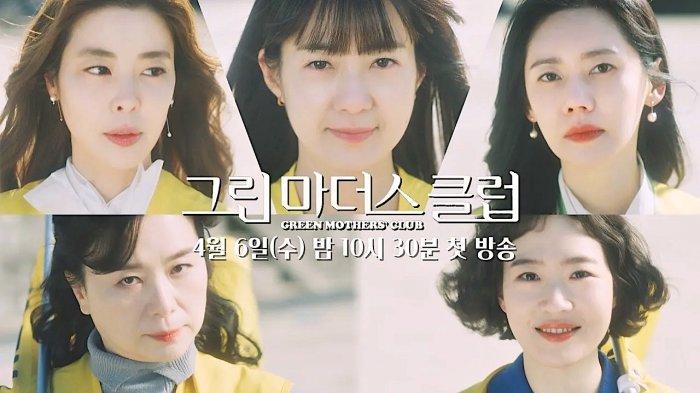
Green Mothers’ Club is a Korean drama that explores friendship, rivalry, ambition, and the complicated reality of motherhood. Set within an elementary school community, the series follows five mothers who form connections not because of work or formal organizations, but through their shared experience of raising children.
At its core, the drama asks a difficult question: Where does motherhood end and individual identity begin? Each woman carries her own insecurities, personal wounds, and ambitions. As their lives intertwine, the show examines instinct, pride, competition, and the fragile boundaries between friendship and rivalry.
Rather than presenting motherhood as soft and sentimental, the drama dives into its raw, almost primal side — the instinct to protect, compete, and survive.
Drama Details
- Title: Green Mothers’ Club
- Native Title: 그린 마더스 클럽
- Screenwriter: Shin Yi Won
- Director: Ra Ha Na
- Genres: Mystery, Drama
- Episodes: 16
- Country: South Korea
- Aired: April 6, 2022 – May 26, 2022
- Network: JTBC (also available on Netflix)
- Runtime: 1 hour 10 minutes per episode
- Rating: 15+
Main Cast:
- Lee Yo Won
- Choo Ja Hyun
- Kim Gyu Ri
- Jang Hye Jin
- Joo Min Kyung
- Choi Jae Rim
Review
Addictive, Flawed, and Impossible to Ignore
Green Mothers’ Club is ambitious. That’s the first word that comes to mind.
It tackles social pressure, parenting anxiety, distorted education systems, mental health, false friendships, and even crime — all within one narrative. It doesn’t always balance these elements perfectly, but it certainly keeps viewers engaged.
Like dramas such as Sky Castle or The Penthouse, this series often prioritizes intensity and dramatic impact over strict realism. To fully enjoy it, viewers must accept that not everything is meant to be realistic. The show aims to entertain, shock, and provoke thought more than it aims to be entirely plausible.
And it works.
From the very first episode, the story pulls you in. The early plotlines are complex and emotionally charged, making it difficult to stop watching. While some story arcs feel loosely concluded toward the end — leaving a few narrative gaps — the gripping performances more than compensate for those imperfections.
The acting across the board is impressive. Veteran actress Lee Yo Won delivers a layered performance, and even the child actors handle their roles with remarkable maturity. In many ways, the performances elevate the material beyond its structural weaknesses.
When Parenting Becomes a Battlefield
The drama begins with a compelling and original premise: mothers competing through their children’s academic achievements.
In this neighborhood, a child’s success directly influences the mother’s social status. The better the child performs, the higher the mother climbs within the community hierarchy. Recognition, prestige, and validation all revolve around educational performance.
This competitive environment naturally leads to:
- Silent resentment
- Hidden jealousy
- Manipulative behavior
- Emotional damage to children
- Tension within marriages
What starts as school-related rivalry gradually expands into darker territory — betrayal, stalking, drug issues, and even murder.
It’s intense. Sometimes excessive. But undeniably addictive.
The Five Mothers at the Center
The strength of Green Mothers’ Club lies in its character dynamics.
Lee Eun Pyo (Lee Yo Won)
A mother of two boys, Eun Pyo believes in a relaxed educational approach. She values character development over academic perfection and wants her children to grow into good human beings rather than “achievement machines.”
However, she is not flawless. Her personal insecurities and stubborn traits occasionally make her frustrating. Her journey is as much about self-reflection as it is about motherhood.
Byun Chun Hui (Choo Ja Hyun)
Chun Hui is ambitious, competitive, and deeply insecure. Unlike Eun Pyo, she believes in pushing children to the top — no matter the cost.
Her internal contradictions make her one of the most compelling characters. Beneath her drive lies vulnerability, fear, and the constant need for validation.
The tension between Eun Pyo and Chun Hui forms the emotional backbone of the series.
Seo Jin Ha (Kim Gyu Ri)
An accomplished artist and mother of one, Jin Ha struggles with her own mental health challenges. She is emotional, expressive, and quietly tragic.
Kim Gyu Ri delivers a powerful performance, though the character arguably deserved more screen time given her narrative importance.
Kim Young Mi (Jang Hye Jin)
Young Mi promotes progressive, anti-capitalistic educational philosophies. Calm and self-controlled, she stands out intellectually.
However, her limited screen presence feels like a missed opportunity. Her role in revealing key truths in the story is significant, yet her character arc could have been explored more deeply.
Park Eun Ju (Joo Min Kyung)
Gentle and family-oriented, Eun Ju is easygoing but easily influenced. Her vulnerability highlights how peer pressure affects not only children but adults as well.
The Children and Husbands
The child actors deserve recognition. Since much of the drama revolves around academic pressure and mental health, their performances carry emotional weight. They convincingly portray anxiety, confusion, ambition, and emotional exhaustion.
The husbands also play important supporting roles. Notably, Jung Jae Woong (Choi Jae Rim), Eun Pyo’s husband, stands out as one of the most morally grounded characters in the series.
Plot Development and Pacing
For most of its run, the plot progresses at a strong pace. The first twelve episodes are especially engaging, blending mystery with emotional drama effectively.
However, episodes 13 and 14 feel somewhat uneven. The final stretch slows down, particularly regarding the mystery arc. While not disastrous, the narrative becomes slightly choppy.
The biggest frustration comes from certain character decisions in episode 15, which feel irrational and somewhat exaggerated. Fortunately, episode 16 manages to recover much of that damage. The final 20 minutes offer a satisfying emotional closure.
Overall rating based on the entire journey? Around 7.5 out of 10 — strong, though not flawless.
Themes That Stand Out
1. Mental Health and Academic Pressure
One of the drama’s strongest elements is its portrayal of children’s mental health. It clearly shows how excessive pressure can damage young minds.
Parents forcing children to fulfill their own dreams, pushing them beyond their limits, or overprotecting them can unintentionally create long-term harm. The show serves as a cautionary tale.
2. Distorted Education Systems
The series critiques how competitive educational environments shape parenting behaviors. Status becomes tied to test scores, and success becomes social currency.
This portrayal feels realistic and relatable, particularly in highly competitive urban communities.
3. Friendship Between Mothers
Friendship in K-dramas is common, but here it feels layered and fragile.
The evolving relationship between Eun Pyo and Chun Hui is especially compelling. Their bond shifts between rivalry, resentment, understanding, and emotional solidarity. It reflects how complex adult friendships can be when pride and parenting collide.
4. Makjang Meets Slice-of-Life
Although the drama contains makjang elements (dramatic twists, shocking revelations), it doesn’t fully lean into over-the-top chaos. Instead, it blends melodrama with realistic emotional struggles.
The direction by Ra Ha Na is polished for a debut project. The urban setting, soft color palettes, and overall cinematography complement the emotional tone effectively.
The OST and Production Quality
The series features five OST tracks:
- “Happiness” – Nakkyeum
- “Moonlight Mother” – Jang Pil Soon
- “What If” – Jung In
- “Ivory” – Jemma
- “A Song For You” – SAya
While not particularly groundbreaking, the songs are emotionally fitting and memorable. The background score and opening theme are beautifully arranged, enhancing key dramatic moments.
What Works
- Strong character development
- Realistic portrayal of parenting conflicts
- Honest depiction of children’s mental health struggles
- Intense and engaging mystery peaks
- Powerful acting performances
What Could Have Been Better
- Slight dragging in the final episodes
- Some inconsistent character decisions
- Limited screen time for certain key characters
Final Verdict
Green Mothers’ Club is not perfect. It stumbles near the end and occasionally stretches believability. Yet it remains engaging, emotionally layered, and socially relevant.
It’s a drama that examines motherhood not as an idealized role, but as a battlefield of instinct, insecurity, love, and ambition.
Despite its flaws, it deserves a chance.
If you enjoy character-driven dramas with psychological tension and social commentary — this one is worth watching.