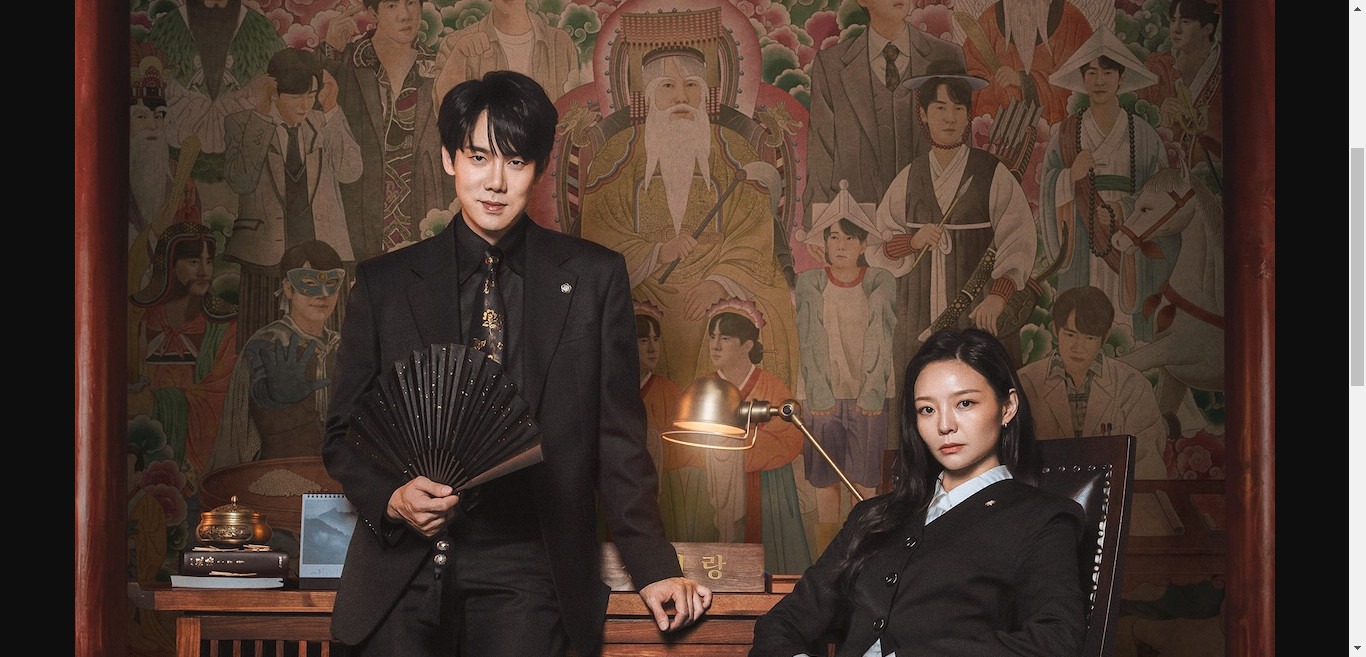
Episode 14 of Phantom Lawyer didn’t come in loud, but it stayed with me longer than I expected.
At first glance, it feels like a transition episode. Not much action, not many dramatic twists. But emotionally? It’s heavy. This is the kind of episode where everything slows down just enough for the characters, and us, to really sit with what’s been building all along.
I found myself unexpectedly invested in I-rang’s internal struggle. It’s not just about solving a case anymore. It’s about confronting something far more personal: what do you do when the truth you’ve believed your whole life starts to crack?
And honestly, watching that unfold felt… quietly intense.
We begin with I-rang trying to fix a mistake, but not really fixing anything at all.
After missing his date, he rushes to the restaurant and finds Na-hyun waiting outside. She’s clearly upset, and while he apologizes, it feels incomplete. He doesn’t explain why he didn’t show up. Instead, he asks her to stay away from the office for a few days.
That moment immediately creates distance between them. And I couldn’t help but feel a bit frustrated, like, just explain it already. But at the same time, it makes sense. I-rang isn’t the type to open up easily, especially when things get personal.
Back at home, Kyung-hwa grows anxious when she realizes I-rang didn’t come back the night before. Bong-soo tries to reassure her, promising to check on him. There’s something comforting about these small domestic moments, they remind me that beneath all the chaos, there’s still a sense of family holding things together.
At the office, things take a more chaotic turn. I-rang ends up arguing with his father’s ghost, Gi-jung. He’s irritated, sleep-deprived, and clearly overwhelmed. He blames his father’s presence for everything that’s going wrong.
What stood out to me here is how strongly he refuses to take his father’s case. It’s not just reluctance, it feels like rejection rooted in years of unresolved resentment.
Then comes a strangely light moment.
Bong-soo arrives with food packed by Kyung-hwa, coincidentally one of Gi-jung’s favorite meals. I-rang, already anticipating trouble, tells Bong-soo not to open it and to splash water on him if anything strange happens.
Of course, Bong-soo opens it anyway.
And just like that, Gi-jung possesses I-rang… purely to eat.
I don’t know why, but I found this scene weirdly endearing. It’s such a simple, human desire, wanting to eat something you love, that it made Gi-jung feel less like a ghost and more like a person stuck between worlds. Bong-soo even lets him enjoy the meal before trying to snap I-rang back. It’s chaotic, but also oddly warm.
Meanwhile, Na-hyun begins her own investigation. She contacts Prosecutor Kim and uncovers details about a case from 20 years ago. At the same time, Bong-soo returns home and casually shares what happened, including how the “ghost client” enjoyed the meal.
When Kyung-hwa opens the empty container, she finds delicate paper art inside.
That detail hit me.
We later see her sitting quietly with a collection of similar paper crafts, silent proof that she’s been holding onto memories of Gi-jung all this time. It’s not loud grief. It’s the kind that lingers quietly in the background.
Back with I-rang, he makes a firm decision: he won’t help his father. Instead, he plans to force him to pass on. He retrieves a talisman and contacts a priest, determined to end things quickly.
But Gi-jung doesn’t understand what’s happening.
He follows I-rang, confused and hurt. When I-rang finally confronts him, he accuses him of terrible crimes, framing innocent people, causing deaths, destroying families.
Gi-jung’s reaction is… heartbreaking.
He genuinely can’t believe it. And the worst part? He has no memories to defend himself. Imagine being told you were a terrible person, with no way to confirm or deny it.
As I-rang continues toward the priest, he passes places tied to his childhood, an arcade, a baseball field. Memories begin to surface. Moments where his father wasn’t a villain, but just a dad spending time with his son.
Those scenes felt soft, almost nostalgic, and they clash painfully with everything I-rang believes now.
At one point, Gi-jung decides to step away. He senses that his presence is hurting I-rang. Even without his memories, he chooses to trust I-rang’s words, while quietly admitting he can’t fully accept them.
He tells I-rang he’ll respect whatever decision he makes.
That moment felt… mature, in a quiet and heartbreaking way.
Later, I-rang returns home. Kyung-hwa senses something is off but doesn’t push him to talk. She simply lets him rest. There’s something very real about that kind of understanding, knowing when not to ask questions.
Elsewhere, Na-hyun meets Jae-wook to discuss his father’s death. What seemed like suicide might actually be something more complicated. She also learns that someone anonymously revealed I-rang’s identity to him.
The mystery keeps expanding.
The next day, Na-hyun waits outside I-rang’s house and brings him to a park. She gently tells him she knows about his father, and the case.
What I appreciated here is her approach. She doesn’t pressure him. She simply says she’ll wait until he’s ready, but asks to stay by his side.
That moment felt soft and sincere. It shows growth, not just as a character, but as someone who understands emotional boundaries.
Eventually, I-rang agrees to investigate. He visits Chairman Yang, who points him toward an old case from his time in Incheon, mentioning Corporal Choi Dong-man.
Meanwhile, Do-gyeong starts uncovering unsettling truths about his own father. Through Min-hyuk, he learns that Chairman Yang has been actively trying to eliminate ghosts, especially Gi-jung.
That detail adds a darker layer to everything.
Kyung-hwa, now aware of I-rang’s intentions, seeks advice from Priest Tae-oh. She learns that ghosts without memories are drawn to places that feel familiar. This reminds her of a trip to the beach they once took together.
You can feel her hope quietly returning.
Meanwhile, I-rang and Na-hyun’s investigation leads them to Chinatown. A local business owner claims that Gi-jung worked with the Four Dragons Gang, using them to control and extort businesses. In contrast, Chairman Yang is painted as the hero who brought them down.
It sounds convincing… almost too convincing.
And that suspicion proves right. The testimony was staged, carefully arranged by Chairman Yang.
I won’t lie, this made me a bit annoyed. The manipulation is so calculated, it’s frustrating to watch.
By now, I-rang feels defeated. He’s close to accepting that his father really was the person everyone says he was.
But then something shifts.
His own memories resurface, clearer this time. And suddenly, the image of his father he carries doesn’t match the one the world insists on.
That realization changes everything.
In a rush, he runs to the baseball field and finds Gi-jung.
And finally, instead of pushing him away, I-rang makes a different choice.
He decides to believe in the father he remembers.
He tells Gi-jung his name. His date of birth.
It’s such a simple moment, but it feels like the beginning of truth finally breaking through.
What I love about this episode is how it challenges the idea of truth.
For years, I-rang believed a version of his father shaped by public opinion and past accusations. But now, he’s forced to confront something uncomfortable: what if that version isn’t complete?
The episode shows how easily narratives can be constructed, especially by people in power like Chairman Yang. And once those narratives take hold, they become difficult to question.
But memory is powerful too.
I-rang’s turning point doesn’t come from evidence, it comes from remembering who his father was to him. And that emotional truth becomes just as important as any factual one.
Na-hyun’s role also stands out here. Instead of demanding answers, she offers presence. That quiet support feels more meaningful than any dramatic declaration.
Episode 14 may not be the most action-packed chapter, but it’s one of the most emotionally grounded.
It slows things down in the best way possible, giving space for reflection, doubt, and growth. I-rang’s journey in this episode feels raw and believable, from anger, to confusion, to finally choosing to trust his own memories.
And that final moment? It felt like a shift, not just in the story, but in how everything moving forward will unfold.
With only two episodes left, the stage is clearly set for a powerful climax. Redemption, truth, and confrontation are all on the horizon, and I’m genuinely excited (and a little nervous) to see how it all comes together.
Rating: 9/10
A reflective and emotionally rich episode that quietly reshapes the narrative, and sets up a potentially unforgettable ending.