While the series saw a massive resurgence in interest early this year, its arrival on global streaming platforms has sparked a new debate: does the 2016 miniseries still hold up in 2026?
Let’s be honest: most time travel stories are a mess of paradoxes and lazy writing. But every once in a while, a series comes along that understands time travel isn’t about the physics, it’s about the trauma. That is exactly what 11.22.63, the eight-episode miniseries produced by J.J. Abrams and adapted from Stephen King’s behemoth novel, delivers. Now that it has quietly landed on Netflix in 2026, it is time we talk about why this is the hidden gem you’ve been ignoring while chasing the latest Stranger Things hype.
In this long-form analysis, I’m going to break down why 11.22.63 is perhaps the most underrated Stephen King adaptation ever made, how it handles the “Butterfly Effect” better than any sci-fi flick in a decade, and why its ending remains one of the most heartbreaking moments in television history.
The Burden of the “Reset”: A Premise with Teeth
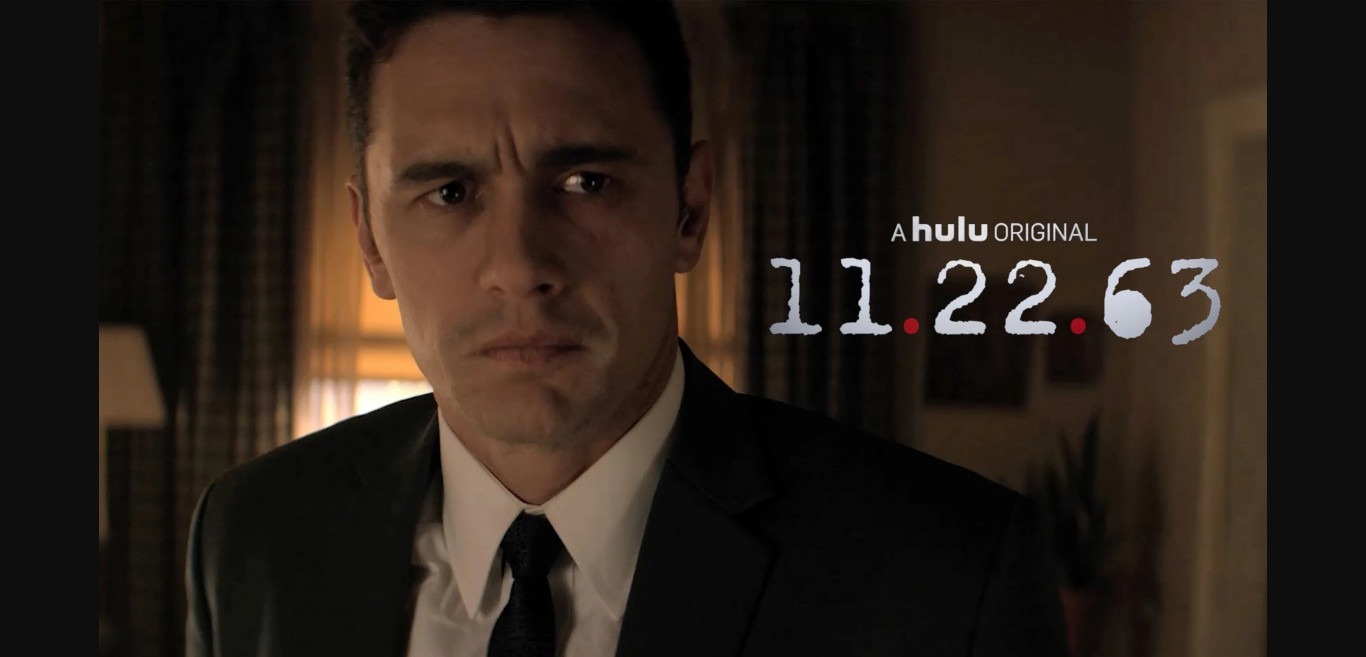
The setup is deceptively simple: Jake Epping (James Franco), a disillusioned high school teacher, is told by his dying friend Al that there is a portal in a diner pantry that leads to October 21, 1960. The mission? Stay in the past for three years and stop Lee Harvey Oswald from killing JFK.
What I love about this premise isn’t the political goal; it’s the logistics of the “Reset.” Every time you go back, the past resets. If you spend three years there and come back, only two minutes have passed in the present. But if you go back into the portal again? Everything you did before is erased. This adds a layer of tragic stakes that most time-travel shows lack. Imagine spending years falling in love, only to realize that one mistake forces you to erase that person’s entire memory of you. It’s a brutal, existential horror that Stephen King captures perfectly.
“The Past is Obdurate”: Time as a Slasher Villain
Most sci-fi treats the past like a blank canvas. King treats it like a predator. In 11.22.63, the past is described as “obdurate”, it doesn’t want to be changed. When Jake gets too close to altering a major event, the world pushes back. Fires break out, chandeliers fall, cars malfunction.
This is where J.J. Abrams’ influence shines. The “Bad Robot” production style turns history itself into the antagonist. It’s not just about dodging the FBI; it’s about surviving a universe that is actively trying to kill you for meddling. Watching Jake struggle against a sentient, stubborn timeline creates a sense of dread that makes the typical “grandfather paradox” look like a bedtime story. In my opinion, this is the most terrifying version of time travel ever put to screen.
The Lee Harvey Oswald Enigma: Fact vs. Fiction
One of the biggest risks the series took was its portrayal of Lee Harvey Oswald (Daniel Webber). History books usually paint him as either a lone wolf nutcase or a CIA puppet. Webber’s performance, however, is hauntingly human. He plays Oswald as a volatile, deeply insecure man-child who is desperate to be “someone.”
The series spends a significant amount of time, perhaps too much for some viewers, following Oswald’s domestic life with his Russian wife, Marina. But I argue this is essential. By humanizing the assassin, the show forces us to ask: If you saw this pathetic, struggling man, could you really pull the trigger before he did anything wrong? It moves the show away from a political thriller and into a deep moral gray area that most “Save JFK” stories avoid.
Book vs. Screen: What Was Lost in Translation?
As a fan of the 800-page novel, I have to address the “Bill Turcotte” problem. In the book, Jake is mostly a lone wolf, communicating his thoughts through internal monologue. Since TV doesn’t allow for that, the creators elevated a minor book character, Bill (George MacKay), to be Jake’s sidekick.
Purists might hate this change, but from a storytelling perspective, it was a masterstroke. Bill represents the “casualty” of time travel. His descent into obsession and the tragic way his arc ends serves as a warning to Jake (and the audience) that you cannot play God without getting your hands dirty. However, I did miss the “Derry” sequences from the book, a subtle nod to IT, which were sadly trimmed for the Netflix version.
The Romance that Saved the Sci-Fi
Let’s be real: James Franco can be a polarizing actor. But in 11.22.63, his chemistry with Sarah Gadon (Sadie Dunhill) is the show’s beating heart. Sadie isn’t just a 1960s trope; she is a resilient woman escaping a domestic nightmare.
The central conflict of the show eventually shifts from “Can I save the President?” to “Can I stay with Sadie?” This is King at his best, using a massive historical event as a backdrop for a small, intimate love story. The finale’s “dance” scene is, without hyperbole, one of the most emotionally devastating five minutes of television you will ever watch. It’s a reminder that even if you save the world, you might lose your own universe in the process.
The Kennedy Conspiracy: Why It Still Matters in 2026
Why are we still obsessed with November 22, 1963? In 2026, we live in an era of deepfakes and misinformation. 11.22.63 resonates now more than ever because it’s about the obsession with the “Truth.” Jake Epping represents every conspiracy theorist who thinks that if they could just fix one moment, the world would be perfect.
The show’s climax serves as a cold shower for this kind of thinking. Without giving away the ending, the “Butterfly Effect” the show depicts is a terrifying vision of how a “better” past can lead to a much darker future. It’s a cautionary tale about nostalgia, reminding us that the “good old days” were often built on fragile foundations.
“11.22.63 is a rare adaptation that understands Stephen King’s greatest secret: the monsters aren’t under the bed; they are the choices we made three years ago.”
Final Verdict: A “High-Value” Binge-Watch
If you’ve been skipping 11.22.63 because it looked like a dry history lesson, you are making a mistake. It is a taut, emotional, and visually stunning thriller that treats its audience with intelligence. In a world of endless sequels and reboots, this self-contained miniseries is a reminder of what happens when great source material meets a director who knows how to pace a mystery.
Final Rating: 9.5/10 — The Gold Standard of Stephen King Adaptations.
What would you do if you found a portal to 1960? Would you try to change history, or would you just stay for the 35-cent coffee? Let’s discuss the paradoxes in the comments below!